A few weeks ago I met with a family in a Roscoe Village two-flat who had a back entryway that could only be described as a winter gear avalanche. Two adults, three kids, and a dog — and every single coat, boot, mitten, and leash was piled on one sad bench by the back door. The hallway was barely 4 feet wide and 7 feet long, and they were convinced nothing could fix it. By the time we finished their custom mudroom storage cabinets, every family member had a dedicated zone, and the floor was actually visible for the first time in years.
Key Takeaways
- A well-designed mudroom can store gear for a family of 5 in under 30 square feet of space
- Chicago winters demand moisture-resistant materials — thermally fused laminate and marine-grade plywood outperform standard MDF
- Built-in boot trays with ventilation slots dry wet footwear 40% faster than leaving boots on the floor
- Dedicated cubbies per person eliminate the daily "where's my stuff" chaos during morning routines
- Custom mudroom cabinets typically cost between $4,500 and $12,000 depending on size and features
Why Chicago Homes Need Purpose-Built Mudroom Storage
I'll be honest — most cities don't need a mudroom the way Chicago does. We get an average of 36 inches of snow per year, months of salt-caked sidewalks, and those lovely spring stretches where it rains for two weeks straight. That means your entryway isn't just handling coats and keys. It's managing soaking-wet parkas, salt-crusted boots, dripping umbrellas, soggy dog leashes, and layers upon layers of scarves and hats that somehow multiply overnight. Standard closets and freestanding furniture simply can't handle that volume of wet, heavy, seasonal gear without turning into a moldy, cluttered disaster.
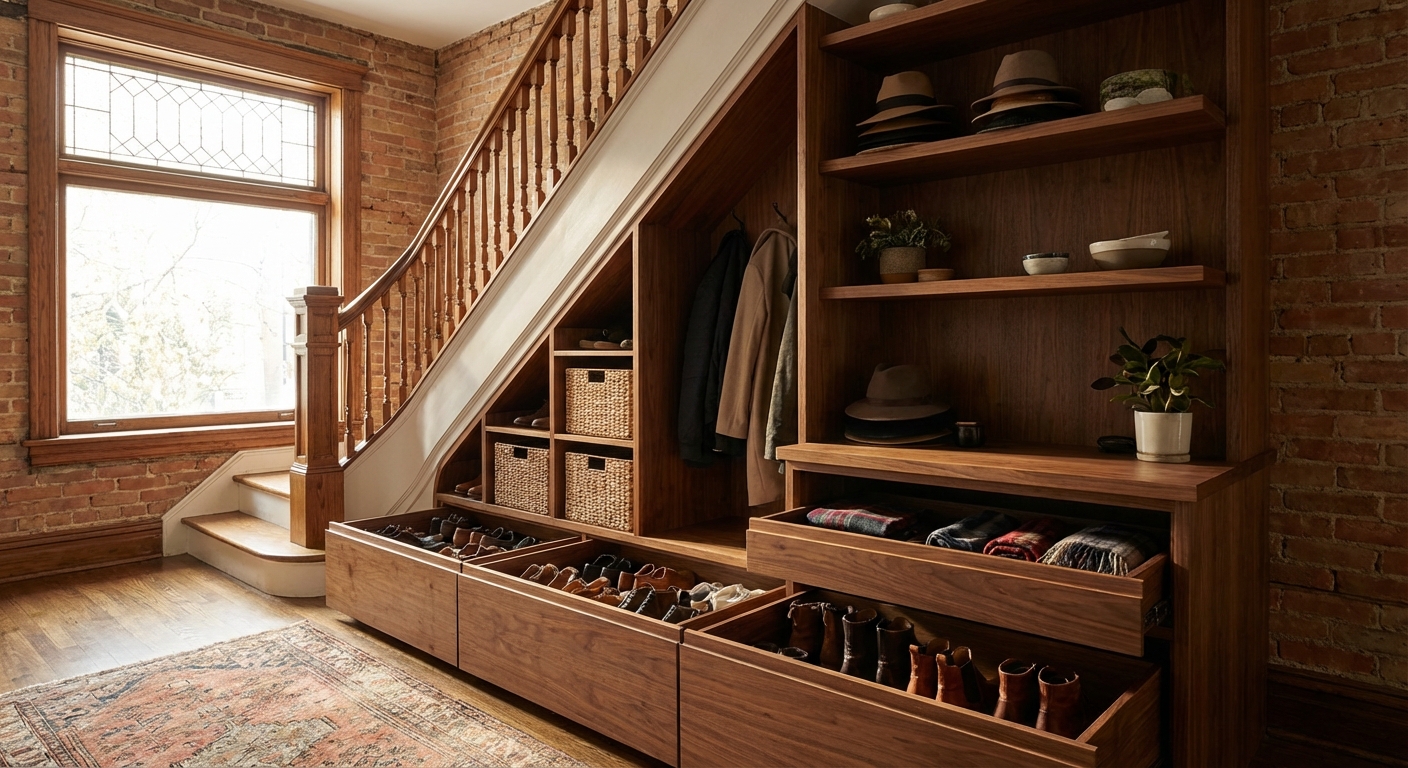
What makes this even trickier is the architecture of most Chicago homes. Vintage bungalows, greystones, and two-flats were built before the concept of a "mudroom" even existed. You get a narrow back hallway, a tiny vestibule, or — in condos — absolutely nothing between the front door and the living room. That's why I approach every project as a custom space-planning challenge, not just a cabinet installation. The goal is to build a system that works with the bones of your home, handles the worst of winter, and still looks like it belongs there. If you're dealing with an oddly shaped entry, our team's approach to custom built-ins for awkward spaces applies perfectly to mudroom design.
Mudroom Cabinet Styles That Work in Chicago Homes
Not every mudroom looks the same, and the style of cabinet you choose should match both your home's architecture and your family's daily habits. Over my 400+ storage projects, I've found that a few configurations consistently outperform the rest in Chicago homes. Here's what I recommend most often:
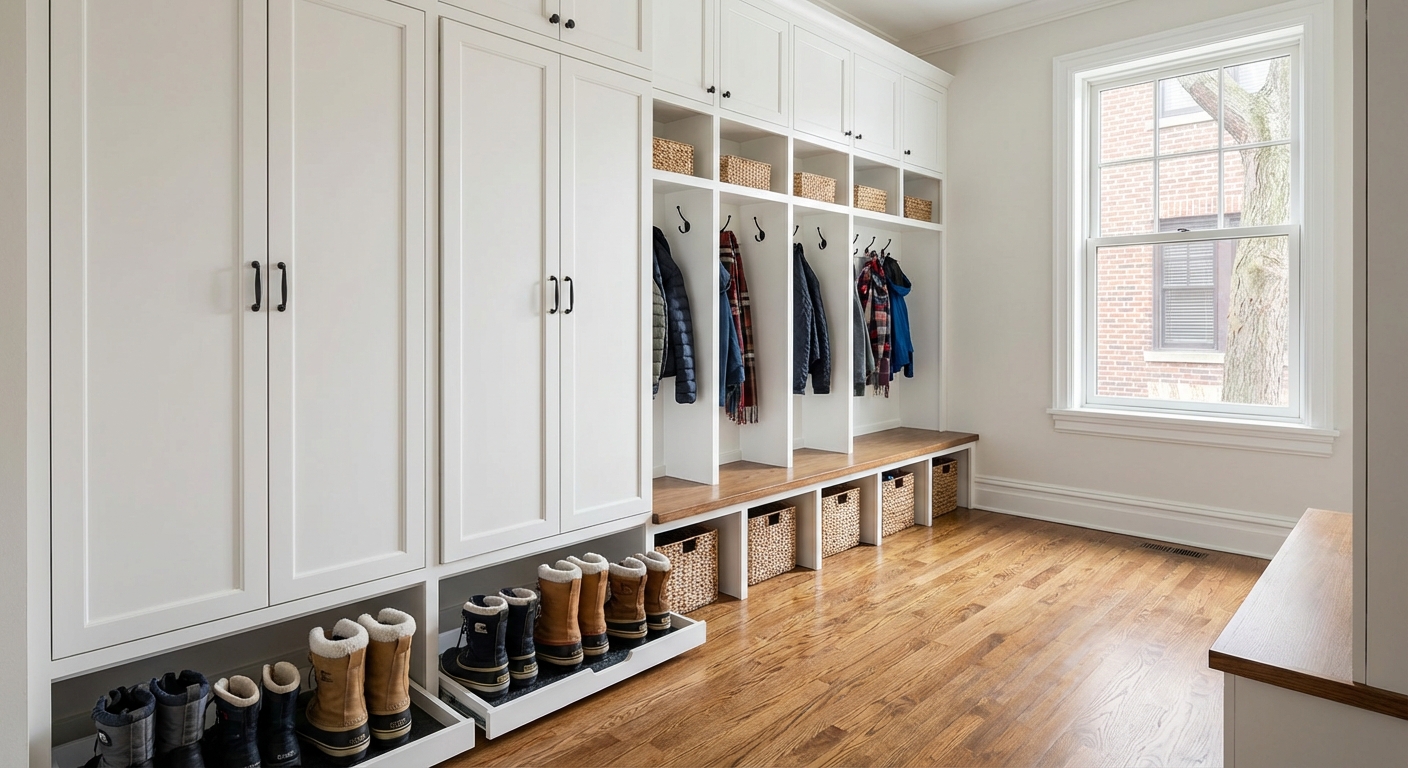
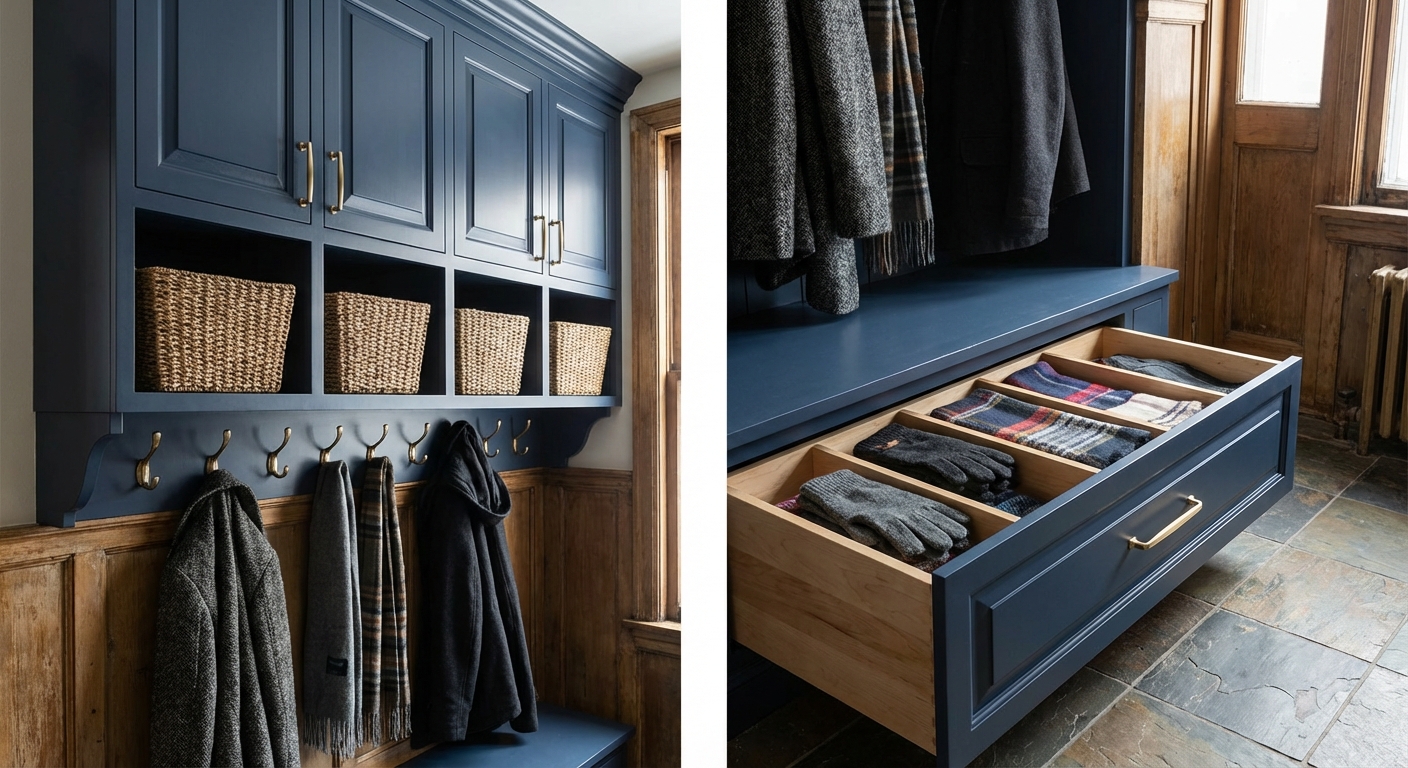
- Locker-Style Cubbies: Tall, open compartments — one per family member — with hooks at two heights, a shelf up top, and a bench or drawer below. Perfect for families with kids because everything is visible and accessible.
- Closed Upper / Open Lower: Closed cabinets on top for seasonal storage (think summer hats in winter, snow pants in July) with open hooks and cubbies below for everyday use. Great for keeping the entry looking clean.
- Full Built-In Wall: Floor-to-ceiling cabinetry that takes over an entire wall. Includes a combination of drawers, cabinets, hooks, and bench seating. Ideal when you have at least 6 linear feet of wall space.
- Corner Mudroom Systems: L-shaped designs that wrap around a corner near the back door. These are incredibly efficient in Chicago bungalows where the kitchen opens directly to the back entry.
- Mudroom Bench with Storage Below: A simpler option for condos — a built-in bench with pull-out drawers underneath and a row of hooks above. Takes up as little as 18 inches of depth.
The right style depends on how many people use the space, how much gear you're managing, and whether the mudroom also serves as a laundry pass-through or pet station. I've even designed mudrooms that double as drop zones for groceries — a lifesaver when you're hauling bags up the back stairs of a Lincoln Square walkup.
Materials That Survive a Chicago Winter
This is where mudroom storage cabinets differ dramatically from custom closets and wardrobe systems in a bedroom. Your closet stays dry and temperature-controlled. Your mudroom? It gets hit with moisture, road salt, temperature swings, and heavy daily use from October through April. I've seen painted MDF cabinets in unheated vestibules start swelling within a single season. That's why material selection is one of the first conversations I have with every client.
| Material | Moisture Resistance | Durability | Best For |
|---|---|---|---|
| Thermally Fused Laminate (TFL) | Excellent | High | Cabinet boxes, shelves, cubbies |
| Marine-Grade Plywood | Excellent | Very High | Bench tops, boot trays, base panels |
| Standard MDF | Poor | Moderate | Interior shelves in climate-controlled spaces only |
| Solid Hardwood | Moderate | High (with finish) | Bench seats, decorative trim, hook rails |
| PVC/Composite | Excellent | Moderate | Boot trays, drip pans, lower kick panels |
At AK Cabinet Craft, we use EGGER thermally fused laminates for most mudroom cabinet boxes because they resist moisture, hold up to daily abuse, and come in finishes that actually look good — not the cheap laminate you remember from a 1990s laundry room. For hardware, we rely on Blum soft-close hinges and drawer systems because they handle the constant open-close-slam cycle that comes with kids, backpacks, and people who are always running late. Every cabinet we build also comes with our 5-year warranty, which gives you peace of mind that your investment will last well beyond a single Chicago winter.
Need expert advice? Call (224) 808-5100 or schedule a free mudroom design consultation.
Smart Features That Make a Chicago Mudroom Actually Work
Cabinets are just the structure — it's the interior features that turn a mudroom from a glorified coat rack into a system that keeps your mornings sane. Here are the features I build into almost every mudroom project, and each one earns its spot by solving a real, everyday Chicago problem:
- Ventilated boot trays: Pull-out trays with slotted bottoms let melted snow drain instead of pooling. I position them over a removable drip pan so cleanup takes seconds.
- Double-height hooks: Adult hooks at 60 inches, kid hooks at 36 inches. As kids grow, we can easily move the lower hooks up.
- Heated base panels: For clients with unheated back entries, I can integrate a low-wattage heating mat behind the kick panel. This keeps the base warm enough to speed up boot drying without running up your energy bill.
- Charging drawer: A shallow drawer with a built-in power strip for phones, earbuds, and tablets. Keeps devices off the counter and charged before you head out.
- Pet station: A lower cabinet section with a pull-out bin for leashes, waste bags, and treats. I've even added retractable leash hooks for homes with multiple dogs.
- Seasonal swap shelves: Adjustable upper shelves that let you rotate winter and summer gear without cramming everything into one space year-round.
These details might sound small, but when you're wrangling three kids out the door at 7:30 AM during a polar vortex, having a dedicated spot for every glove, hat, and zipper pouch is the difference between a 5-minute exit and a 20-minute meltdown. Function first — always.
Design Ideas by Chicago Home Type
Chicago's housing stock is wildly varied, and that's what makes this work so interesting. A mudroom solution for a sprawling Norwood Park colonial looks nothing like what works in a Wicker Park condo. Here's how I approach each common home type:
| Home Type | Typical Entry Space | Recommended Design | Estimated Cost |
|---|---|---|---|
| Chicago Bungalow | Back hallway, 5-7 ft wide | L-shaped built-in with bench and upper cabinets | $6,000–$9,000 |
| Greystone Two-Flat | Narrow vestibule, 3-4 ft wide | Slim wall-mounted cubbies with fold-down bench | $4,500–$7,000 |
| Lincoln Park Condo | Entry hallway, 4-5 ft wide | Single-wall locker system with closed upper storage | $5,000–$8,000 |
| Suburban-Style Single Family | Dedicated mudroom, 8-12 ft | Full built-in wall with laundry integration | $8,000–$12,000 |
| Vintage Two-Flat (Owner Unit) | Back porch or enclosed entry | Freestanding-look built-ins with moisture-proof base | $5,500–$9,500 |
For greystone and two-flat owners specifically, I always recommend keeping the lower 6 inches of cabinetry completely sealed or built from composite material. Salt and snowmelt track in constantly during winter, and that base section takes the worst of it. It's a small detail in the design phase that prevents big headaches three years down the road. At AK Cabinet Craft, our team has completed 1,300+ projects across nearly every Chicago neighborhood, so chances are I've already worked in a home with a layout very similar to yours.
Mudroom Storage Meets the Rest of Your Home
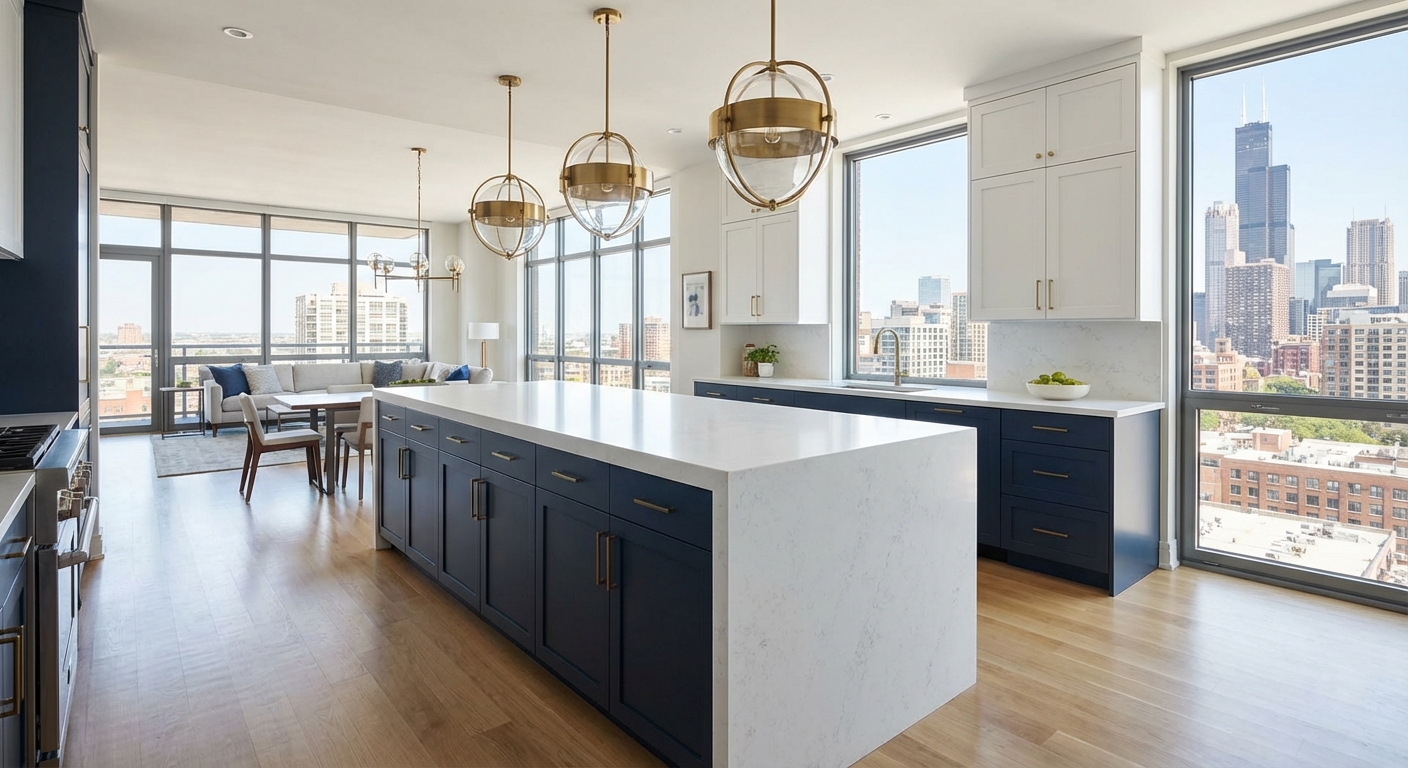
One thing I always tell clients: your mudroom shouldn't feel like an afterthought bolted onto the back of your house. The cabinet finishes, hardware, and design language should connect to the rest of your home. If your kitchen features shaker-style doors in a warm greige, carrying that same profile into the mudroom creates visual flow — especially in open floor plans where you can see both spaces at once. This is one of the advantages of working with a single shop for custom cabinets for any room in your home.
I've had several clients start with a mudroom project and then realize they want matching custom bathroom vanities or updated kitchen storage using the same material palette. Because we manufacture everything in our own shop with a 21-day production timeline, we can match finishes precisely across different rooms and different project phases. No guessing whether the "white" from one vendor matches the "white" from another. Understanding standard cabinet dimensions also helps when you want mudroom cubbies to align visually with adjacent kitchen cabinetry — consistency in heights and proportions makes the whole home feel intentional.
2026 Mudroom Trends I'm Seeing in Chicago
Design trends come and go, but the ones I'm most excited about for 2026 are rooted in function, not just aesthetics. First, I'm seeing a major shift toward darker cabinet colors in mudrooms — deep navy, forest green, and charcoal — because they hide scuffs and dirt far better than all-white designs. Clients are finally embracing the reality that a mudroom is a working space, and darker tones look better longer between deep cleans.
Second, integrated pet stations are no longer a niche request. In the last year alone, at least 60% of my mudroom clients have asked for some form of pet organization — whether it's a built-in feeding station, a leash drawer, or a lower compartment with a washable liner for muddy paws. Third, there's growing demand for flexible family command centers built into the mudroom wall — a small corkboard panel, a mail slot, and a key drawer right at the entry point. It's the modern version of the kitchen bulletin board, and it keeps clutter from migrating deeper into the house.
Finally, sustainable materials are gaining traction. Clients increasingly ask about low-emission laminates and responsibly sourced plywood, which aligns with guidelines from organizations like the National Kitchen and Bath Association. I'm happy to walk through material certifications during any consultation.
Frequently Asked Questions
How long does it take to design and install custom mudroom storage cabinets?
From our first meeting to completed installation, most mudroom projects take 4 to 6 weeks. The design and measurement phase is usually about a week, production takes 21 days in our shop, and installation is typically done in a single day for standard configurations. More complex builds with electrical (like charging drawers or heated panels) may add a couple of days.
Can you build a mudroom in a condo that doesn't have a dedicated entry space?
Absolutely — I do this all the time. In Chicago condos, I often create a "mudroom zone" along the entry hallway using a slim built-in system that's only 12 to 16 inches deep. It won't have a full bench, but it can include hooks, cubbies, a narrow drawer for keys and mail, and a low boot tray. It defines the entry without eating up your living space.
What's the best way to handle wet boots and snow gear without damaging cabinets?
I design every mudroom with moisture management in mind. That means sealed base panels, removable drip trays beneath boot storage, and ventilated compartments that promote airflow. I also recommend thermally fused laminate for all surfaces below 24 inches because it won't swell or warp the way raw MDF does when exposed to repeated moisture.
Do mudroom cabinets increase home value?
In Chicago's market, yes. Buyers consistently list organized storage as a top priority, and a well-built mudroom signals that the home is designed for real life — not just staged for photos. While exact ROI varies, I've seen custom mudroom projects recoup 70% to 85% of their cost at resale, especially in family-oriented neighborhoods like Lincoln Square, Beverly, and Edison Park.
Can I match my mudroom cabinets to my existing kitchen?
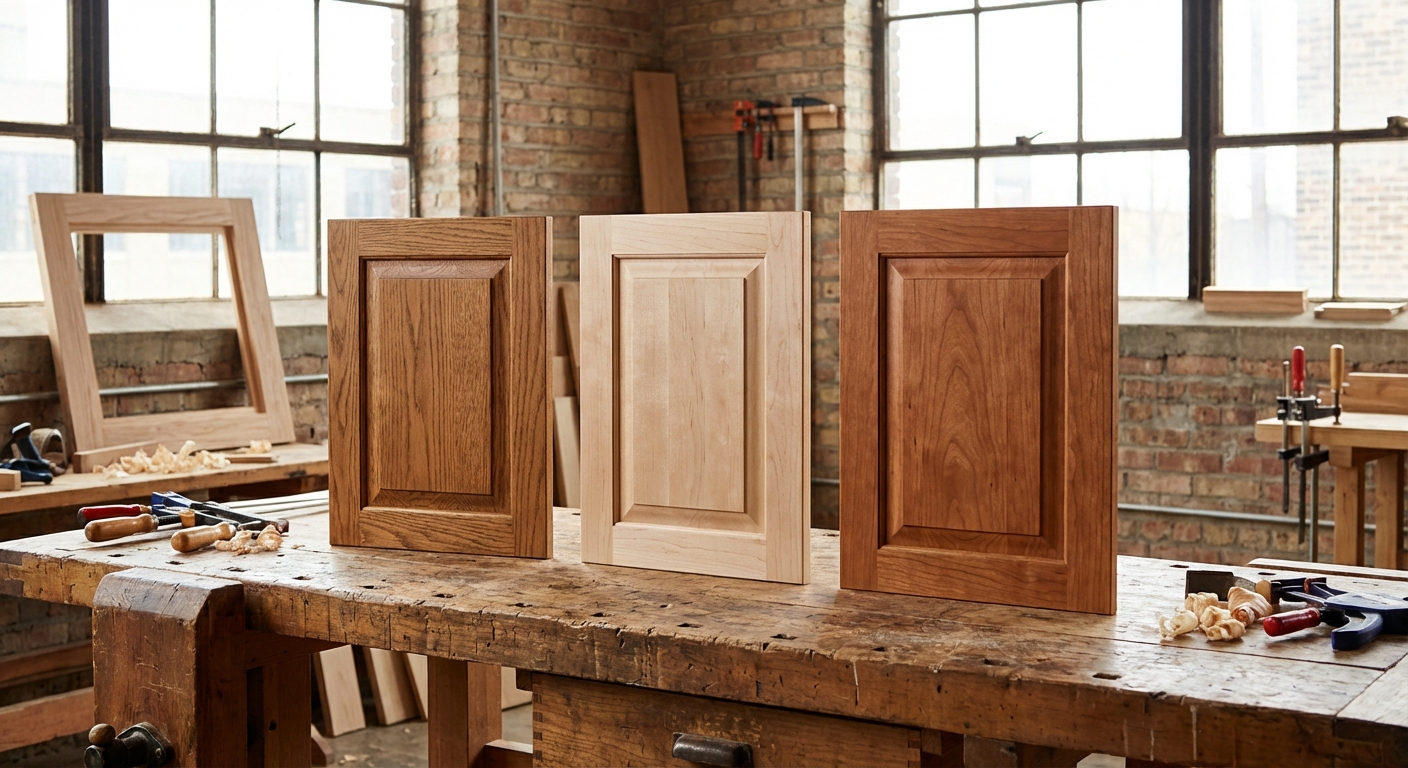
Yes, and I strongly encourage it. Because we manufacture all cabinetry in-house, I can match door profiles, finishes, and hardware exactly. If you already have custom kitchen cabinets from our shop, I can pull your original specifications and replicate them precisely. If your kitchen was built by someone else, I'll bring samples to your home and get as close a match as possible.
Ready to Get Started?
If your Chicago entryway is losing the battle against winter, let's fix that. I'd love to walk through your space, talk about how your family actually uses the entry, and design mudroom storage cabinets that make every morning a little less chaotic. Schedule a free mudroom design consultation or call (224) 808-5100 — I'll bring ideas specific to your home type, your family size, and your budget.