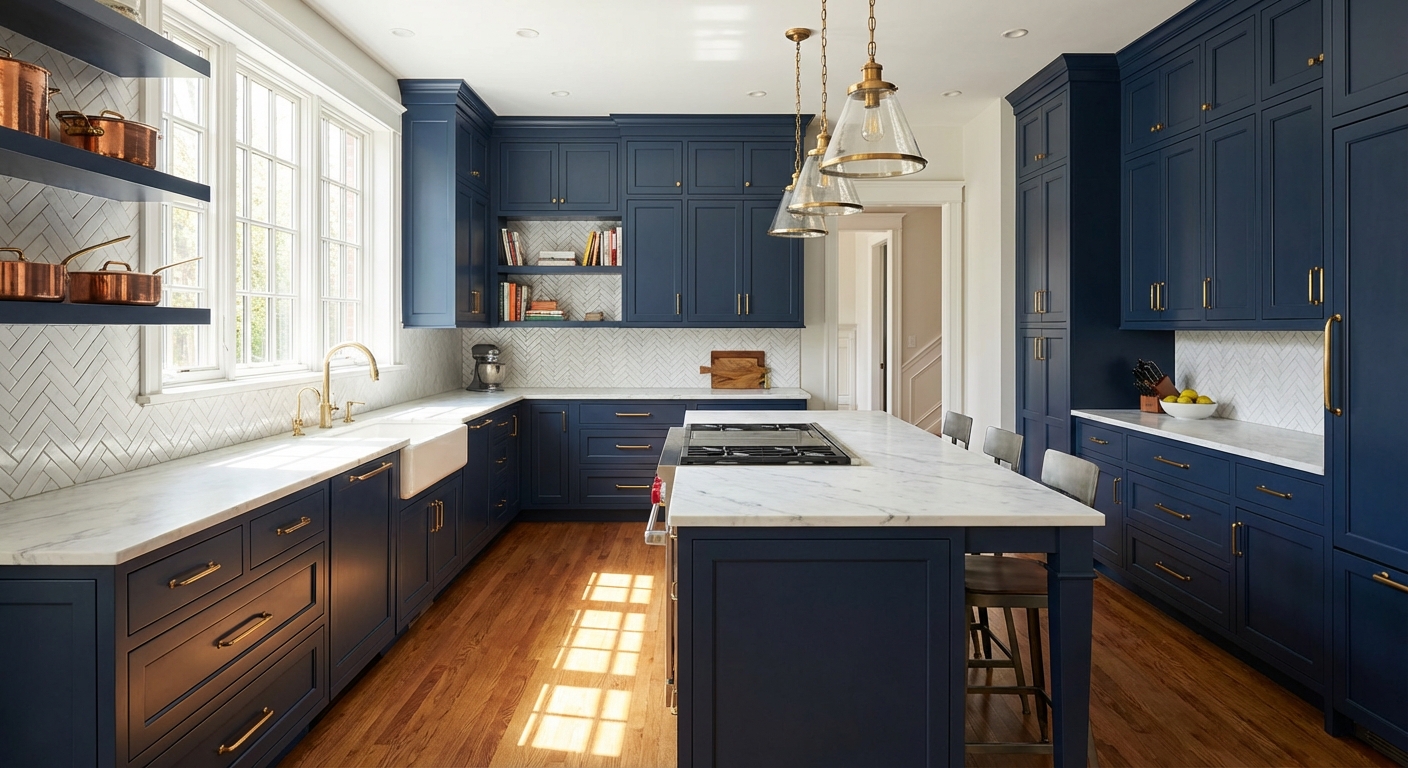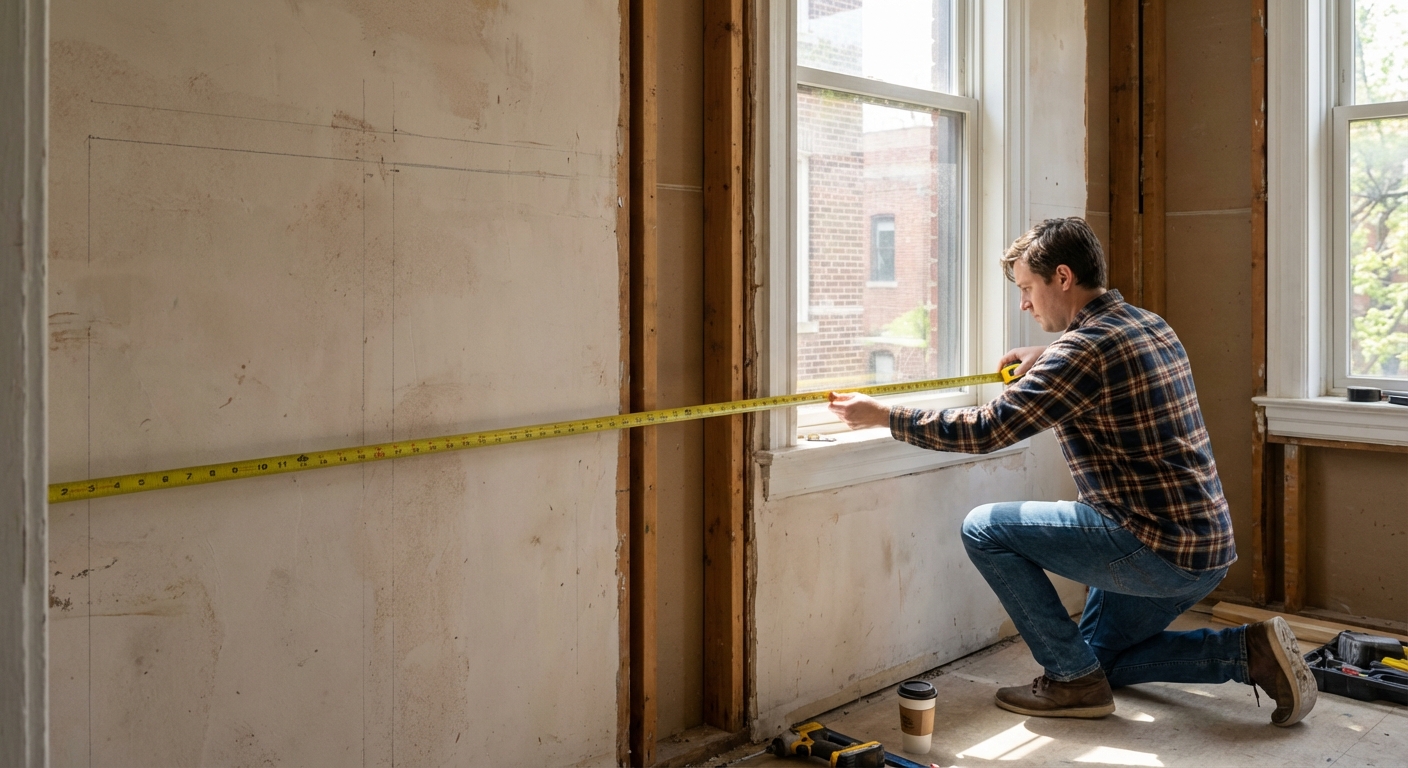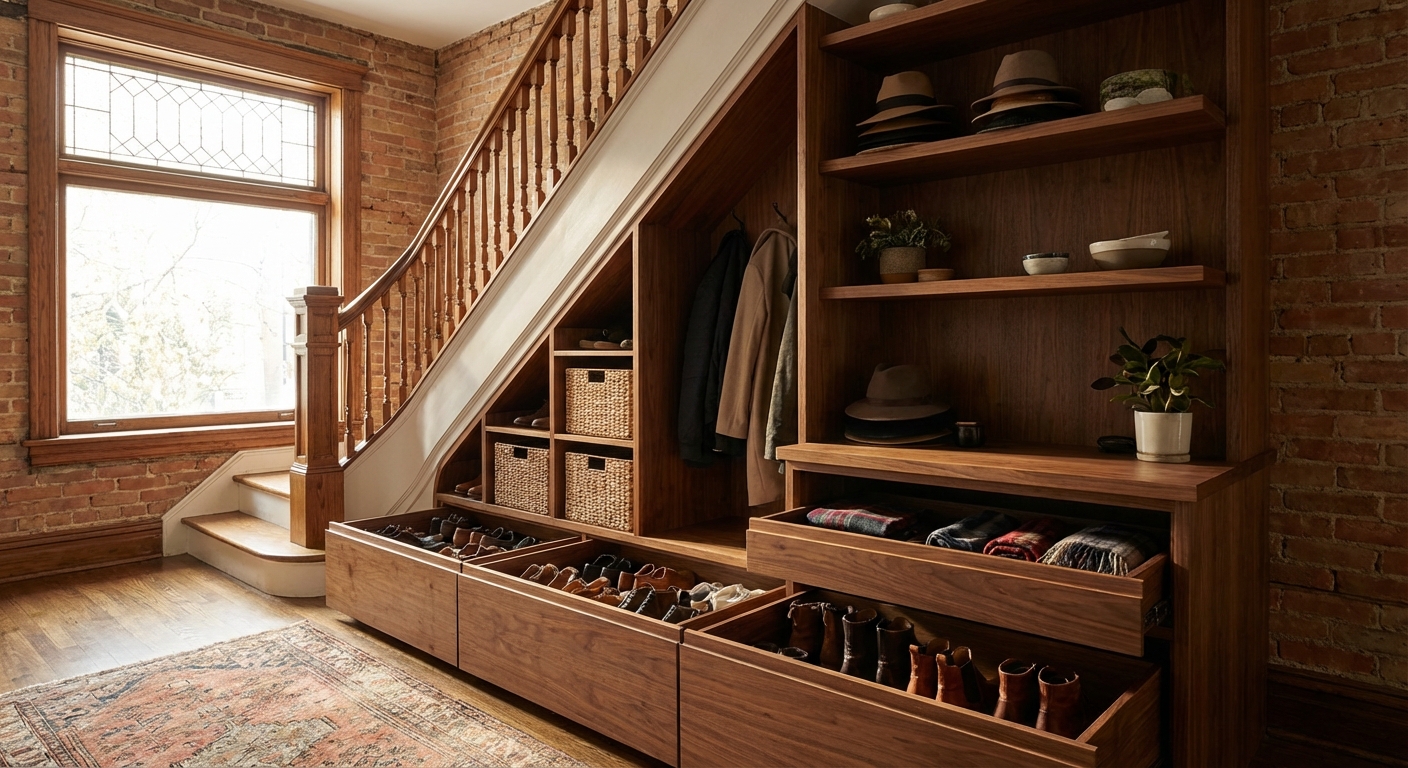
A few weeks ago, I visited a young family in a Ravenswood two-flat who had been stuffing winter gear, strollers, and tool bags into a narrow hall closet that was already bursting at the seams. Meanwhile, the space under their front staircase — roughly 42 square feet of usable volume — sat completely walled off behind drywall, doing absolutely nothing. We opened it up, designed a system of pull-out drawers and cabinets, and gave them back storage they didn't even know they had. That project changed how I think about every staircase I see in Chicago.
Key Takeaways
- Under-stair spaces in typical Chicago homes yield 30 to 55 square feet of usable storage volume
- Pull-out drawers, hinged cabinets, and hybrid designs each serve different lifestyle needs
- Chicago greystones, two-flats, bungalows, and condos each present unique staircase configurations
- Custom under-stair cabinets typically cost between $3,500 and $9,000 depending on complexity
- Quality hardware like Blum soft-close mechanisms ensures under-stair drawers glide smoothly for years
Why Under-Stair Storage Makes Sense in Chicago
Every week I walk into a Chicago home where the storage situation is genuinely dire. Maybe the condo has one coat closet for a family of four, or the bungalow's single-floor layout leaves no room for a proper mudroom. Chicago homes — especially those built before 1950 — were designed in an era when people simply owned fewer things. Today we're asking those same footprints to hold bikes, boots, holiday decorations, sports equipment, and a full home office setup. The dead space under a staircase is often the single biggest untapped storage opportunity in these homes.
What makes under-stair storage particularly valuable here is our climate. We cycle through heavy coats, snow boots, rain gear, and summer accessories every single year, and all of that needs a home. A well-designed under-stair cabinet system can hold an entire season's worth of outerwear, freeing up closets for everyday items. I've seen under-stair projects add the equivalent storage of an entire 4-foot-wide reach-in closet — sometimes more. And because the space already exists, you're not stealing square footage from any room.
Under-Stair Storage Ideas by Chicago Home Type
Not every staircase is the same, and Chicago's architectural diversity means I approach each project differently. A greystone's grand front staircase offers deep triangular cavities that work beautifully for tall shoe cabinets and coat storage. Bungalow basements, on the other hand, often have low-headroom stairs where shallow pull-out trays make the most of tight angles. Two-flats typically feature interior staircases between units, creating opportunities for storage on both sides of the wall if both owners cooperate. Even modern condos with floating or open-riser designs can incorporate discreet cabinets beneath if the framing allows it.
| Chicago Home Type | Typical Under-Stair Depth | Best Storage Approach | Estimated Usable Volume |
|---|---|---|---|
| Greystone | 24–36 inches | Deep pull-out drawers + tall cabinet at high end | 40–55 sq ft |
| Bungalow (basement) | 18–28 inches | Shallow sliding trays + low-profile cubbies | 25–35 sq ft |
| Two-Flat | 22–32 inches | Combination drawers + hinged cabinet doors | 35–50 sq ft |
| Modern Condo | 20–30 inches | Minimalist flat-panel doors + internal organizers | 30–45 sq ft |
I always start by measuring the stair angle, the depth at each tread, and the ceiling height at the tallest point. Those three measurements dictate everything. For our team at AK Cabinet Craft, this kind of precision work is second nature — we've completed 1,300+ projects across the Chicago area, and a good portion involve solving exactly these kinds of spatial puzzles.
Pull-Out Drawer Systems: The Workhorse Design
If I had to pick one under-stair configuration that works in the widest range of homes, it's the graduated pull-out drawer system. Picture this: the tallest section near the bottom of the staircase gets 3 to 4 full-depth drawers stacked vertically, then as the ceiling slopes down, the drawers get progressively shorter. The smallest drawers at the tapered end are perfect for gloves, scarves, pet leashes, and all those small items that otherwise end up in a junk drawer. Blum TANDEMBOX drawer runners handle the weight beautifully, even in deep configurations where a single drawer might hold 40+ pounds of winter boots.
One of my favorite recent installations was for a couple in Wicker Park who wanted seasonal rotation storage. We built six graduated drawers on full-extension runners, labeled by season. When October hits, they simply swap their summer drawer contents with what's in the basement bins. The whole system is built from moisture-resistant EGGER laminate panels, which matters in Chicago entryways where wet boots and slushy shoes are a daily reality from November through March. Pull-out drawers also keep everything visible — no digging into dark corners wondering where you put the ice scraper.
Need expert advice? Call (224) 808-5100 or schedule a free storage design consultation.
Hinged Cabinet Doors with Internal Organizers
For homeowners who want a cleaner, more furniture-like look, I often recommend hinged cabinet doors that follow the stair angle. This approach works especially well in living rooms and dining areas where exposed drawers might feel too utilitarian. Behind the doors, we install adjustable shelving, pull-out bins, or custom dividers depending on what you're storing. I designed a system like this in a Lincoln Square bungalow last year where the under-stair cabinet looked like a built-in sideboard — guests had no idea it held an entire collection of board games, craft supplies, and holiday serving ware.
The key to making hinged doors work under stairs is getting the door height transitions right. I typically break the run into 3 to 5 individual door panels, each stepping down in height to follow the stair slope. Soft-close hinges from Blum are non-negotiable here because the doors get opened and shut dozens of times a day in high-traffic areas. Interior lighting is another detail that makes a huge difference — a simple LED strip on a door-activated switch means you're never fumbling in a dark cavity. If you're considering this style and also need custom closet and wardrobe systems elsewhere in the home, we can match finishes and hardware across every space for a cohesive look.
Creative Multi-Function Under-Stair Designs
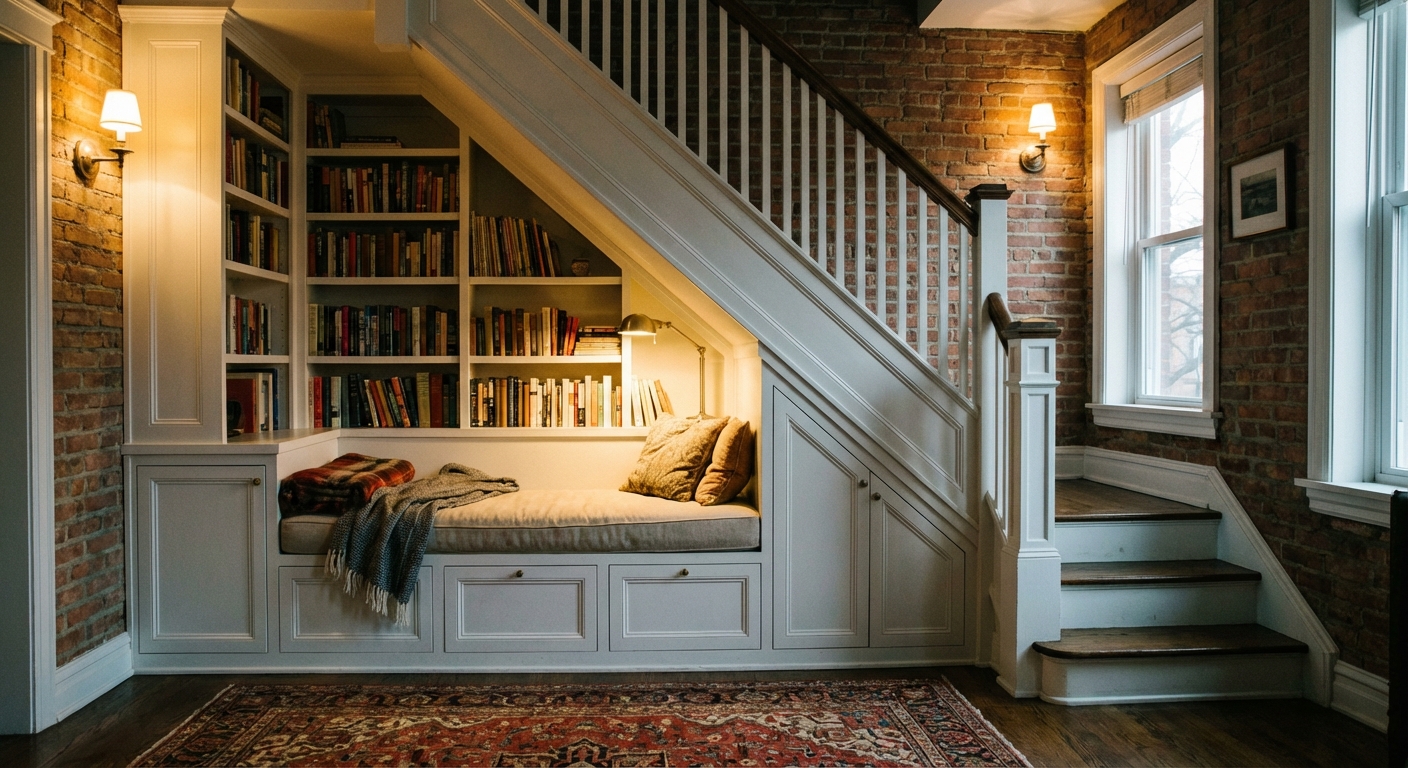
Storage doesn't have to be the only function. Some of my most satisfying projects combine cabinets with a reading nook, a pet station, or a mini home office. In one Andersonville condo, we built a small desk surface at the tall end of the staircase, with file drawers below and open shelving for books as the ceiling tapered. The homeowner works from home two days a week and didn't have room for a dedicated office — this gave her a functional workspace in under 18 square feet of floor area. Below the desk, we tucked a small printer shelf and a charging drawer with built-in power outlets.
Another popular combination is a mudroom station with under-stair cabinets. Think hooks for coats at the tall end, a small bench with shoe storage drawers underneath, and closed cabinets for cleaning supplies at the tapered end. For families with dogs, I've designed pull-out feeding stations and leash organizers into the lowest sections. These multi-function designs often require the same careful custom built-in approach we use for awkward spaces throughout Chicago homes. The key is mapping out your daily routine and designing the system around how you actually move through the space.
Materials and Hardware That Last
Under-stair cabinets take a beating, especially near entryways where moisture, salt, and temperature swings are part of daily life in Chicago. I always recommend 3/4-inch plywood carcasses over particleboard for structural integrity, particularly for pull-out drawer systems that bear heavy loads. For door and drawer fronts, thermofoil and high-pressure laminate offer excellent moisture resistance at a reasonable price point, while painted MDF delivers a more traditional look. If the under-stair area connects to your kitchen or living space, we can match the cabinetry to your existing custom cabinets for a seamless transition.
| Material | Moisture Resistance | Cost Range (per linear ft) | Best Application |
|---|---|---|---|
| Plywood + Laminate | Excellent | $180–$280 | Entryway and mudroom areas |
| Plywood + Painted MDF | Good | $200–$320 | Living rooms, visible spaces |
| Plywood + Thermofoil | Very Good | $160–$250 | Basement stair storage |
| Plywood + Wood Veneer | Moderate | $250–$400 | High-end visible installations |
Hardware selection matters just as much as the box materials. Full-extension, soft-close drawer runners ensure you can access the entire depth of each drawer without it slamming shut. Blum CLIP top hinges for cabinet doors provide smooth, tool-free adjustment that I can fine-tune during installation. Every under-stair project we build at AK Cabinet Craft comes with our 5-year warranty, covering both materials and hardware. Our standard 21-day production timeline means your project moves from design to installation faster than most homeowners expect.
Design Tips for Maximizing Every Inch
After designing dozens of under-stair systems, I've learned a few tricks that make the difference between "nice storage" and "life-changing storage." First, always plan for the future — if you're storing baby gear now, those drawers will hold sports equipment in five years, so make them adjustable. Second, don't ignore the very lowest section of the stair taper, even if it's only 6 to 8 inches tall. That sliver is perfect for flat items like serving trays, baking sheets, or wrapping paper rolls. Third, consider ventilation if you're storing shoes or sports gear — a few discreet vent holes or a mesh-backed panel prevents moisture buildup and odors.
- Measure three times: Stair angles are rarely perfectly consistent — take measurements at every tread
- Use the full depth: Don't stop at the visible opening; the cavity often extends further behind the drywall
- Add interior lighting: Battery-operated or hardwired LED strips eliminate dark corners
- Label or zone your sections: Dedicate drawers to specific categories (shoes, seasonal, pet, sports)
- Think vertical at the tall end: The highest section can fit a narrow broom closet or vacuum nook
If your home also has tight kitchen cabinet dimensions or undersized bathroom storage, the same precision-first approach applies everywhere. I often work with clients on multiple rooms in a single project, which lets us coordinate materials and keep the overall cost lower. Whether you need custom bathroom vanities or a complete custom kitchen cabinet redesign alongside your under-stair project, we handle everything under one roof.
Frequently Asked Questions
How much do under-stair storage cabinets cost in Chicago?
Based on our projects, most under-stair cabinet systems run between $3,500 and $9,000 depending on the size of the space, materials chosen, and complexity of the design. A simple hinged-door system with basic shelving falls at the lower end, while a full pull-out drawer system with custom organizers, lighting, and premium finishes reaches the higher range. I always provide a detailed quote after measuring your specific staircase.
Can you add under-stair storage without damaging the staircase structure?
Yes, in most cases. I work with your existing framing and never compromise structural integrity. We access the cavity by removing drywall or paneling on the accessible side, then build the cabinet system to fit within the existing framework. In older Chicago homes, I occasionally find original lathe-and-plaster walls that require a bit more care during demo, but the staircase stringers and treads themselves are left completely untouched.
How long does an under-stair storage project take from start to finish?
From our initial measurement visit to completed installation, most projects take 4 to 6 weeks. That includes the design consultation, material selection, our 21-day production cycle, and a 1 to 2 day on-site installation. More complex multi-function designs with electrical work for lighting or outlets may add a few days.
What if my staircase has an irregular angle or curved wall?
Irregular angles are the norm in Chicago's older homes, not the exception. I use digital templating to capture the exact geometry of your stair cavity, and our shop builds each piece to match those precise measurements. Curved walls require additional templating but are absolutely doable — we've handled everything from rounded greystone foyer walls to angled basement stairwells.
Can under-stair cabinets be designed to match my existing cabinetry?
Absolutely. We can match door styles, finishes, and hardware to your existing kitchen or bathroom cabinetry so the under-stair storage looks like it was always part of the home. If you're planning a broader renovation, designing all your cabinetry at once ensures a perfect match and often saves on material costs.
Ready to Get Started?
That dead space under your staircase isn't dead — it's waiting. Whether you need pull-out drawers for a greystone entryway or a full mudroom station in your two-flat, I'd love to help you design a system that works for your home and your routine. Reach out to schedule a free storage design consultation or call (224) 808-5100 and let's talk about what's possible under your stairs.