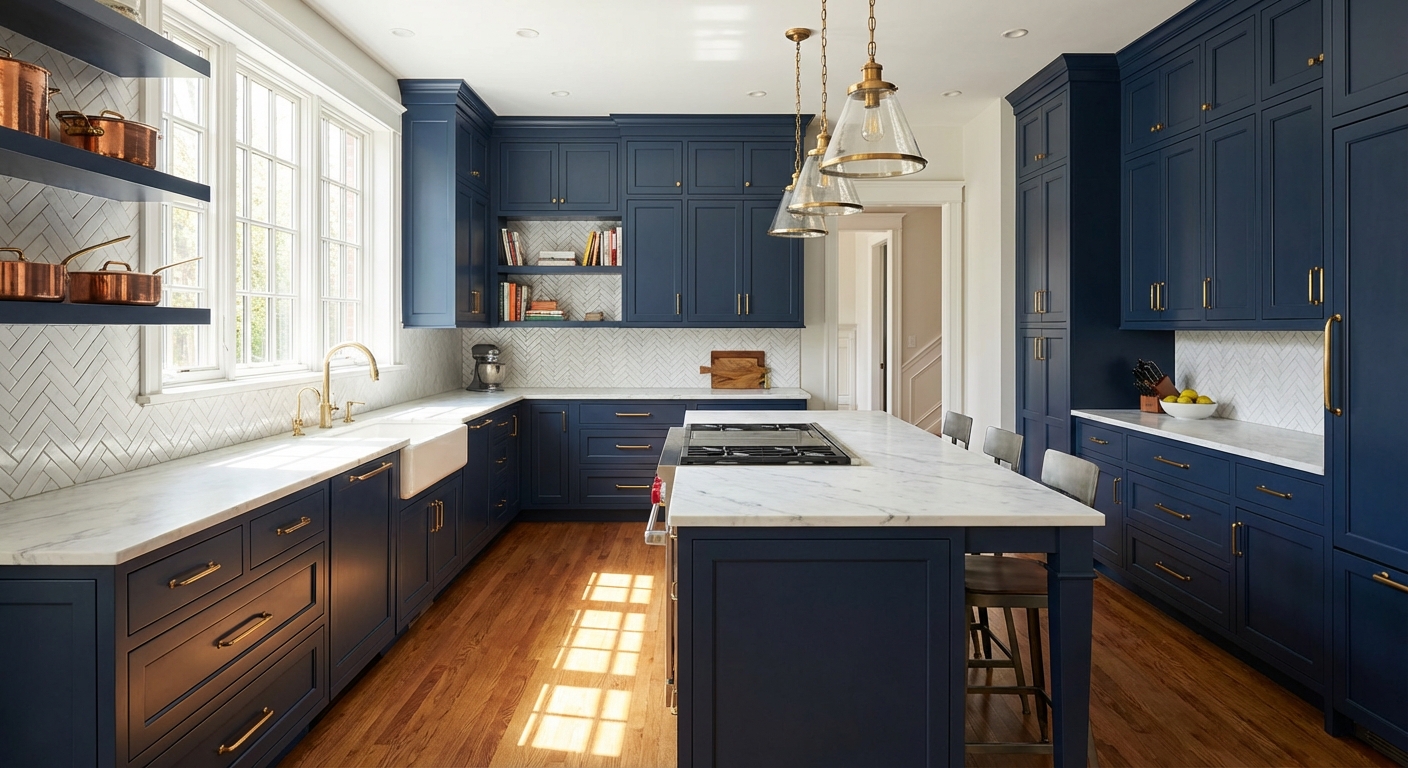
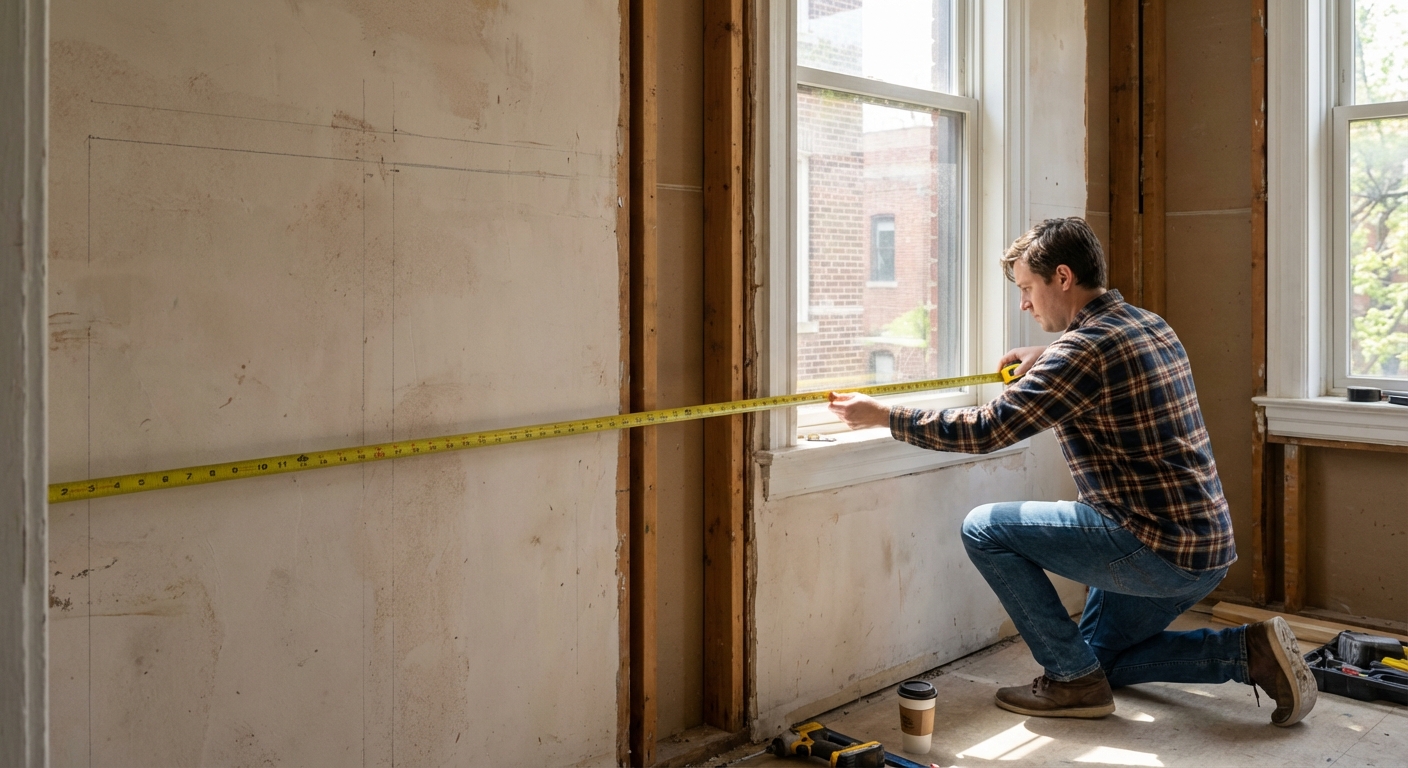
After examining hundreds of failed cabinet installations across Chicago, I can tell you that material choice matters more here than almost anywhere else. Our city throws everything at your cabinets: 90°F summers with 80% humidity, bone-dry winters when indoor humidity drops to 15%, and temperature swings of 50 degrees in a single week. Both thermofoil and wood veneer have their place, but choosing wrong means premature replacement.
What Makes Chicago's Climate So Hard on Cabinets
Chicago homes experience what I call the "humidity rollercoaster." In summer, moisture from Lake Michigan pushes indoor humidity to 60-70%. Come January, your furnace runs constantly, dropping humidity to 15-25%. This 40-50% annual swing causes materials to expand and contract repeatedly.
I've measured cabinet surfaces near dishwashers reaching 140°F during dry cycles. Above stovetops, temperatures spike during cooking while steam creates localized humidity pockets. These microclimates within your kitchen stress materials differently than ambient room conditions.
Thermofoil Explained: Construction and Properties
Thermofoil cabinets use MDF (medium-density fiberboard) cores wrapped with vinyl film heated to 300°F during application. The vinyl bonds to all surfaces including edges, creating a seamless, non-porous finish. Standard thermofoil thickness runs 0.5-1.0mm.
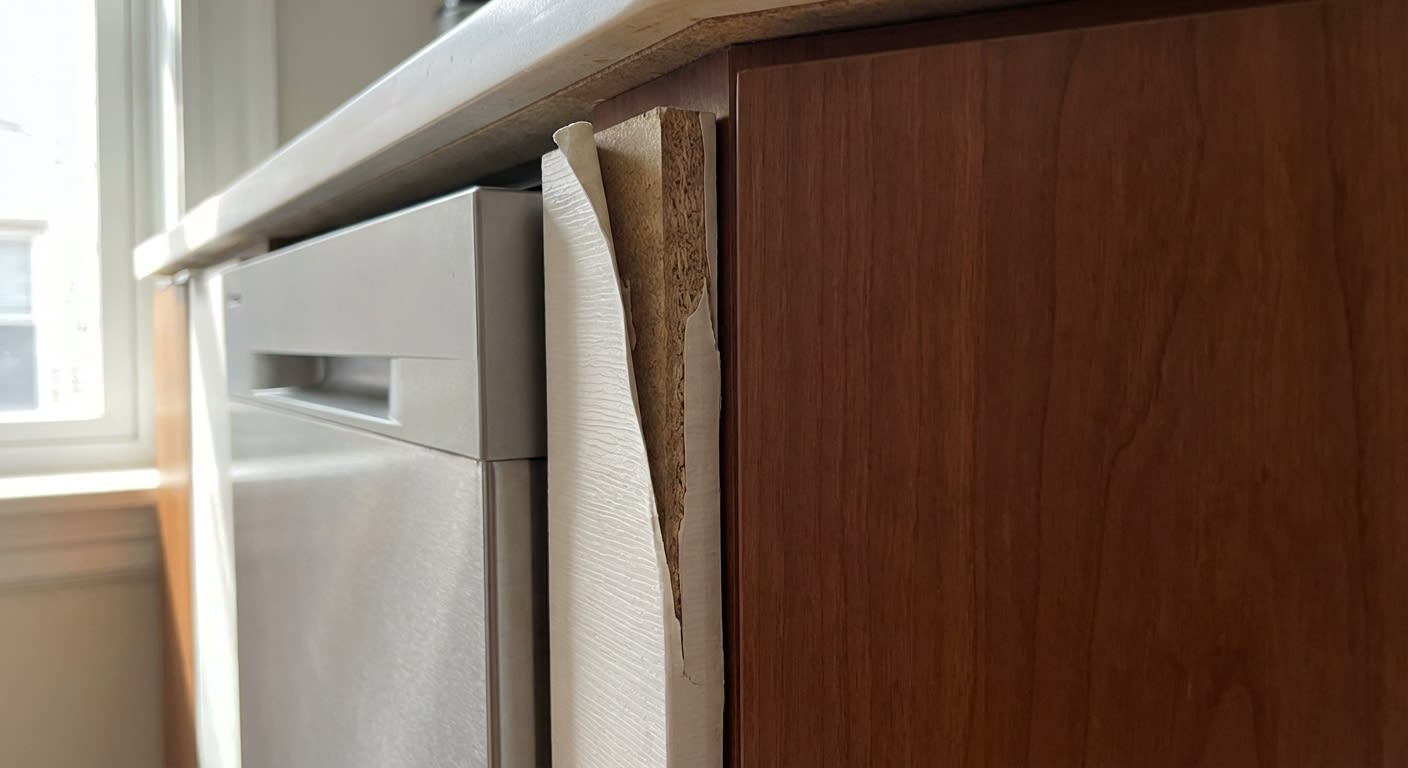
The material resists moisture penetration when intact. However, the bond between vinyl and MDF has a critical weakness: heat. At temperatures above 150°F, the adhesive softens. I've seen thermofoil separate from MDF cores positioned too close to ovens or coffee makers that vent steam upward.
Wood Veneer Construction: What You're Actually Buying
Wood veneer consists of thin real wood slices (typically 1/42" thick) adhered to plywood, MDF, or particleboard substrates. Quality varies enormously. Premium veneers use rotary-cut or plain-sliced hardwoods on multi-ply cores. Budget versions use paper-backed veneers on particleboard.
The finish matters as much as the wood itself. Conversion varnish finishes penetrate and seal the veneer, providing moisture resistance comparable to solid wood. Catalyzed lacquers offer similar protection. Cheap pre-finished veneers with thin topcoats fail faster in high-humidity environments.
Durability Performance: My Observations from 1,300+ Projects
Thermofoil cabinets installed away from heat sources typically last 15-20 years in Chicago homes without delamination. The failures I see cluster around dishwashers, ovens, and south-facing windows with direct sun exposure. Once peeling starts, it spreads. You cannot re-wrap thermofoil; the door requires replacement.
Wood veneer with proper finishing handles humidity fluctuations better because wood naturally absorbs and releases moisture. However, veneer over particleboard substrates swells at edges when exposed to water. Plywood-core veneer cabinets I installed in the early 2000s still look excellent today.
Have questions? Call me at (224) 808-5100
Heat Resistance: The Critical Difference
This is where thermofoil loses every time. Sustained temperatures above 150°F cause irreversible damage. I tested cabinet surfaces in a Lincoln Park kitchen: the door directly above a commercial-style range measured 165°F during normal cooking. That homeowner's thermofoil peeled within 18 months.
Wood veneer tolerates heat far better. The finish may yellow slightly over years of exposure, but the material remains structurally sound. For cabinets flanking ranges or above built-in coffee systems, I always recommend veneer or solid wood.
Moisture and Humidity: A More Nuanced Picture
Thermofoil's sealed surface repels water better initially. Spills wipe away without absorption. But Chicago's humidity cycling creates a different problem: the MDF core absorbs moisture through any imperfection in the vinyl wrap—screw holes, hinge mounting points, edge chips. Once moisture enters, MDF swells and never fully recovers.
Wood veneer breathes. It absorbs humidity in summer and releases it in winter, naturally cycling with your home. Quality veneer on plywood substrates handles this gracefully. The key is proper sealing of all surfaces, including cabinet interiors and edges.
Repair and Refinishing Options
Thermofoil cannot be repaired or refinished. A chip or peel means door replacement. Matching colors on older thermofoil proves difficult because vinyl fades and manufacturers discontinue colors. I've seen homeowners replace entire cabinet sets because four damaged doors couldn't be matched.
Wood veneer accepts repairs. Minor scratches buff out. Deeper damage can be filled and touched up. Complete refinishing lets you change colors entirely. I refinished 1980s oak veneer cabinets in a Lakeview condo last year, transforming them with dark walnut stain for under $3,000—a fraction of replacement cost.
Cost Comparison: Initial and Lifetime
Thermofoil costs 20-40% less upfront. A typical Chicago kitchen runs $4,500-8,000 for thermofoil versus $7,000-14,000 for quality wood veneer. However, thermofoil's shorter lifespan and inability to be refinished change the math over 25 years.
- Thermofoil 25-year cost: Initial $6,000 + replacement at year 15 ($8,000) = $14,000
- Wood veneer 25-year cost: Initial $10,000 + refinish at year 12 ($2,500) = $12,500
Premium wood veneer on plywood actually costs less over a home's lifetime when you factor in durability and refinishing capability.
My Recommendations by Kitchen Zone
I advise clients to think in zones rather than choosing one material for everything:
- Above range and oven: Wood veneer only, no exceptions
- Flanking dishwasher: Wood veneer on plywood core preferred
- Pantry and upper cabinets away from heat: Thermofoil acceptable
- Bathroom vanities: Wood veneer—steam exposure too intense for thermofoil
- Basement or laundry: Thermofoil works well in stable temperatures
Frequently Asked Questions
Can thermofoil cabinets be painted if they start looking dated?
Technically yes, but I don't recommend it. Paint adheres poorly to vinyl surfaces and chips easily. The prep work required—scuffing, priming with bonding primer, multiple coats—costs nearly as much as replacement doors.
Which material holds up better near windows with direct sunlight?
Wood veneer handles UV exposure better. Thermofoil fades and can warp from solar heat gain. South and west-facing cabinets in Chicago homes need UV-resistant finishes regardless of material choice.
Does humidity affect hardware mounting differently between materials?
Yes. MDF cores in thermofoil grip screws well initially but lose holding power if moisture enters. Plywood cores under veneer maintain screw strength through humidity cycles. We use Blum hardware designed for both substrates, but plywood provides superior long-term stability.
What warranty should I expect for each material?
Quality thermofoil carries 5-10 year warranties against delamination under normal use. Wood veneer warranties typically cover 10-25 years. Our cabinets at AK Cabinet Craft include a 5-year warranty covering material defects and workmanship.
Are there newer thermofoil products that handle heat better?
Manufacturers now offer "high-heat" thermofoil rated to 175°F versus standard 150°F. This helps but doesn't eliminate the fundamental limitation. I've seen even premium thermofoil fail above ranges in high-use kitchens.
Ready to Get Started?
Choosing between thermofoil and wood veneer depends on your kitchen layout, budget, and how long you plan to stay in your home. I'm happy to evaluate your specific situation and recommend the right material for each cabinet location. At AK Cabinet Craft, we complete most projects in 21 days with premium Blum hardware from Austria.
Call me at (224) 808-5100 or visit us at 2650 N Halsted St, Chicago, IL 60614. With over 1,300 Chicago projects completed and a 5.0 Google rating, we understand what materials perform best in our unique climate. Kitchen packages start at $2,999.