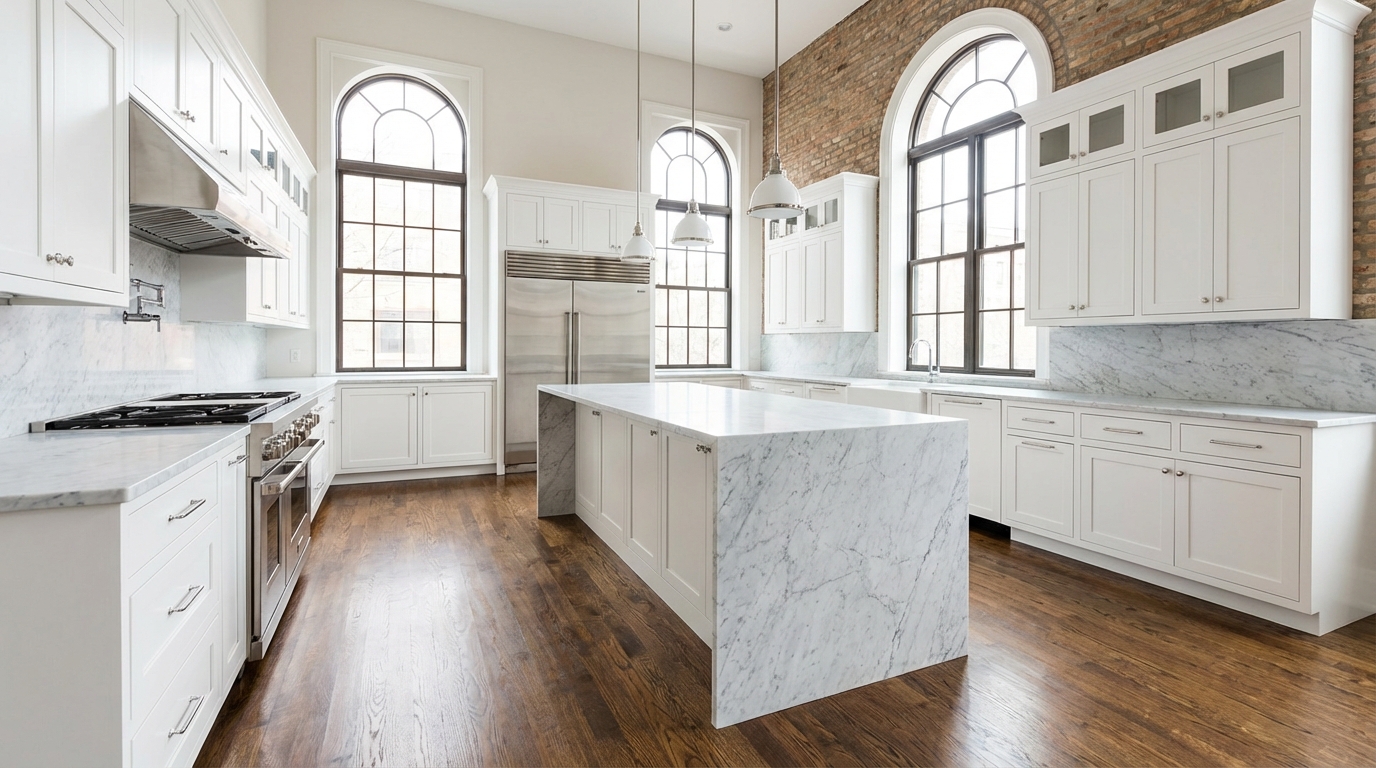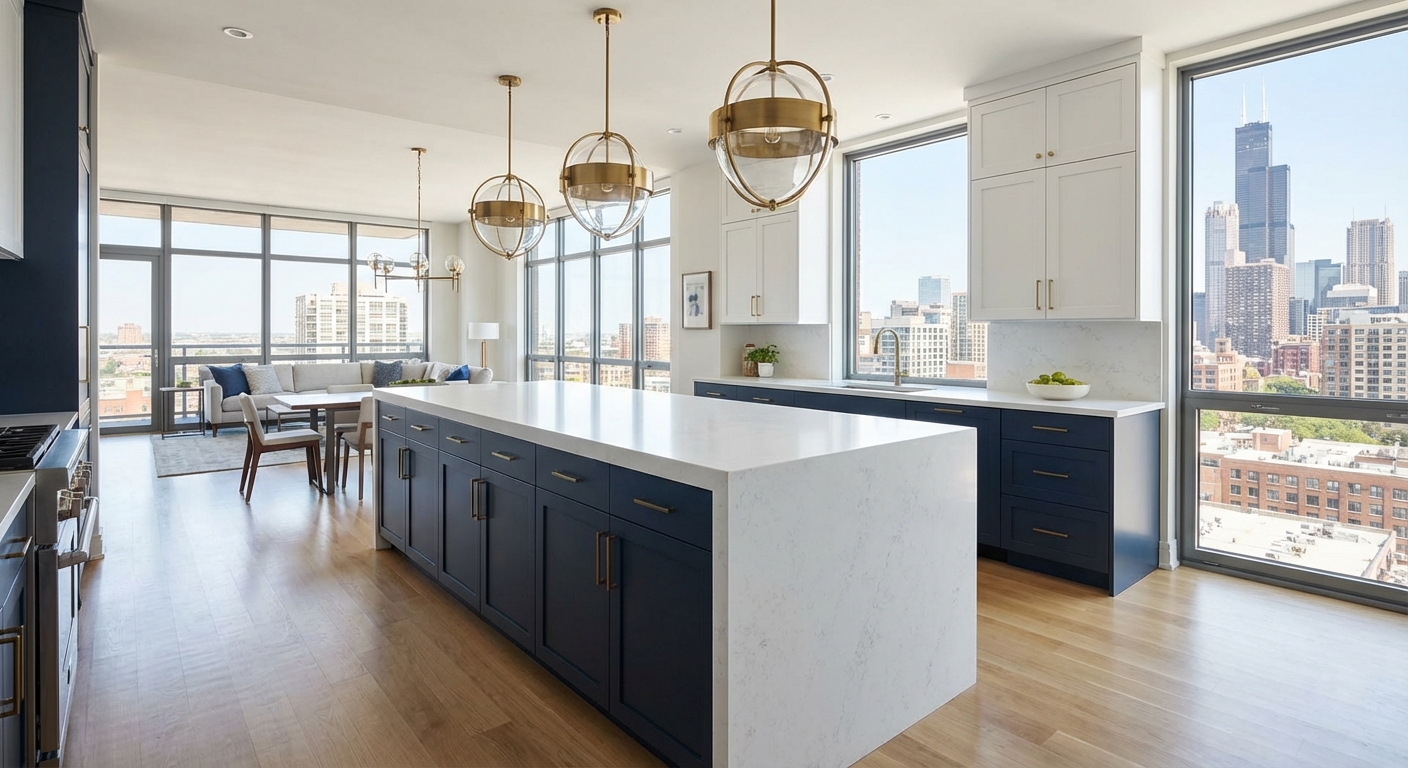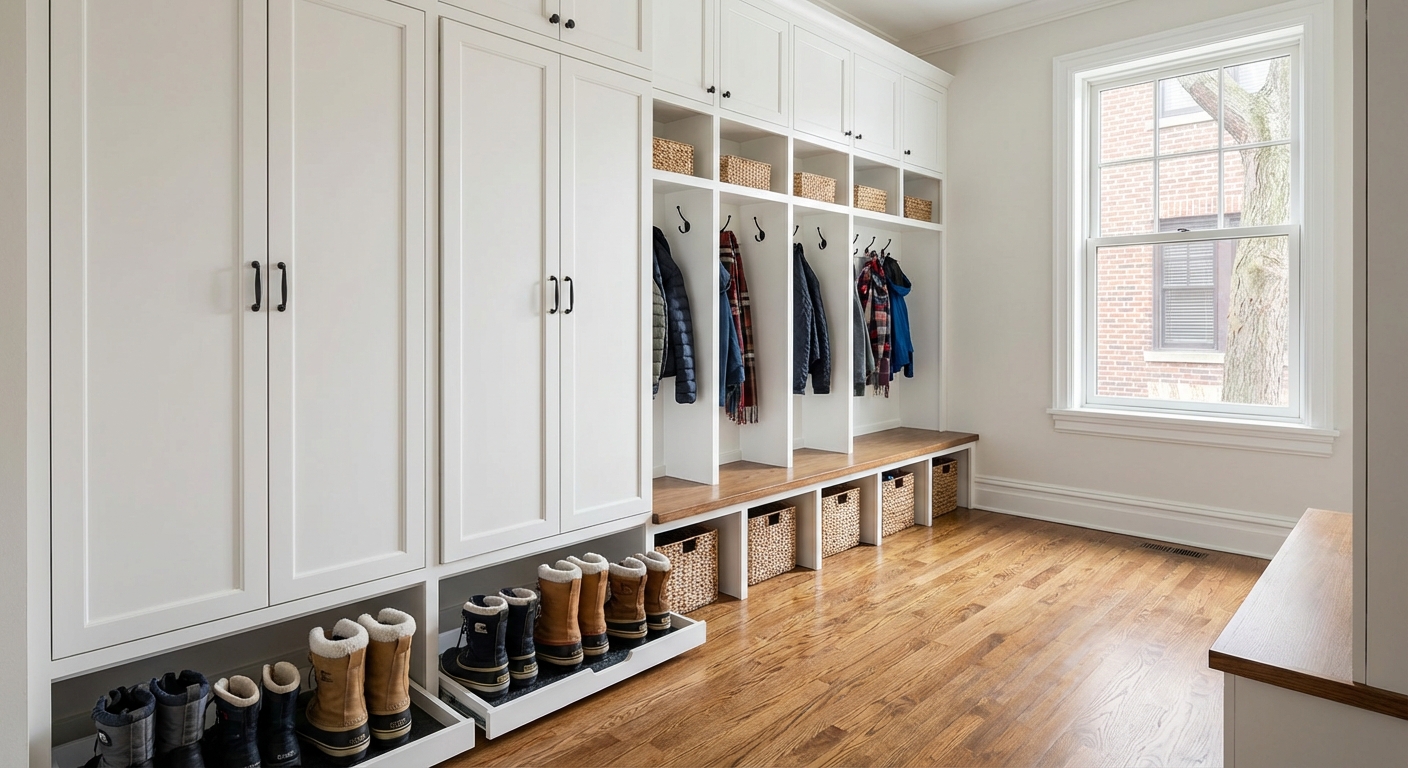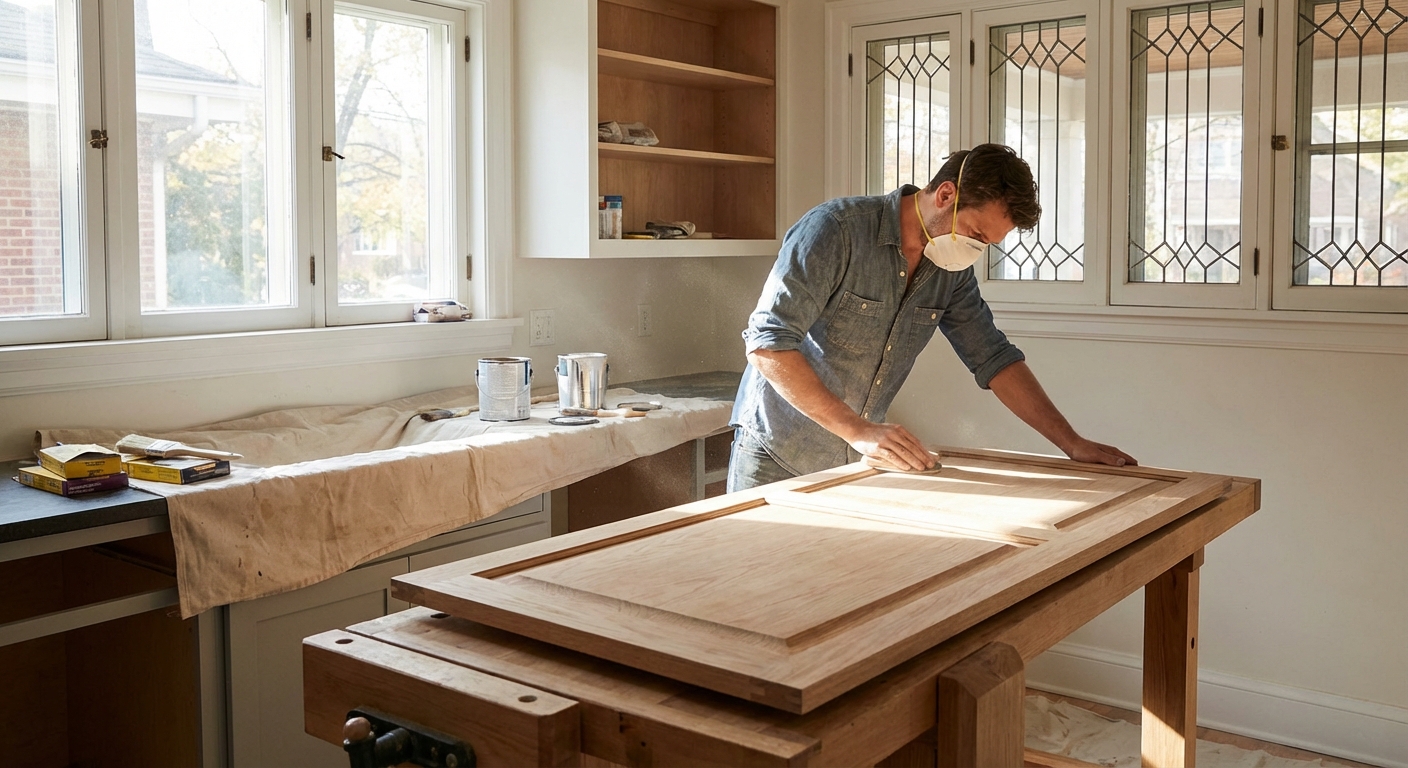
Two weeks ago I got a call from a homeowner in a 1940s Ravenswood bungalow who was ready to gut her entire kitchen — until we talked numbers. Her solid maple cabinets were structurally sound, but the honey-oak finish screamed 1993. After walking through her options, she chose to refinish her kitchen cabinets instead of replacing them, saving roughly $12,000 and finishing the project in a single weekend. That conversation happens in my office at least three times a week, and it's exactly why I wrote this guide.
Key Takeaways
- Refinishing cabinets costs $1,500–$5,000 for a typical Chicago kitchen — 40–60% less than full replacement.
- The process takes 3–5 days for a DIY approach or 1–2 days with a professional crew.
- Solid wood and plywood cabinet boxes are the best candidates; thermofoil and severely water-damaged cabinets are not.
- Chicago's humidity swings (winter lows of 20% to summer highs above 70%) demand the right primer and topcoat.
- Upgrading hardware during refinishing — especially Blum soft-close hinges — can make old cabinets feel brand new.
When Refinishing Makes Sense (and When It Doesn't)
Refinishing works when the cabinet boxes and frames are structurally intact. I inspect for soft spots around the sink base, warped doors, and delaminating veneers. If more than 30% of your doors or drawer fronts show irreparable damage, I usually steer clients toward custom kitchen cabinets built to Chicago specs instead. Solid hardwood — oak, maple, cherry — refinishes beautifully. Even older plywood-box cabinets accept paint well when properly prepped.
Thermofoil or vinyl-wrap doors are a different story. Once the film starts peeling, no amount of sanding will give you a lasting finish. Particle-board boxes that have swollen from water exposure should also be replaced, not refinished. Chicago homes built before 1978 may also have lead paint on cabinet surfaces, so testing with an EPA-approved kit is a critical first step before you touch any sandpaper.
Cost Comparison: Refinish vs. Reface vs. Replace
Budget is usually the deciding factor, so here's how the three main options compare for a standard 10×12-foot Chicago kitchen with 20–25 linear feet of cabinetry. These numbers are based on projects our team has managed across Chicagoland in 2025 and 2026. Keep in mind that material costs fluctuate, but the relative savings of refinishing hold steady. I always tell clients to add a 10–15% contingency for unexpected discoveries — especially in pre-war homes.
| Option | Typical Cost (Chicago) | Timeline | Best For |
|---|---|---|---|
| DIY Refinish | $500–$1,500 | 3–5 days | Handy homeowners with solid-wood cabinets |
| Professional Refinish | $2,500–$5,000 | 1–2 days | Anyone who wants a spray-booth finish on-site |
| Reface (new doors + veneer) | $7,000–$14,000 | 3–5 days | Good boxes but outdated door style |
| Full Custom Replacement | $15,000–$40,000+ | 3–6 weeks | Layout changes, damaged boxes, total redesign |
If you're comparing numbers for a full replacement, check our kitchen cabinet dimensions guide to understand how sizing affects pricing.
Step-by-Step: How to Refinish Kitchen Cabinets
I've watched hundreds of DIY refinishing jobs — some flawless, some disastrous. The difference almost always comes down to prep work. Rushing the sanding or skipping primer is how you end up with a sticky, chipping finish by Thanksgiving. Follow these steps in order, and give each stage the time it needs.
- Empty and label everything. Remove all doors, drawer fronts, and hardware. Number each piece with painter's tape on the hinge side so reinstallation is painless.
- Clean with TSP. Trisodium phosphate cuts through years of grease and cooking residue. A quick wipe with a damp cloth won't do it — especially near the stove.
- Sand all surfaces. Use 120-grit sandpaper for the initial pass, then 220-grit to smooth. You're creating tooth for the primer, not stripping to bare wood.
- Apply bonding primer. A shellac-based or high-adhesion acrylic primer is essential. I recommend two coats with light sanding between them.
- Paint or stain. For paint, use a cabinet-grade acrylic-alkyd hybrid. For stain, apply with a rag in the direction of the grain and follow with polyurethane.
- Reinstall with upgraded hardware. This is the perfect time to swap old hinges for soft-close models and add new pulls.
Need expert advice? Call (224) 808-5100 or schedule a free kitchen design consultation.
Choosing the Right Finish for Chicago's Climate
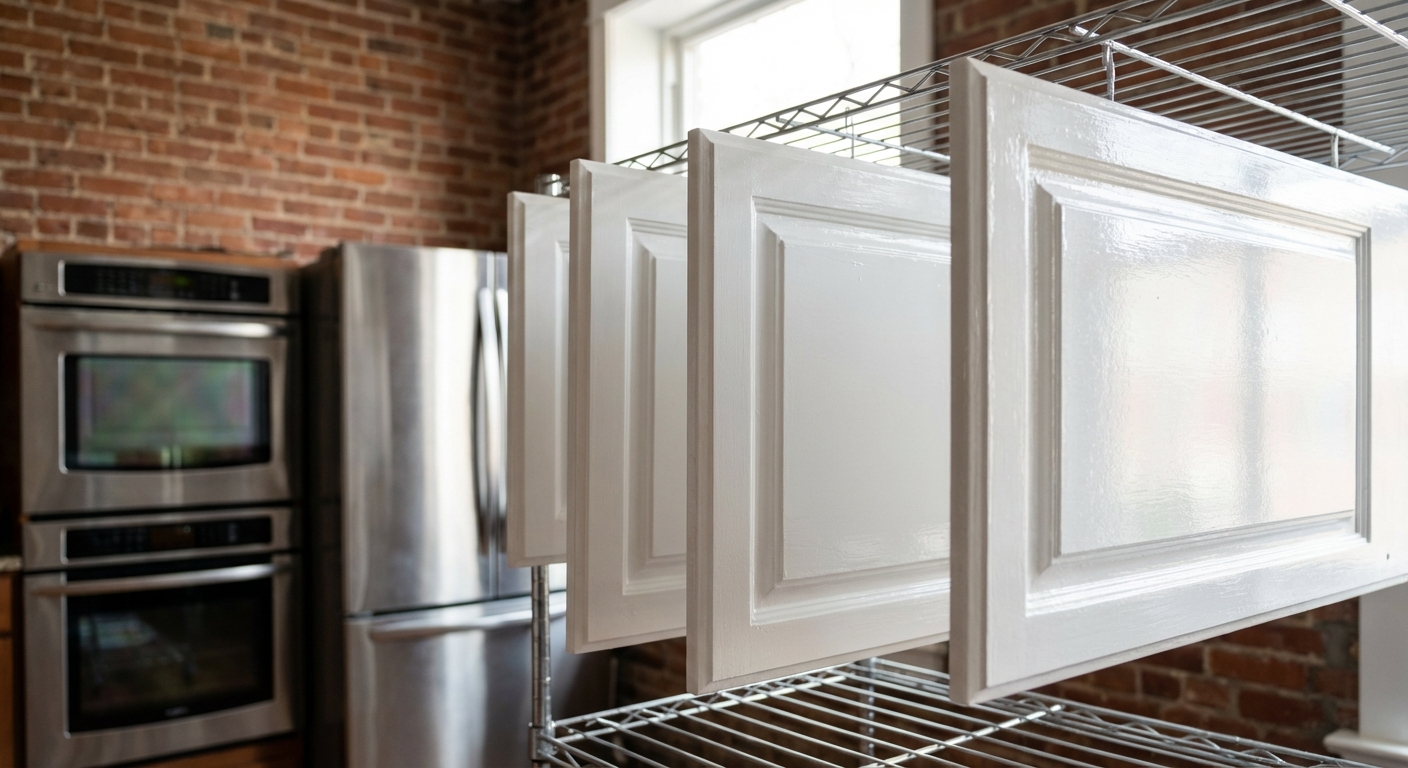
Chicago's extreme temperature and humidity swings are brutal on painted surfaces. In winter, forced-air heating drops indoor humidity to 15–25%, causing wood to contract. Come July, humidity spikes above 65% and everything swells. A rigid, inflexible finish will crack under that stress within a year. That's why I always recommend acrylic-alkyd hybrid paints for cabinet refinishing projects in our climate — they cure harder than standard latex but remain flexible enough to handle wood movement.
If you prefer a stained look, oil-based polyurethane provides the most durable topcoat, though it adds 24–48 hours of dry time per coat compared to water-based alternatives. For clients choosing EGGER laminate panels on new doors paired with refinished boxes, we color-match the paint to maintain a seamless look. Whichever route you take, apply at least two topcoats — three on high-touch areas like the sink base and stove-adjacent cabinets.
Hardware Upgrades That Transform Refinished Cabinets
New paint on old cabinets with worn-out hinges is like putting new tires on a car with broken shocks. I tell every client to budget $150–$400 for hardware upgrades during a refinishing project. Soft-close hinges eliminate slamming and dramatically improve the feel of older cabinets. At AK Cabinet Craft, our team installs Blum CLIP top hinges from Austria on every custom project, and I recommend the same for refinishing upgrades.
Here's what to consider swapping out:
- Hinges: Blum soft-close concealed hinges run $3–$6 per hinge and install with a Forstner bit.
- Drawer slides: Blum Tandem or MOVENTO full-extension slides cost $20–$40 per pair and support up to 130 lbs.
- Pulls and knobs: Budget $3–$15 per piece depending on style. Brushed brass and matte black are leading the 2026 trend charts.
- Soft-close dampers: If you don't want to replace all hinges, clip-on dampers at $1–$2 each are a quick fix.
If you realize during the hardware swap that your cabinet interiors need a full overhaul — pull-out shelves, lazy Susans, built-in organizers — our team can help. Browse our custom cabinet solutions for any room to see what's possible.
Common Mistakes That Ruin a Refinishing Project
After managing over 1,300 completed projects at AK Cabinet Craft, I've seen every mistake in the book. The number one killer is insufficient dry time between coats. Chicago's cooler basement workshops slow curing significantly — a coat that's dry to the touch in 4 hours at 75°F may need 8–10 hours in a 55°F garage. Reinstalling doors before the paint has fully cured (usually 7–14 days) leads to sticking and imprinting.
The second most common mistake is skipping the degreasing step. Kitchens in two-flats and greystones often have decades of polymerized cooking oil on surfaces that sandpaper alone won't remove. TSP or a dedicated cabinet cleaner is non-negotiable. Third, I see people using interior wall paint instead of cabinet-grade paint. Wall paint is formulated for low-wear surfaces and will chip off cabinet edges within months. Finally, painting over old hardware holes without filling them first leaves visible dimples — always use auto-body filler, sand flush, then paint.
When to Stop DIY and Call a Professional
I'm a big supporter of homeowners tackling projects they're equipped to handle, but refinishing has a tipping point. If your kitchen has more than 30 doors and drawer fronts, the sheer volume of sanding, priming, and painting becomes a multi-week commitment that tests anyone's patience. Kitchens with intricate raised-panel or cathedral-arch doors are nearly impossible to spray evenly without professional equipment. And if you discover water damage, termite trails, or structural issues in the cabinet boxes, that's a hard stop on refinishing.
At that point, I recommend exploring custom-built kitchen cabinets designed for Chicago homes — especially if you want to change the layout. Our team completes full kitchen cabinet projects in 21 days from production start, with a 5-year warranty and Blum hardware standard on every unit. For clients with solid boxes who want new doors only, we also offer ready-made kitchen design lines that combine affordability with quality.
Sometimes the best projects combine approaches. I recently managed a Logan Square condo where we refinished the perimeter cabinets, replaced the island with custom cabinetry, and added a new bathroom vanity upstairs — all coordinated as one project to save on labor costs. The National Kitchen and Bath Association estimates that cabinet refurbishment combined with strategic replacements delivers the best return on investment for resale.
Frequently Asked Questions
How long does it take to refinish kitchen cabinets in Chicago?
For a DIY project in a standard-size kitchen, I estimate 3–5 days of active work spread over 7–10 days to allow for proper curing between coats. Professional crews with spray equipment can finish in 1–2 days, but you'll still need to wait 7–14 days before hanging heavy items inside cabinets.
Can I refinish cabinets in winter in Chicago?
Yes, but you need to control your environment. Work indoors at 65–75°F with humidity between 40–50%. Garage workshops in January are too cold for proper paint curing. I've seen entire projects fail because homeowners painted in an unheated space during a polar vortex.
Is it cheaper to refinish or replace kitchen cabinets?
Refinishing costs $1,500–$5,000 compared to $15,000–$40,000+ for custom replacement. However, if your layout doesn't work or boxes are damaged, refinishing is a band-aid. I walk every client through both options before committing to a plan. Check our guide to custom built-ins for awkward spaces if layout issues are your main concern.
What paint sheen is best for kitchen cabinets?
I recommend semi-gloss or satin finishes for kitchen cabinets. Semi-gloss is the most durable and easiest to clean, which matters in a high-moisture, high-grease environment. Matte finishes look beautiful but show fingerprints and grease marks almost instantly.
Do I need to remove cabinets from the wall to refinish them?
You don't need to remove the cabinet boxes, but you absolutely should remove all doors, drawer fronts, and hardware. Painting doors while they're still on the hinges leads to drips, uneven coverage, and paint buildup in the hinge cups. Label everything before removal — trust me on this one.
Ready to Get Started?
Whether you're refinishing cabinets yourself or considering a professional-grade upgrade, I'm happy to walk you through your options. At AK Cabinet Craft, our team has completed 1,300+ kitchen, closet, and vanity projects across Chicagoland, and every consultation starts with an honest assessment of what your cabinets actually need. Schedule a free kitchen design consultation or call (224) 808-5100 — I'll help you figure out the smartest path for your budget and your home.