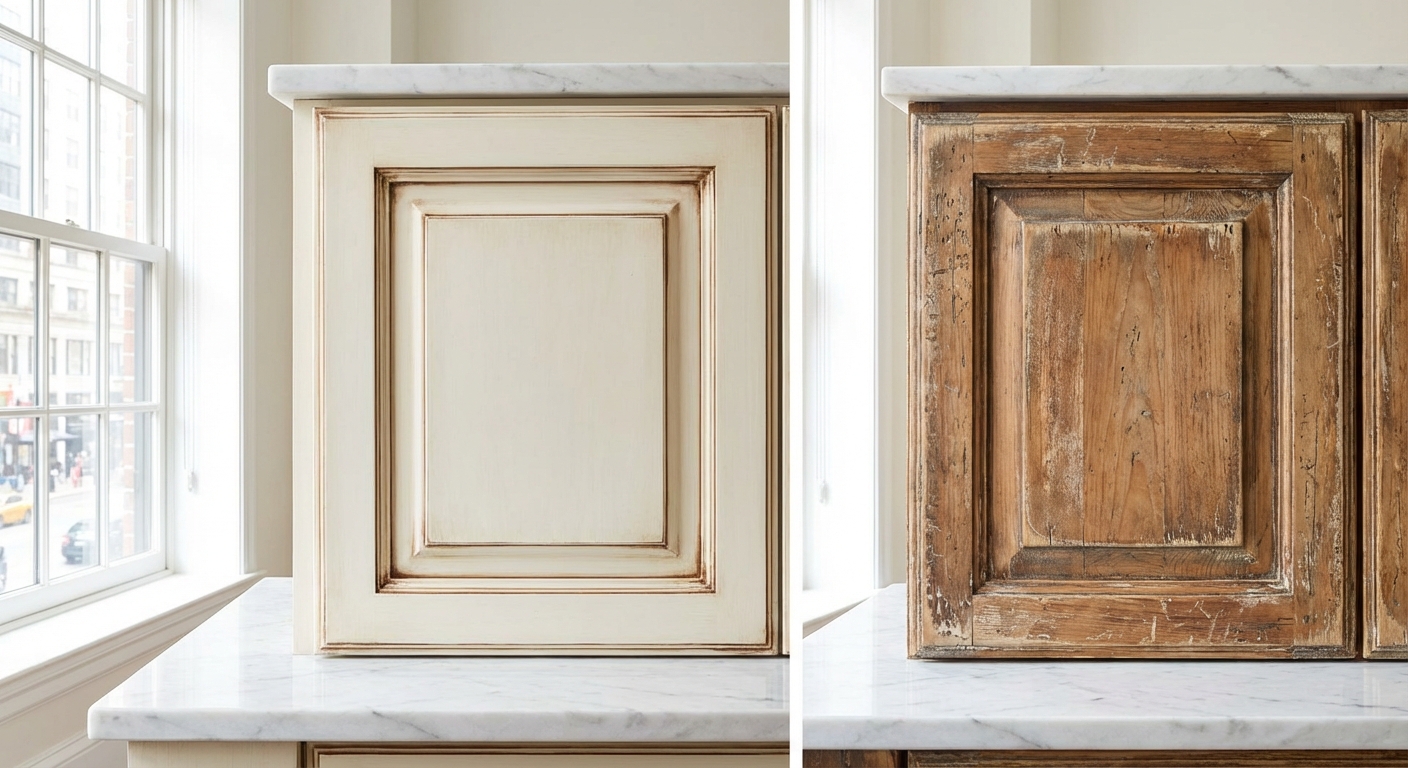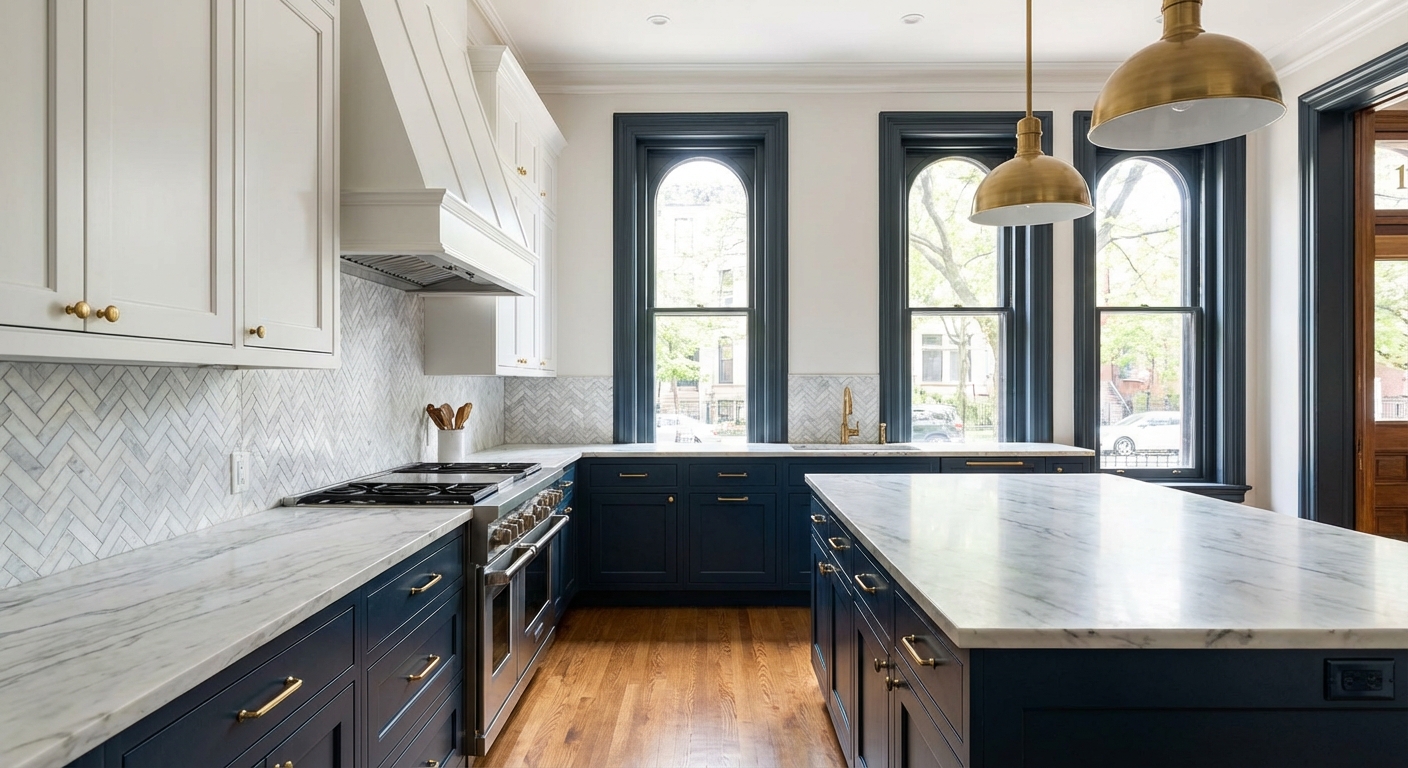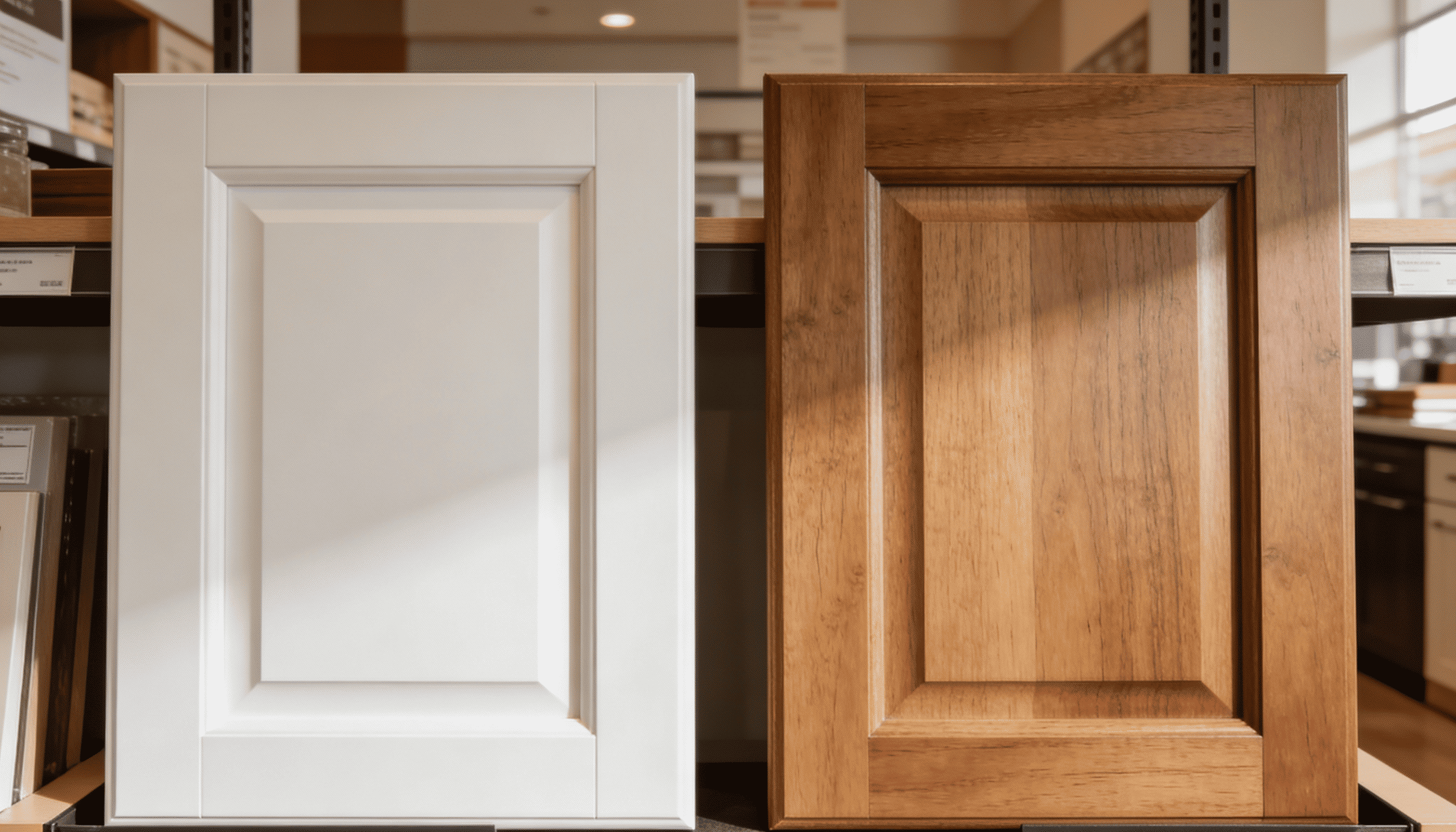
Cabinet door material significantly impacts kitchen appearance, durability, and budget. MDF (medium-density fiberboard) and solid wood represent the two primary options, each with distinct advantages for different applications. Chicago homeowners choosing between these materials need to understand how each performs in local climate conditions, how finish options differ, and where to invest for best long-term value. The right choice depends on desired appearance, finish type, and budget priorities.
Understanding the Materials
Both materials serve cabinet door construction but differ fundamentally:
MDF Composition
- Wood fibers bonded with resin under heat and pressure
- Uniform density throughout—no grain, knots, or variations
- Smooth, consistent surface ideal for painting
- Engineered for stability and flatness
- Available in various thicknesses and densities
Solid Wood Composition
- Natural lumber milled from trees
- Visible grain patterns unique to each piece
- Expands and contracts with humidity changes
- Available in numerous species with different characteristics
- Traditional material used for centuries
Neither material is universally "better"—each excels in specific applications. Understanding these differences guides appropriate selection.
MDF Cabinet Doors Explained
MDF doors dominate painted cabinet applications:
Why MDF works for painted doors:
- Perfectly smooth surface shows no grain through paint
- No risk of wood grain "telegraphing" over time
- Edges profile cleanly without splintering
- Consistent density means uniform paint absorption
- Dimensional stability prevents cracking at joints
MDF construction advantages:
- Lower cost than solid wood
- No natural defects to work around
- Machines precisely for tight-fitting joints
- Accepts primer and paint beautifully
- Maintains flatness over time
MDF limitations:
- Cannot be stained (no grain to show)
- Heavier than equivalent solid wood
- Edges absorb moisture if exposed
- Cannot be refinished by sanding and restaining
- Perceived as "lesser" material by some buyers
Quality MDF indicators:
- Higher density (heavier) means better performance
- Furniture-grade MDF outperforms construction grade
- Proper sealing of all edges essential
- Quality paint application with primer
.png)
MDF door pricing:
- $75-150 per door for painted finish
- 30-50% less than equivalent solid wood painted doors
- Excellent value for painted kitchen applications
Solid Wood Cabinet Doors Explained
Solid wood suits stained and natural finish applications:
Why solid wood works for stained doors:
- Natural grain creates visual beauty
- Each door unique with character
- Can be stained any color while showing grain
- Traditional craftsmanship associations
- Refinishing possible through sanding and restaining
Popular wood species for cabinet doors:
- Maple: Fine, consistent grain; popular for both paint and stain
- Cherry: Rich color that deepens with age; formal appearance
- Oak: Prominent grain; traditional and durable
- Hickory: Dramatic grain variation; rustic aesthetic
- Walnut: Dark, sophisticated; premium pricing
Solid wood construction methods:
- Frame and panel: Solid wood frame with floating panel (allows expansion)
- Solid plank: Single piece for simple styles (prone to warping)
- Engineered core: Solid wood veneer over stable substrate (combines benefits)
Solid wood advantages:
- Natural beauty and warmth
- Stain finish options unlimited
- Can be refinished multiple times
- Traditional craftsmanship appeal
- Often higher perceived value
Solid wood limitations:
- Expands and contracts with humidity
- May develop minor cracks at joints over time
- Higher cost than MDF
- Grain shows through paint (undesirable for some)
- Quality varies with species and cut
Need expert advice? Call (224) 808-5100 for free consultation and measurement.
Finish Compatibility Comparison
Material selection should match desired finish:
For Painted Finishes—MDF Preferred
- Smooth surface produces flawless paint appearance
- No grain telegraphing through paint over time
- Lower cost for equivalent appearance
- Professional painters often prefer MDF
- Chicago humidity doesn't affect painted MDF significantly
For Stained Finishes—Solid Wood Required
- Stain needs grain to absorb and display
- MDF cannot be stained (appears blotchy)
- Natural wood beauty is the point
- Species selection affects final appearance
- Grain pattern creates visual interest
For Natural/Clear Finishes—Solid Wood Only
- Showcases wood's inherent beauty
- No stain color—just protective clear coat
- Highest-quality wood specimens used
- Most expensive option but stunning results
Painted solid wood considerations:
- Costs more than painted MDF
- Grain may telegraph through paint eventually
- Some prefer "authenticity" of real wood even painted
- Makes sense if future refinishing to stain planned
Chicago Climate Considerations
Local conditions affect material performance:
Humidity Impact on MDF
- Stable material resists expansion/contraction
- Painted and sealed MDF handles humidity well
- Edge exposure to moisture problematic
- Properly finished MDF performs excellently
- Under-sink locations need extra protection
Humidity Impact on Solid Wood
- Natural expansion and contraction with seasons
- Chicago's humidity swings (20% winter to 70% summer) noticeable
- Frame and panel construction accommodates movement
- Minor joint movement may occur—normal for wood
- Quality construction minimizes visible effects
Temperature considerations:
- Neither material affected by normal temperature ranges
- Extreme heat (near stoves) affects both similarly
- Proper installation accommodates expansion regardless
- Chicago's temperatures within normal parameters
Practical recommendations for Chicago:
- MDF excellent for painted kitchens
- Solid wood performs well with proper finishing
- Quality construction matters more than material choice
- Proper sealing essential for both materials
Durability and Longevity Comparison
Long-term performance differs by application:
MDF Durability Factors
- Resists warping better than solid wood
- Maintains flatness throughout life
- Paint finish protects surface effectively
- Cannot be sanded and refinished
- Damage requires door replacement
- Expected lifespan: 15-25 years
Solid Wood Durability Factors
- May develop minor movement over decades
- Can be sanded and refinished multiple times
- Surface damage repairable in many cases
- Quality varies significantly with construction
- Expected lifespan: 25-50+ years with refinishing
Impact resistance:
- MDF dents but doesn't splinter
- Solid wood may dent or chip depending on species
- Both repair similarly for minor damage
- Major damage easier to address with solid wood
Edge durability:
- MDF edges vulnerable if paint chips
- Solid wood edges generally more resilient
- Both need prompt repair if damaged
- Edge profile affects durability
Cost Comparison Analysis
Investment levels differ significantly:
MDF Painted Door Costs
- Standard MDF painted door: $75-150 each
- Premium MDF with detailed profile: $125-200 each
- 20-door kitchen: $1,500-4,000 for doors
- Best value for painted kitchen appearance
Solid Wood Painted Door Costs
- Maple painted door: $150-250 each
- Cherry or walnut painted: $200-350 each
- 20-door kitchen: $3,000-7,000 for doors
- Premium option when real wood preferred
Solid Wood Stained Door Costs
- Maple stained: $175-275 each
- Cherry stained: $225-375 each
- Walnut stained: $275-450 each
- 20-door kitchen: $3,500-9,000 for doors
- Appropriate investment for natural wood beauty
Total cost impact on kitchen project:
- MDF saves $1,500-5,000 versus solid wood on typical kitchen
- Savings can upgrade other components
- Or maintain budget while achieving quality appearance
When to Choose MDF
MDF makes sense in these situations:
Painted finish planned:
- Smooth surface produces superior paint results
- No grain showing through ever
- Lower cost for equal or better appearance
- Professional standard for painted cabinets
Budget consciousness:
- Significant savings versus solid wood
- Invest savings in better hardware, countertops
- Quality MDF outlasts cheap solid wood
- Smart allocation of kitchen budget
Modern aesthetic desired:
- Clean, uniform appearance suits contemporary styles
- No natural variation—intentional uniformity
- Flat-panel doors particularly suited
- Complements minimalist design approaches
Rental or investment properties:
- Excellent appearance at lower cost
- Adequate durability for tenant use
- Replacement if damaged affordable
- Strong ROI on investment
When to Choose Solid Wood
Solid wood makes sense in these situations:
Stained finish desired:
- Only option for showing wood grain
- Natural beauty requires natural material
- Species selection creates specific looks
- Traditional and transitional styles
Long-term ownership planned:
- Refinishing extends life indefinitely
- 30-50+ year lifespan possible
- Investment justified over decades
- Heirloom potential for quality cabinets
High-end property:
- Buyers expect solid wood in luxury homes
- Resale value enhanced
- Quality matches overall home standard
- Premium properties warrant premium materials
Traditional or historical style:
- Authentic to architectural period
- Real wood appropriate for vintage homes
- Craftsman, Victorian styles call for solid wood
- Historical accuracy for restoration projects
Combination Approaches
Strategic mixing optimizes value:
MDF doors with solid wood frames:
- Frame provides solid wood edge durability
- MDF panel ensures flat, stable center
- Common semi-custom construction method
- Good balance of performance and cost
Different materials by location:
- MDF for standard cabinet doors (most of kitchen)
- Solid wood for glass-frame doors (visible edges)
- Prioritize investment where most visible
- Practical budget allocation
Painted perimeter with stained island:
- MDF painted doors for wall and base cabinets
- Solid wood stained doors for island
- Creates visual interest through contrast
- Each material in appropriate application
Frequently Asked Questions
Q: Is MDF or solid wood better for kitchen cabinet doors?
A: Neither is universally better—each suits different applications. MDF excels for painted finishes with smooth, grain-free surfaces at lower cost. Solid wood is necessary for stained finishes and provides refinishing options. Choose based on desired finish type and budget.
Q: Will MDF cabinet doors hold up in humid Chicago kitchens?
A: Yes, properly finished MDF performs well in Chicago's humidity. Quality paint seals the surface effectively. Avoid MDF in locations with direct water exposure (inside sink bases). Edge sealing prevents moisture absorption.
Q: Can I paint solid wood cabinet doors?
A: Yes, but wood grain may "telegraph" through paint over time as wood moves seasonally. For painted finishes, MDF provides smoother results at lower cost. Solid wood painted doors make sense if future conversion to stained finish is planned.
Q: How long do MDF cabinet doors last?
A: Quality MDF doors with proper paint finish last 15-25 years. They cannot be refinished by sanding, so significant damage requires replacement. Solid wood doors can be refinished multiple times, extending lifespan to 30-50+ years.
Q: Are solid wood cabinets worth the extra cost?
A: Solid wood cabinets justify extra cost for stained finishes, long-term ownership, high-end properties, and traditional styles. For painted kitchens with 10-15 year horizons, quality MDF provides equivalent appearance at lower investment.
Get Started
Material selection affects kitchen appearance, performance, and budget for years to come. Free consultations include detailed discussion of material options with samples showing actual construction and finish quality.
AK Cabinet Craft offers both MDF and solid wood doors across cabinet lines. Compare materials side-by-side at either showroom to make informed decisions.
Schedule Your Free Consultation:
- Call: (224) 808-5100
- Visit: Lincoln Park or Bucktown showroom
- Online: akcabinetcraft.com/contacts