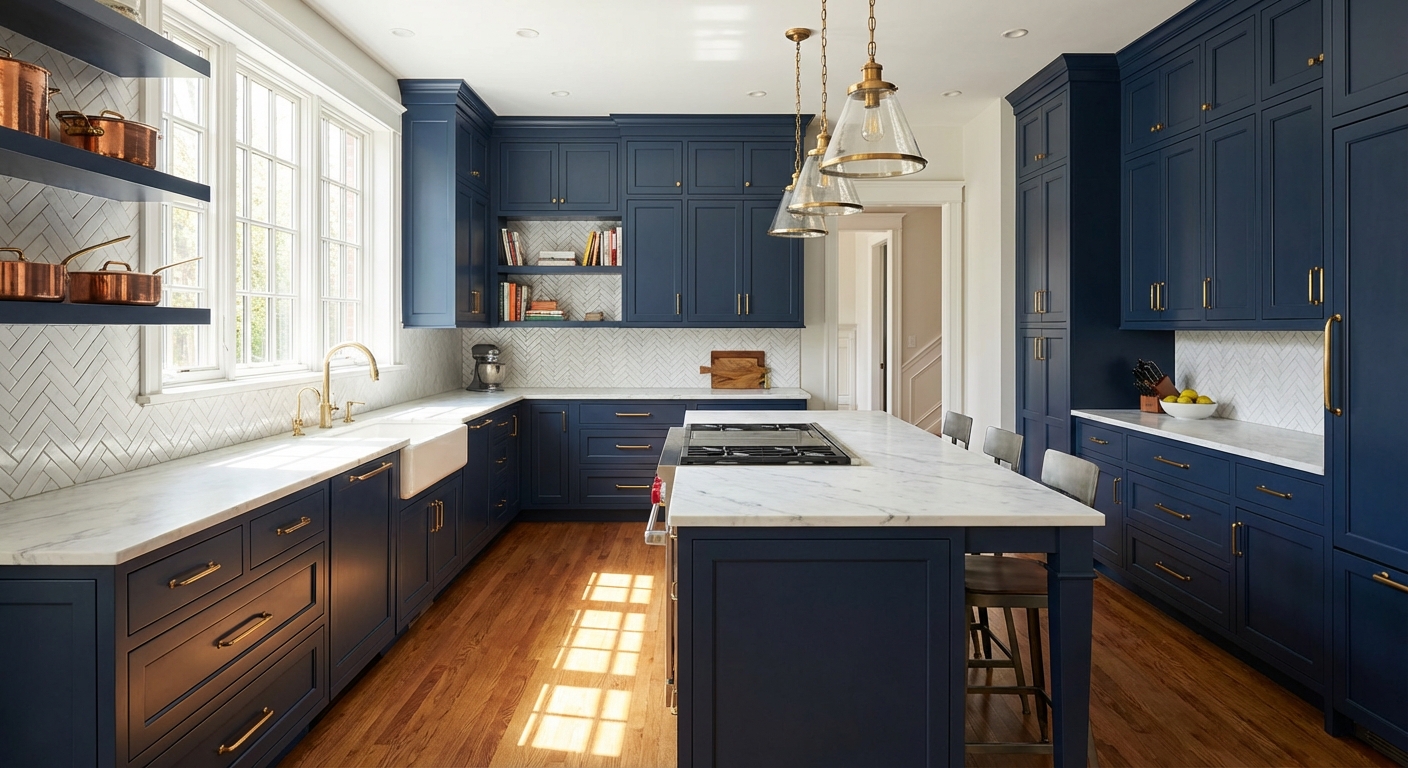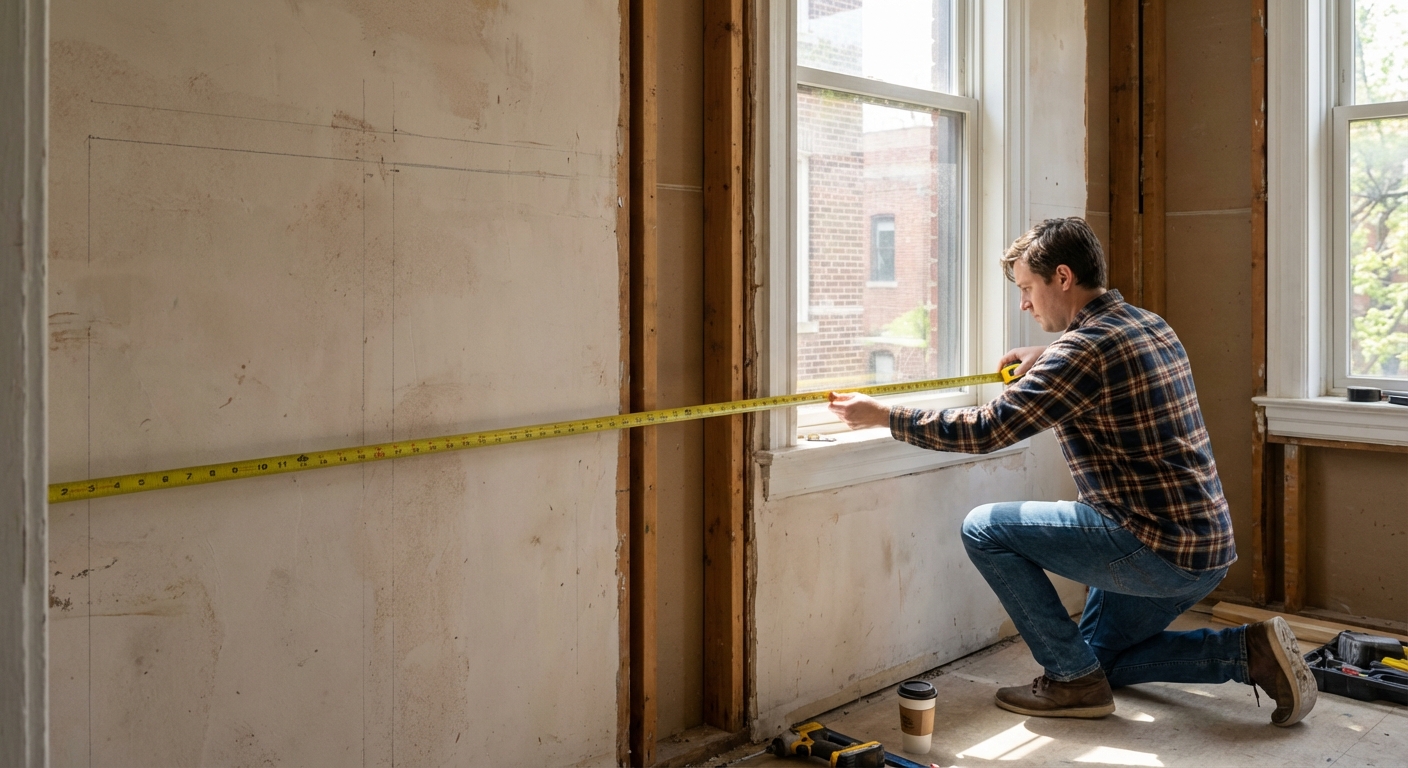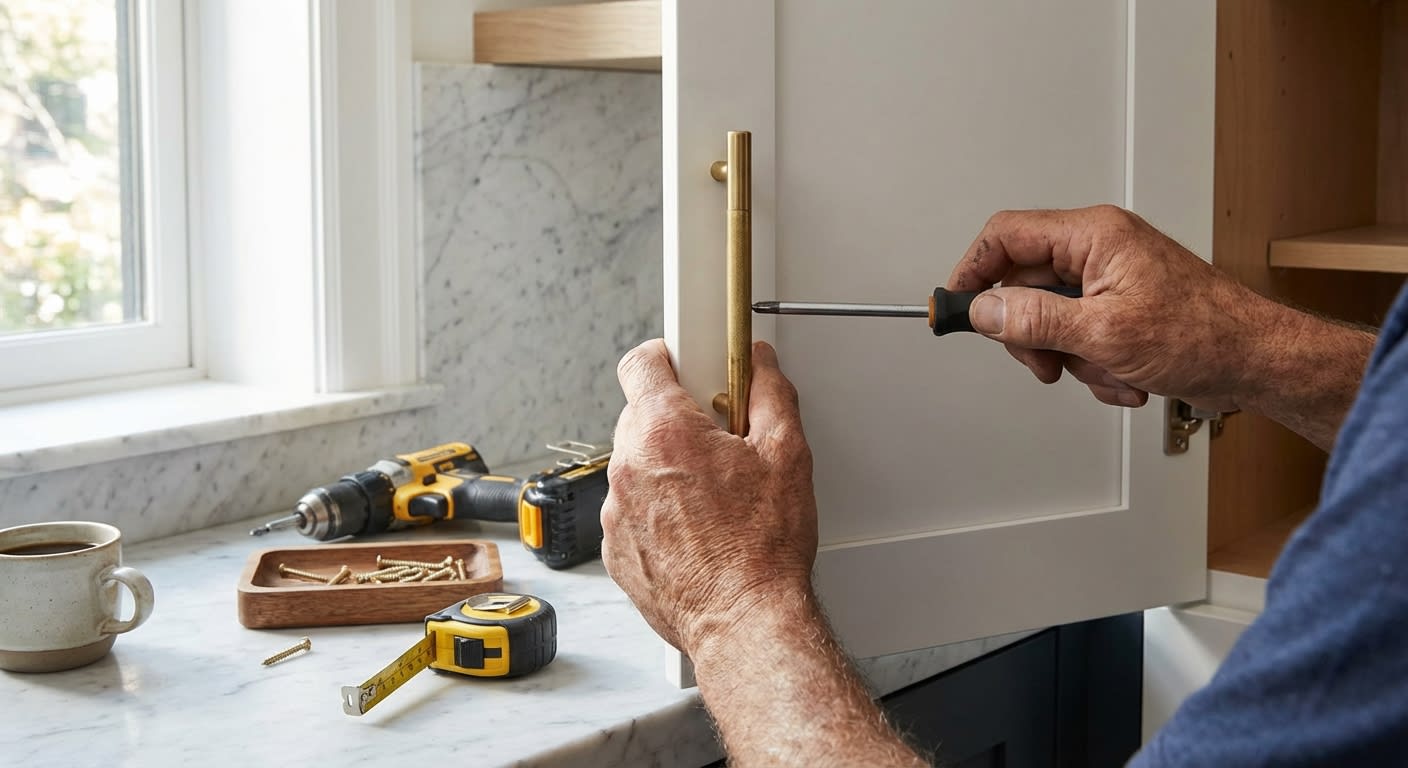
I've installed hardware on over 1,300 kitchen projects across Chicago, and here's what I know for certain: the wrong hardware choice will frustrate you every single day. The right choice becomes invisible because it just works. After 15 years of watching homeowners live with their decisions, I'm sharing exactly how to pick handles and knobs you won't regret.
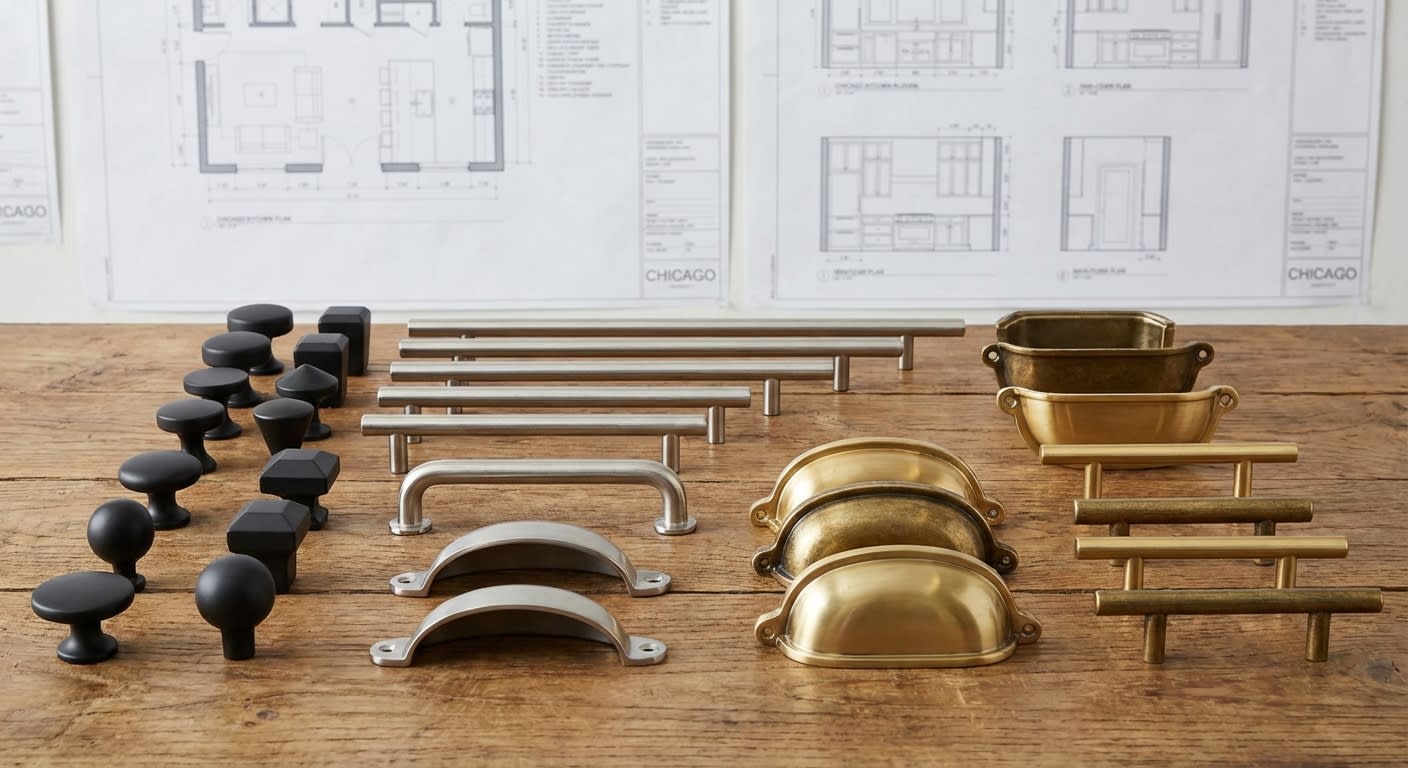
Knobs vs. Pulls vs. Cup Pulls: Which Actually Works Best
Knobs cost less and work fine for doors. I install them on upper cabinets where you're pulling straight out. They fail on drawers, especially heavy ones like your utensil or pot drawer. Your fingers slip, you strain your wrist, and after 10,000 opens, that gets old.
Pulls give you leverage. I recommend 4-inch pulls for most drawers and 6-inch or longer for wide pan drawers. Cup pulls (also called bin pulls) work beautifully on drawers and add farmhouse character, but they collect crumbs. Every Chicago homeowner I've installed them for loves the look and tolerates the extra wiping.
My standard recommendation: knobs on doors, pulls on drawers. This isn't opinion—it's ergonomics tested across hundreds of kitchens.
Materials That Survive Chicago Kitchens
Chicago homes deal with humidity swings from lakefront summers to dry heated winters. Cheap hardware fails here faster than anywhere I've worked. Here's what holds up:
- Solid brass: Develops patina unless lacquered. Lasts generations. Expect $8-25 per piece.
- Stainless steel: Fingerprint-prone but indestructible. Best for families with kids. $5-15 per piece.
- Zinc alloy: The sweet spot. Most mid-range hardware uses this. Holds finish well. $3-12 per piece.
- Aluminum: Lightweight, affordable, but scratches easily. Skip it for high-traffic kitchens.
Avoid anything labeled "iron" without a protective coating. I've seen rust develop in Chicago kitchens within two years, especially near sinks and dishwashers.
How to Measure and Space Hardware Correctly
Incorrect spacing is the amateur mistake I fix most often. Here are the rules I follow:
For base cabinet doors, position the pull 2.5 to 3 inches from the top corner (opposite the hinge). For upper cabinets, 2.5 to 3 inches from the bottom corner. This feels natural to grab and keeps visual weight balanced.
Drawer pulls center horizontally. Vertically, I place them in the upper third of the drawer face for the most comfortable grip angle. On drawers taller than 6 inches, centered looks wrong—trust me, go upper third.
Measure the "center-to-center" distance for pulls. A 4-inch pull needs holes exactly 4 inches apart. Drill once, drill right. Use painter's tape and mark with a pencil before touching your drill.
Have questions? Call me at (224) 808-5100
Finish Selection: Matching Chicago Home Styles
The finish you choose should complement your kitchen style, not fight it. Here's what I install most often in different Chicago neighborhoods:
Lincoln Park brownstones and vintage homes: Unlacquered brass or oil-rubbed bronze. These finishes age gracefully and match original architectural details.
Modern condos and new construction: Matte black or brushed nickel. Clean lines, no fuss. Matte black hides fingerprints better than any other dark finish.
Transitional kitchens: Brushed gold or champagne bronze hits the middle ground. Warm but not old-fashioned.
One rule I enforce: match your hardware finish to either your faucet or your appliances, not both unless they already match each other. Mixed metals work when intentional. Random mixing looks like mistakes.
Installation Steps That Prevent Costly Mistakes
I've repaired hundreds of doors ruined by DIY hardware installation. Here's how to avoid becoming a cautionary tale:
- Step 1: Remove doors and drawers. Work on a flat, padded surface.
- Step 2: Create a drilling jig from cardboard or buy a $15 hardware template. This single tool prevents every positioning error.
- Step 3: Mark your holes, then use a center punch to prevent drill bit wandering.
- Step 4: Drill from the front using a sharp bit. Place scrap wood behind to prevent blowout on the back.
- Step 5: Test fit before committing. If holes feel off, now is the time to adjust.
Never drill freehand through cabinet faces. I don't care how steady your hands are. One slip means visible damage that can't be fixed without refinishing.
Hardware That Works With Blum Hinges and Soft-Close Systems
At AK Cabinet Craft, we exclusively use Blum Austrian hardware for hinges and drawer systems. When selecting handles, weight matters more than you'd expect.
Heavy brass handles on soft-close doors can affect closing speed. Blum hinges adjust for this, but I prefer keeping door hardware under 8 ounces each. Drawer hardware has more flexibility since Blum's Tandem runners handle substantial weight.
Also consider: oversized pulls on soft-close drawers give you more surface area to slow the close manually when needed. I install 8-inch or longer pulls on any drawer wider than 24 inches.
What to Budget for Quality Kitchen Hardware
An average Chicago kitchen has 20-30 doors and 10-15 drawers. Here's realistic budgeting:
Budget tier ($150-300 total): Basic zinc knobs and pulls from home improvement stores. Functional but finishes may wear in 5-7 years.
Mid-range ($400-800 total): Quality brands like Amerock, Liberty, or Hickory. Better finish durability, 10-15 year lifespan with normal use.
Premium ($1,000-2,000+ total): Top Hardware, Emtek, or custom pieces. Solid construction, lifetime finishes, noticeably better hand-feel.
My advice: spend more on frequently used pieces. Your most-opened drawer deserves premium hardware. A rarely-touched upper cabinet doesn't.
When to Call a Professional for Hardware Installation
DIY hardware installation makes sense for standard cabinet doors with straightforward positioning. Call a professional when:
- You're installing appliance pulls (they require precise alignment across multiple panels)
- Your cabinets have curved or unusual door profiles
- You need to fill and redrill existing holes
- Your hardware requires surface-mount installation
At AK Cabinet Craft, we include hardware installation with every custom cabinet project. Our 5-year warranty covers everything we touch, including hardware mounting.
Frequently Asked Questions
Can I mix knobs and pulls in the same kitchen?
Absolutely. I do this on most projects. The key is consistency: knobs on all doors, pulls on all drawers. Mixing randomly within the same category looks chaotic.
How do I clean cabinet hardware without damaging the finish?
Warm water and dish soap handles 90% of situations. For stubborn grease, use a soft toothbrush. Never use abrasive cleaners or scrub pads on any finish except stainless steel.
Should hardware match throughout my entire home?
Not necessarily. I recommend matching within sightlines. If you can see your bathroom from your kitchen, coordinate those. Bedrooms and private spaces can differ.
How often should cabinet hardware be replaced?
Quality hardware lasts 15-20 years minimum. Replace when finishes wear through to base metal, screws strip out, or your style preferences change significantly.
What's the most durable finish for a busy family kitchen?
Brushed or satin stainless steel wins for durability. Matte black comes second—it hides fingerprints and minor scratches remarkably well.
Ready to Get Started?
Choosing hardware is one of the final decisions in a kitchen project, but it affects how your kitchen feels every day. I've helped Chicago homeowners make this choice over 1,300 times, and I'm happy to share specific recommendations for your situation.
At AK Cabinet Craft, we build custom cabinets with Blum Austrian hardware, deliver in 21 days, and back everything with a 5-year warranty. Projects start at $2,999. Visit us at 2650 N Halsted St, Chicago, IL 60614, or call me directly at (224) 808-5100 to discuss your kitchen project.