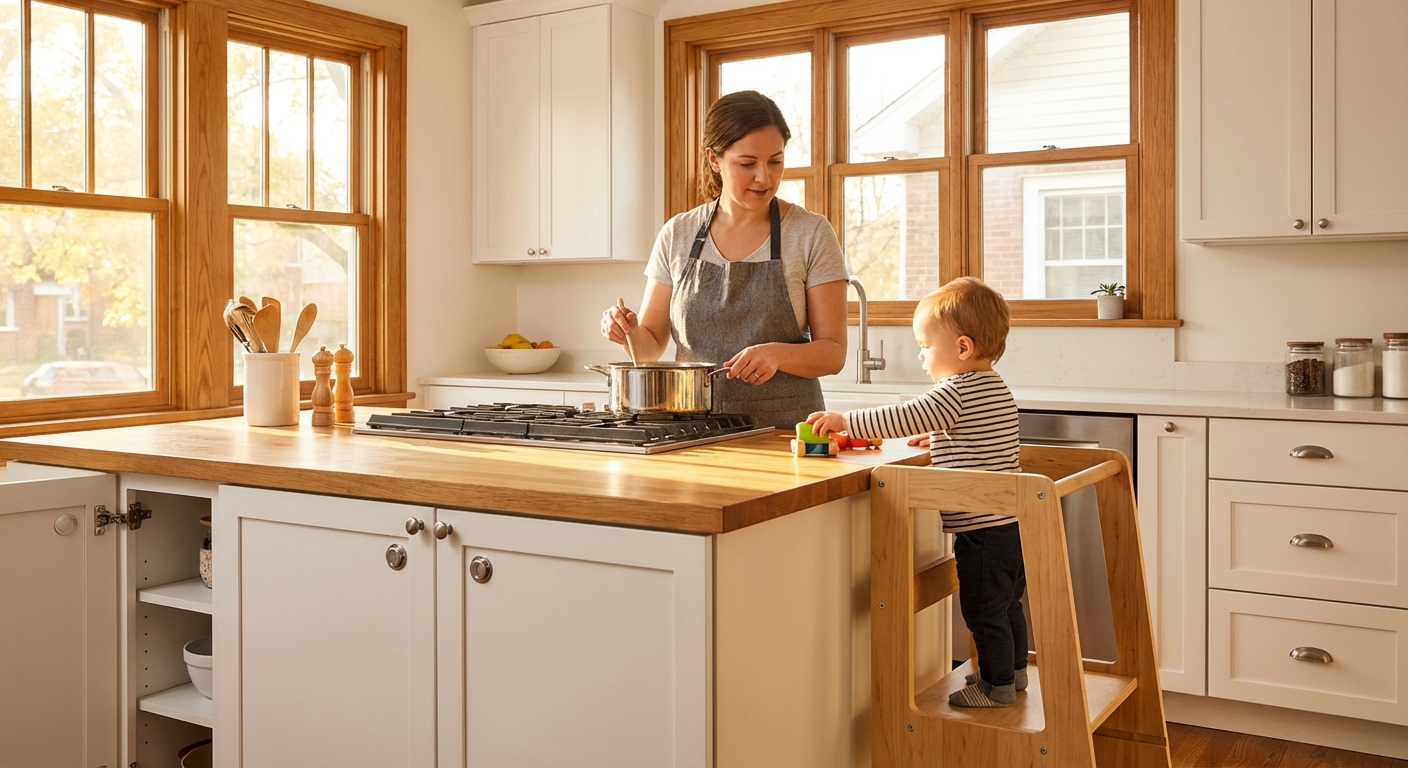
Last spring, a young couple in Roscoe Village called me in a panic. Their 18-month-old had figured out how to open every base cabinet in their 1940s bungalow kitchen — and they'd already made one trip to the ER after she got into the cabinet under the sink. They didn't want a band-aid fix with plastic latches; they wanted a kitchen designed from the ground up to keep their growing family safe. That project changed how I think about every family kitchen I design.
Key Takeaways
- Cabinet-related injuries send over 14,000 children to U.S. emergency rooms every year — most are preventable
- Magnetic locks and soft-close hinges are the two most effective built-in childproofing upgrades
- Strategic storage planning — placing hazards in upper cabinets — eliminates 60-70% of risk without any hardware
- Retrofit childproofing costs $50 to $300, while built-in solutions during a remodel add only $200 to $600
- Soft-close mechanisms from brands like Blum prevent finger-pinching injuries entirely
Why Chicago Kitchens Need Extra Childproofing Attention
Chicago's housing stock creates unique challenges when you're trying to childproof kitchen cabinets. Bungalows and greystones were built decades before modern safety standards existed, with cabinets that feature simple friction catches a toddler can defeat in seconds. Two-flat kitchens on the North Side are often compact, meaning cleaning chemicals, sharp objects, and heavy cookware sit in base cabinets right at a child's eye level. High-rise condos in Streeterville or the South Loop may have more modern cabinetry, but open-plan layouts mean there's no door separating the kitchen from the living area — a curious toddler has a straight line to every cabinet. I've worked in over 600 kitchens across this city, and I'd estimate that fewer than 10% of older homes have any meaningful childproofing built into the cabinetry. The good news is that whether you're retrofitting existing cabinets or planning a full remodel with custom kitchen cabinets designed for Chicago homes, effective solutions exist for every budget and home type.
Step 1: Audit Your Kitchen for Hazards
Before you buy a single latch, I recommend getting down on your hands and knees — literally — and seeing your kitchen from your child's perspective. In a typical Chicago kitchen, I find 4 to 6 high-risk cabinets that need immediate attention. Start with the cabinet under the sink, which almost always contains cleaning chemicals. Next, check any base cabinet storing knives, heavy cast iron, or glass bakeware. Don't forget drawers — I've seen toddlers pull out deep pot drawers in Wicker Park kitchens and use them as steps to climb onto countertops. Corner cabinets with lazy Susans are another hidden risk because kids love to spin them and can get fingers caught. Make a simple list and prioritize the most dangerous spots first.
- Under-sink cabinet: Cleaning chemicals, garbage disposal access
- Knife/utensil drawers: Sharp objects within reach
- Lower pantry cabinets: Heavy cans that can fall
- Corner cabinets: Pinch points on rotating hardware
- Appliance garages: Access to blenders, food processors
- Trash/recycling pull-outs: Choking hazards and bacteria
Step 2: Choose the Right Childproofing Hardware
Not all cabinet locks are created equal, and I've watched families cycle through cheap plastic latches that break within weeks. The table below breaks down the main options I recommend to Chicago parents, from budget fixes to permanent solutions. Magnetic locks are my top pick for most families because they're invisible from the outside, don't damage cabinet finishes, and can be deactivated with a magnetic key when kids outgrow them. For families planning a full kitchen renovation, I always specify Blum soft-close hinges and drawer systems — the integrated damping mechanism eliminates finger-pinching injuries, which account for a surprising number of pediatric ER visits. If your budget is tight, even basic adhesive-mount latches are better than nothing, especially as a temporary measure while you plan a more permanent solution.
| Lock Type | Cost Per Cabinet | Difficulty | Best For |
|---|---|---|---|
| Adhesive strap locks | $3–$5 | Easy (no tools) | Renters, quick temporary fix |
| Slide-bolt latches | $4–$8 | Moderate (drill required) | Older bungalow cabinets |
| Magnetic locks | $8–$15 | Moderate (drill required) | Most homeowners — top pick |
| Soft-close hinges (retrofit) | $15–$30 | Moderate | Preventing pinched fingers |
| Built-in integrated locks | $20–$40 | Professional install | New custom cabinetry |
Need expert advice? Call (224) 808-5100 or schedule a free kitchen design consultation.
Step 3: Redesign Your Storage Layout
The most overlooked childproofing strategy doesn't involve hardware at all — it's about where you store things. I tell every parent I work with: move 100% of hazardous items above counter height. Cleaning supplies go in an upper cabinet. Knives move to a wall-mounted magnetic strip or a high drawer. Heavy cast iron lives on a pot rack or a top shelf. This single change eliminates the majority of risk and makes your kitchen safer even when locks fail or get left unlocked. In the Roscoe Village bungalow I mentioned earlier, we dedicated the base cabinets entirely to child-safe items — plastic containers, kid plates, snack bins — so the toddler could actually access "her" cabinets freely. For guidance on maximizing vertical storage in tight Chicago kitchens, our kitchen cabinet dimensions guide covers optimal shelf heights for both safety and ergonomics. This approach works especially well in compact greystone kitchens where base cabinet space is at a premium anyway.
Step 4: Install Soft-Close Mechanisms on Every Door and Drawer
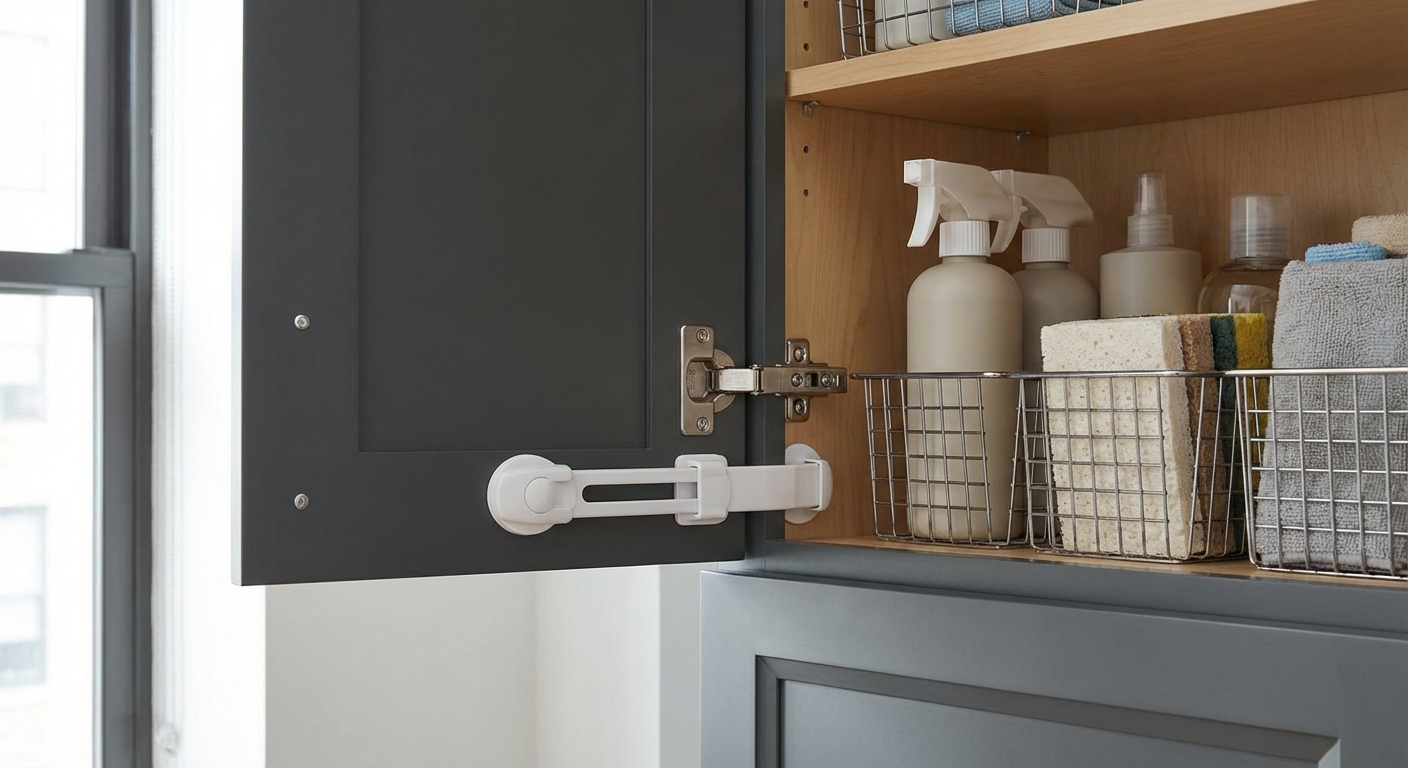
If I could recommend a single upgrade for parents, it would be soft-close hardware on every cabinet door and drawer in the kitchen. Finger-pinching injuries are incredibly common — the National Kitchen and Bath Association has highlighted cabinet safety as a key design concern, and soft-close systems are the industry's primary answer. At AK Cabinet Craft, our team installs Blum BLUMOTION hinges and TANDEMBOX drawer systems as standard equipment on all our custom kitchen cabinetry. These mechanisms slow the door or drawer in the last few inches of travel, making it physically impossible to slam. Retrofit soft-close adapters can be added to existing cabinets for about $15 to $30 per door, and I've installed them on everything from 1920s bungalow cabinets to modern condo kitchen units. The damping action also protects your cabinetry from wear, which means fewer alignment issues down the road. Most parents tell me the quiet kitchen alone is worth the investment — no more slamming at 6 a.m..
Step 5: Secure Freestanding and Anti-Tip Hazards
Cabinets aren't the only risk in a Chicago kitchen. Tall pantry cabinets, especially freestanding ones common in older two-flats, can tip if a child climbs the shelves or hangs on an open door. I always recommend anti-tip brackets screwed into wall studs — this is especially critical in older Chicago homes where plaster walls can crumble around anchors if you don't hit the stud. Appliance garages at counter height need their own latching mechanism, since a toddler pulling a stand mixer off the counter can cause serious injury. For custom built-in solutions in older Chicago homes, wall-anchored cabinetry eliminates the tip-over risk entirely. Don't forget about refrigerator and dishwasher access — modern dishwashers use concentrated detergent pods that look like candy to young children. I've started designing dedicated, lockable compartments for dishwasher pods in every family kitchen I build.
- Anchor all tall cabinets and pantries to wall studs with L-brackets
- Install appliance garage doors with push-to-open latches (child-resistant)
- Use a refrigerator lock if your child can open the door
- Create a locked compartment for dishwasher pods and garbage disposal switches
- Secure any glass-front cabinet doors with tempered safety film
Step 6: Plan for the Future — Kids Grow Fast
One mistake I see Chicago parents make is designing childproofing as though their kids will always be toddlers. A 2-year-old can open a friction-catch cabinet; by age 4, most children can defeat basic strap locks. I recommend investing in solutions that scale. Magnetic locks are ideal because they remain effective for years — most kids can't figure out they need a magnetic key until age 6 or 7. If you're planning a full kitchen remodel, consider building in features that serve double duty: soft-close drawers prevent injuries now and protect cabinetry for decades. Pull-out shelving in base cabinets keeps heavy items stable for toddler safety and improves ergonomics for adults long after the childproofing phase ends. At AK Cabinet Craft, our team has completed 1,300+ projects, and the family kitchens that age best are the ones designed with adaptability in mind. If you're investing in custom cabinets for any room in your home, this forward-thinking approach applies to bathroom vanities, laundry rooms, and garage storage too.
What a Full Childproofing Upgrade Costs in Chicago
Budget is always a real consideration, so let me break down what you can expect to spend in the Chicago market. A basic DIY retrofit — adhesive locks on 10 cabinets — runs about $50 to $80 and takes an afternoon. A mid-range upgrade with magnetic locks and soft-close hinge retrofits costs $200 to $500 for a typical Chicago kitchen with 15 to 20 doors and drawers. If you're doing a complete kitchen remodel, adding childproofing features at the design stage costs only $200 to $600 extra because the labor is already built into the install. Our kitchens at AK Cabinet Craft start from $15,000 and include Blum soft-close hardware standard — meaning the pinch-prevention piece is already covered. We also offer a 5-year warranty on all cabinetry, and our production timeline is just 21 days, so you're not living with an unsafe kitchen for months during a remodel. Considering that the average ER visit for a cabinet-related injury costs over $1,500 out of pocket, childproofing pays for itself quickly.
| Approach | Total Cost | Timeline | Longevity |
|---|---|---|---|
| DIY adhesive locks | $50–$80 | 1 afternoon | 6–12 months |
| Magnetic locks + soft-close retrofit | $200–$500 | 1 weekend | 5–7 years |
| Built-in during full kitchen remodel | $200–$600 (incremental) | Included in remodel | 15+ years |
Frequently Asked Questions
What's the most effective way to childproof kitchen cabinets?
In my experience, magnetic cabinet locks combined with soft-close hinges give you the best combination of security and longevity. The magnetic locks are invisible from outside, keeping your kitchen looking clean, and the soft-close hinges prevent pinched fingers even if a lock is accidentally left disengaged. I've installed this combination in hundreds of Chicago family kitchens and it consistently outperforms other methods.
Can I childproof old cabinets in a Chicago bungalow without replacing them?
Absolutely. Most retrofit magnetic locks only require drilling two small holes inside the cabinet frame — they work on virtually any door style, including the face-frame cabinets common in Chicago bungalows from the 1920s through 1950s. Soft-close hinge adapters clip onto existing hinges. The total investment is usually $200 to $500 for a full kitchen, and the work takes a weekend.
At what age can I remove childproofing from my cabinets?
Most child safety experts suggest keeping cabinet locks in place until age 4 to 5, depending on the child. I usually recommend leaving soft-close mechanisms permanently — they protect your cabinetry and keep the kitchen quieter for the life of the home. Magnetic locks can simply be deactivated by removing the magnet strike plate.
Do childproof locks damage custom cabinet finishes?
Adhesive-mount locks can sometimes pull off paint or laminate when removed — I've seen this happen on painted MDF doors in Lakeview condos. Magnetic locks installed with screws leave only tiny holes inside the cabinet, which are invisible during normal use. If you're ordering new custom kitchen cabinets, I always recommend having the locks pre-installed at the shop so the placement is precise and the finish stays flawless.
How long does it take to get a child-safe custom kitchen installed?
At AK Cabinet Craft, our production timeline is 21 days from final design approval to delivery, followed by 1 to 3 days of installation depending on kitchen size. From your first consultation to cooking dinner in your new child-safe kitchen, most families are looking at 5 to 7 weeks total.
Ready to Get Started?
Whether you need a quick retrofit or you're planning a full family-friendly kitchen remodel, I'd love to help you create a space that's beautiful and safe. At AK Cabinet Craft, we design kitchens that grow with your family — with Blum soft-close hardware, smart storage layouts, and a 5-year warranty on every project. Reach out to schedule a free kitchen design consultation or call (224) 808-5100 to talk through your childproofing options today.