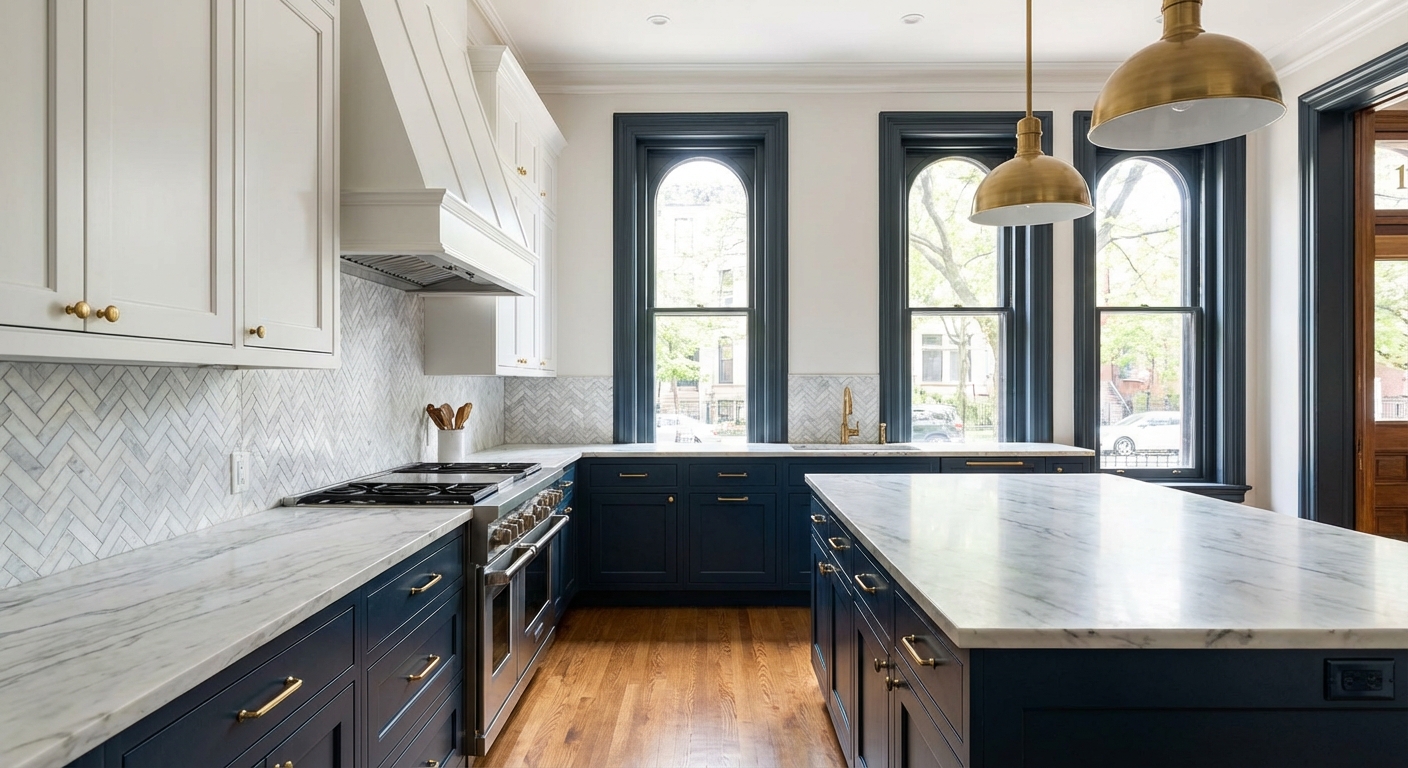
A couple in a Roscoe Village greystone called me last spring because they couldn't agree on a cabinet finish for their gut-renovated kitchen. She wanted the warmth of a glazed antique white; he wanted the rustic, lived-in look of distressed cabinets. The kitchen was 130 square feet with original brick on one wall, so both finishes would have worked — but they needed to pick one and understand exactly what they were committing to in terms of cost, durability, and long-term maintenance. I walked them through everything I'm about to share with you.
Key Takeaways
- Glazing adds $1,200–$3,000 to a full kitchen cabinet order; distressing adds $800–$2,500 depending on the technique.
- Glazed finishes highlight raised-panel and detailed door profiles, while distressing works on nearly any door style.
- Both finishes require a sealed topcoat — I use catalyzed conversion varnish rated at 150+ MEK rubs for Chicago humidity.
- Distressed cabinets hide everyday wear better over 10+ years, making them lower-maintenance long term.
- Glazed finishes tested higher for resale appeal in Midwest markets according to NKBA kitchen trend data.
What Exactly Is a Glazed Cabinet Finish?
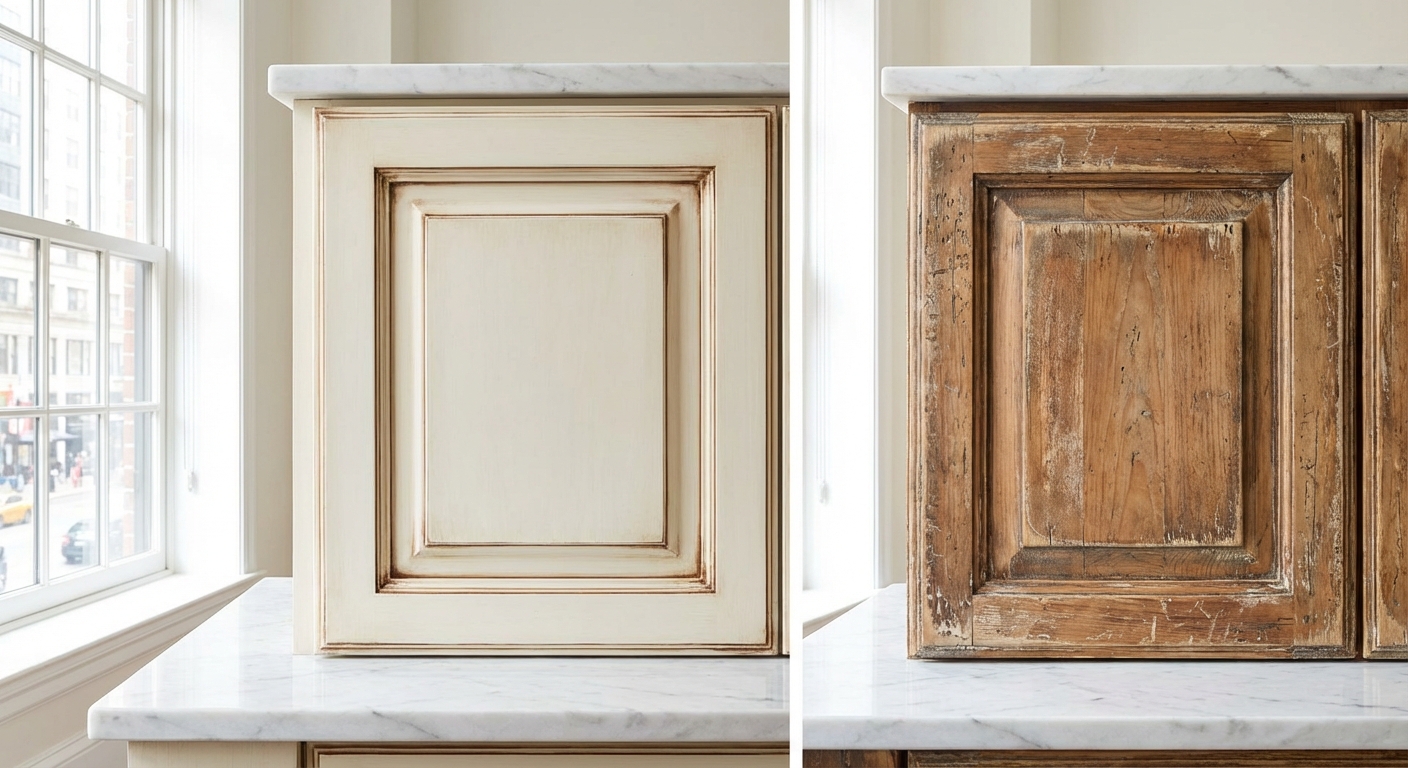
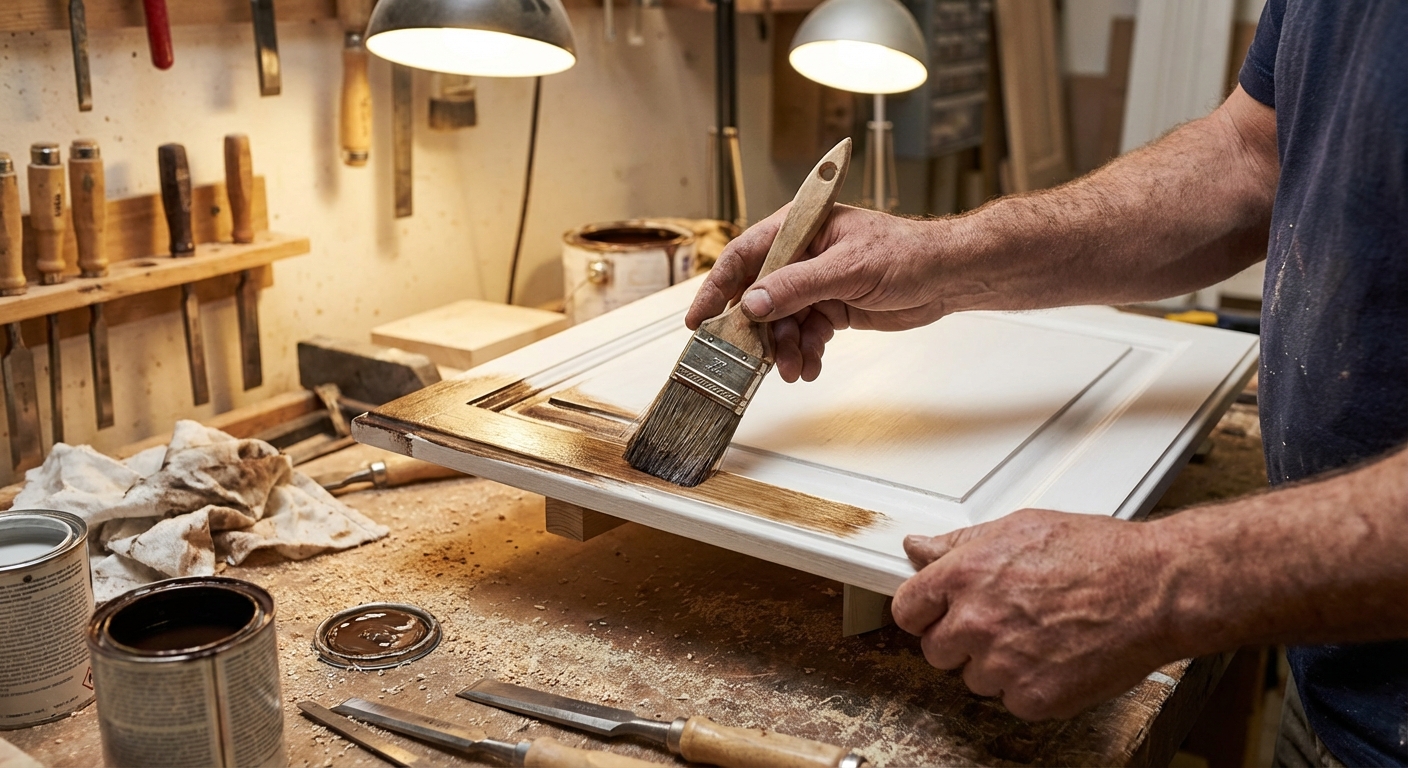
Glazing is a secondary finish applied over a base coat of paint or stain. After the base color cures — usually 24–48 hours — I brush or wipe a translucent glaze into the door's profiles, corners, and edges. The glaze settles into crevices, creating depth and shadow that makes the cabinet look like it's been in the home for decades. At our shop, I typically use oil-based or water-based glazes in chocolate, pewter, black, or Van Dyke brown tones. The technique is entirely hand-done, which means no two doors look identical — and that's the point. Glazed finishes pair beautifully with raised-panel, beaded inset, and applied-molding door styles because the glaze has profiles to settle into. On a flat-slab door, glazing doesn't deliver the same effect, so I'll steer clients toward a different technique if they've chosen modern shaker or frameless construction.
What Exactly Is a Distressed Cabinet Finish?
Distressing is a physical aging technique — we're actually altering the wood surface before sealing it. I use a combination of methods: chain-beating, fly-specking with a toothbrush dipped in dark stain, hand-sanding edges to expose raw wood or a contrasting base coat underneath, and sometimes worm-hole simulation with an awl. The goal is to make brand-new maple, birch, or alder look like it's survived 50+ years of family use. At AK Cabinet Craft, our distressing is done by hand in our Chicago shop — never factory-automated — so the wear patterns look authentic rather than repetitive. The finish works on virtually any door style, from shaker to cathedral arch, because the character comes from the surface itself rather than from profile detail. After distressing, I seal everything with the same catalyzed topcoat we use on glazed work, locking the look in permanently.
Side-by-Side Comparison: Glazed vs Distressed Cabinets
I built this table from real project data across 1,300+ completed projects at AK Cabinet Craft. These numbers reflect full kitchen cabinet sets — typically 20–30 doors — in Chicago homes.
| Factor | Glazed Finish | Distressed Finish |
|---|---|---|
| Added Cost (Full Kitchen) | $1,200–$3,000 | $800–$2,500 |
| Best Door Styles | Raised panel, beaded inset | Any style — shaker to arch |
| Production Time Added | 2–3 days | 1–2 days |
| Humidity Resistance | High (with sealed topcoat) | High (with sealed topcoat) |
| Touch-Up Difficulty | Moderate — must color-match glaze | Easy — new marks blend in |
| Hides Daily Wear | Moderate | Excellent |
| Resale Appeal (Midwest) | High — tested well in 2025/2026 | Moderate — appeals to specific buyers |
| Overall Character Level | Elegant, Old-World | Rustic, Farmhouse, Casual |
The short version: glazing gives you refined, European-inspired elegance. Distressing gives you rugged, warm authenticity. Both add undeniable character — but they attract very different design personalities.
Need expert advice? Call (224) 808-5100 or schedule a free kitchen design consultation.
How Chicago's Climate Affects Both Finishes
I can't talk about cabinet finishes without addressing Chicago's humidity swings. In summer, indoor relative humidity can climb to 55–65% even with air conditioning. In winter with the heat running, it drops to 15–25%. That 40-point swing causes wood to expand and contract, which puts stress on any finish. For glazed cabinets, the risk is micro-cracking in the glaze layer if the topcoat isn't flexible enough — that's why I insist on catalyzed conversion varnish rather than cheaper lacquer. For distressed cabinets, the physical wear marks actually help mask seasonal movement because tiny cracks and edge wear blend right into the aesthetic. Both finishes perform well long-term in Chicago as long as the substrate is right — I use 3/4-inch furniture-grade plywood box construction with solid wood or MDF door panels, never particleboard. You can read more about substrate choices in our kitchen cabinet dimensions and materials guide.
Which Door Profiles Work Best for Each Finish
This is where I see homeowners make costly mistakes. A glazed finish needs somewhere to pool — that means profiles, grooves, and recesses. Here's what I recommend:
- Glazed finish: Raised panel, applied molding, beaded inset, cathedral arch — any door with 3+ profile layers.
- Distressed finish: Shaker, flat panel, raised panel, knotty alder slab — works on virtually everything.
- Avoid: Glazing on flat-slab modern doors (the glaze has nowhere to settle and looks streaky).
- Combine: Some clients layer both — distress the wood, then apply a light glaze over top for maximum depth.
When we build custom kitchen cabinets in Chicago, I always mock up a sample door with the chosen finish before production begins. That sample goes home with the client for 48 hours so they can see it in their own lighting — under Edison bulbs, under fluorescents, in morning sun, at night. Kitchen lighting changes everything about how a glaze reads, and I've had clients completely switch their glaze color after seeing a sample under their pendant fixtures.
Durability and Maintenance Over 10+ Years
I've been building cabinets for 14 years, so I've had the chance to revisit kitchens I finished a decade ago. Glazed cabinets that were properly sealed still look great at the 10-year mark, but they do show wear differently — the glaze in high-touch areas like the handles and lower cabinet rails can lighten slightly from hand oils and cleaning products. Touch-ups require matching the glaze color exactly, applying it by hand, and re-sealing. It's not a DIY-friendly repair. Distressed cabinets at the same age? They look arguably better than the day I installed them. Every ding, scuff, and nick that accumulated over a decade blends seamlessly into the intentional distressing. For families with young kids, or anyone who doesn't want to babysit their cabinets, I lean toward distressing. For a formal kitchen or a home where the owners enjoy meticulous upkeep, glazing wins hands down.
Regardless of finish, I use hardware from Blum on every project — their CLIP top hinges and TANDEMBOX drawer systems are rated for 200,000+ cycles, so the mechanical components outlast any finish debate. Our custom cabinets for every room carry a 5-year warranty covering both construction and finish integrity.
Cost Breakdown: What You'll Actually Pay
Let me break down real numbers from projects we've completed in Lincoln Park, Wicker Park, and Lakeview. These are additional costs on top of base cabinet pricing, which starts at $15,000 for a full custom kitchen at AK Cabinet Craft.
| Finish Option | Added Cost (20–30 Doors) | Includes |
|---|---|---|
| Light glaze (single color) | $1,200–$1,800 | One glaze color, hand-wiped, sealed topcoat |
| Heavy glaze (multi-technique) | $2,000–$3,000 | Layered glaze, brush + wipe, antiqued corners |
| Light distressing | $800–$1,400 | Edge sanding, light fly-specking, sealed |
| Heavy distressing | $1,500–$2,500 | Chain-beating, worm holes, edge wear, layered paint reveal |
| Combined glaze + distress | $2,500–$4,000 | Full physical distressing plus glaze overlay |
These prices include the sample door I mentioned earlier, all labor, and the catalyzed topcoat. Production adds 1–3 days to our standard 21-day build timeline, depending on technique complexity. For inspiration on how these finishes look in real Chicago homes, browse our completed kitchen project gallery.
My Recommendation: Which Finish Should You Choose?
After building cabinets across every style imaginable, here's my honest take. If your home has traditional architecture — a Chicago greystone, a vintage two-flat, a pre-war condo with crown molding — glazed cabinets match that elegance beautifully. The depth and Old-World warmth of a chocolate or pewter glaze on a cream raised-panel door is timeless. If your home leans casual, or you're building a family kitchen that needs to handle real life without showing every scratch, go distressed. I also recommend distressing for custom built-ins in high-traffic areas like mudrooms and family rooms. And if you can't decide — the combination of light distressing with a single-color glaze overlay gives you the best of both worlds for roughly $2,500–$4,000 added to a full kitchen. That Roscoe Village couple I mentioned at the top? They went with the combination. Eight months later, they sent me a photo of their kids doing homework at the island, and those cabinets already looked like they'd been there for generations.
For bathroom applications, both finishes work equally well — our custom bathroom vanity cabinets can be finished with any technique discussed here, using the same moisture-resistant topcoat rated for wet environments.
Frequently Asked Questions
Can I glaze or distress cabinets that are already installed?
Technically yes, but I don't recommend it. Retrofitting a glaze or distressing treatment in place requires masking off countertops, backsplashes, and flooring, and the results are never as precise as shop-applied finishes. If you're refinishing existing cabinets, I'd rather pull the doors and bring them to the shop for 3–5 days to do it right.
Does glazing or distressing void any warranties?
Not at AK Cabinet Craft. Both techniques are covered under our 5-year warranty because we control the entire process — from raw material to sealed topcoat — in our Chicago shop. Our team has completed over 1,300 projects using these methods with a proven track record.
Which finish is better for resale value in Chicago?
In my experience, glazed finishes test better with a broader pool of buyers. They read as "upgraded" rather than "niche." Distressed cabinets appeal strongly to the right buyer but can polarize others. If resale is your top priority within 3–5 years, I'd go with a subtle glaze over a neutral base color like warm white or greige.
Can I combine glazed and distressed finishes in the same kitchen?
Absolutely — and I do it regularly. The key is applying the distressing first, then laying the glaze over top so it settles into both the door profiles and the distress marks. The combined technique costs $2,500–$4,000 for a full kitchen set and adds roughly 3 days to production.
What base paint colors work best under a glaze?
I recommend antique white, linen, warm cream, or light gray as base coats. These neutral tones let the glaze create contrast without looking muddy. Dark base colors like navy or forest green can also be glazed, but you'll need a lighter metallic or white glaze to get visible depth — it's a more advanced technique that I reserve for statement pieces like island cabinets or hutches.
Ready to Get Started?
Whether you're leaning toward a refined glazed finish, a rustic distressed look, or the combination of both, I'd love to build you a sample door so you can see the finish in your own home before committing. At AK Cabinet Craft, every project starts with a one-on-one design conversation where I walk you through materials, finishes, and hardware options tailored to your Chicago home. Schedule a free kitchen design consultation or call (224) 808-5100 — I'll have a sample in your hands within a week.