Choosing between granite and quartz countertops is one of the most common decisions I help Chicago homeowners make. Both materials work beautifully with custom cabinets, but they behave differently in our climate, require different maintenance, and pair best with different cabinet styles. After evaluating materials for hundreds of kitchen projects at AK Cabinet Craft, I can tell you the right choice depends on your kitchen habits, your cabinet finish, and how much upkeep you're willing to do.
How Chicago's Climate Affects Countertop Performance
Chicago's temperature swings — from sub-zero winters to humid 90°F summers — put stress on countertop materials that homeowners in milder climates never think about. Granite is a natural stone with microscopic pores. When humidity spikes in July and August, unsealed or poorly sealed granite absorbs moisture, which can lead to dark spots near sinks and dishwashers. In winter, the dry indoor air from forced-air heating causes that moisture to evaporate unevenly, sometimes amplifying hairline fissures over years.
Quartz, being an engineered product (roughly 93% ground quartz bound with polymer resins), is non-porous. It doesn't absorb moisture at all. In my experience, this makes quartz more predictable in Chicago kitchens where the humidity differential between summer and winter can exceed 40 percentage points. That said, quartz is sensitive to heat — placing a 400°F pan directly on quartz can discolor the resin. Granite handles heat without flinching.
Durability: What I've Seen After Years of Use
Granite scores a 6-7 on the Mohs hardness scale and resists scratching well. However, it can chip at edges, especially at corners near high-traffic zones like the stove. I've inspected granite countertops in Lincoln Park kitchens that still looked flawless after 15 years — because the owners sealed them annually.
Quartz is slightly more flexible due to its resin binders, making it more resistant to chipping on impact. It doesn't need sealing, ever. The trade-off is UV sensitivity: prolonged direct sunlight can yellow white quartz over time. If your kitchen gets strong afternoon sun through west-facing windows, I'd recommend choosing a mid-tone quartz or ensuring window treatments are in place.
Cabinet Pairing: Which Material Complements Which Style
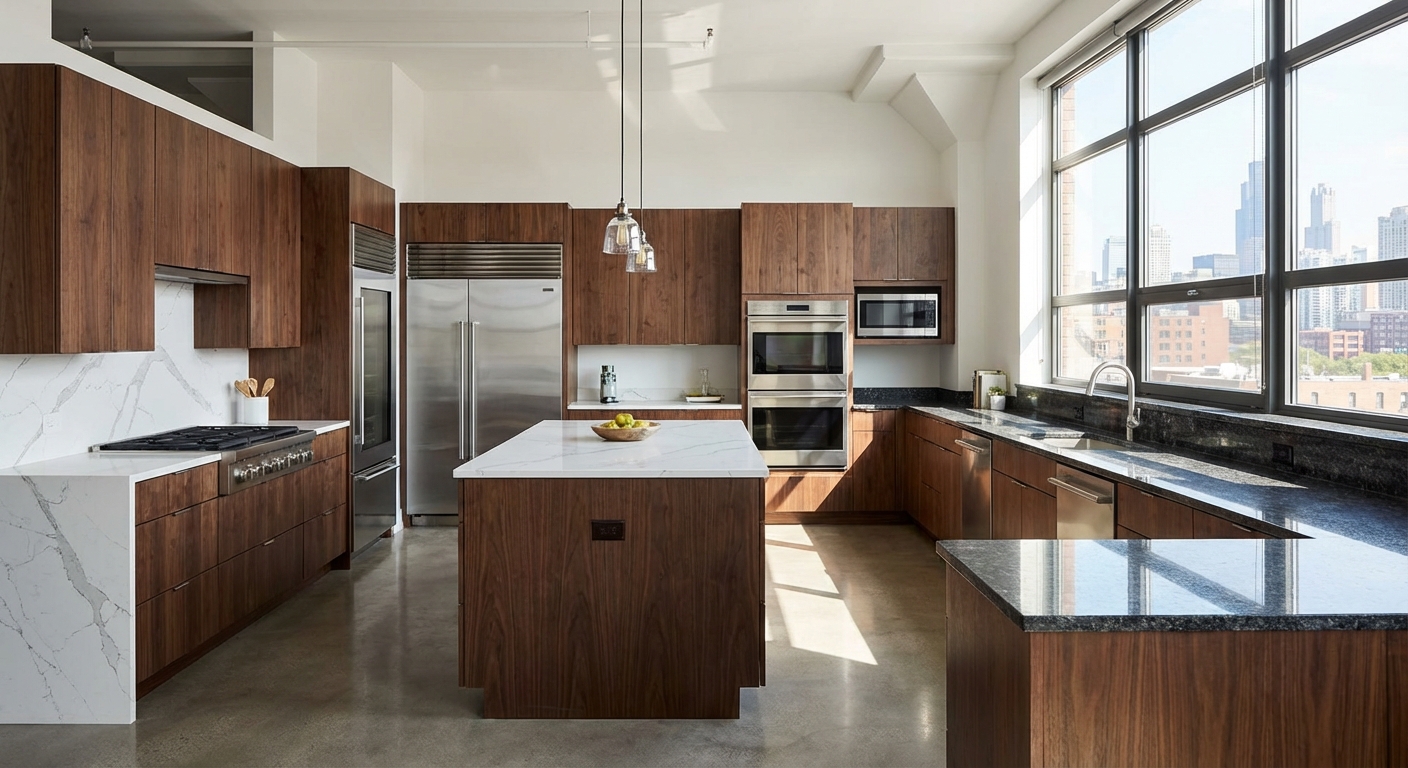
This is where my materials expertise directly intersects with cabinet design. Granite's natural veining and color variation pair best with solid wood cabinets that have their own organic character — think walnut, cherry, or stained white oak. The visual complexity of granite works with the warmth of natural wood grain. If you pair heavily veined granite with a busy cabinet pattern, the kitchen looks chaotic. Simpler cabinet door profiles (shaker or flat panel) let dramatic granite slabs breathe.
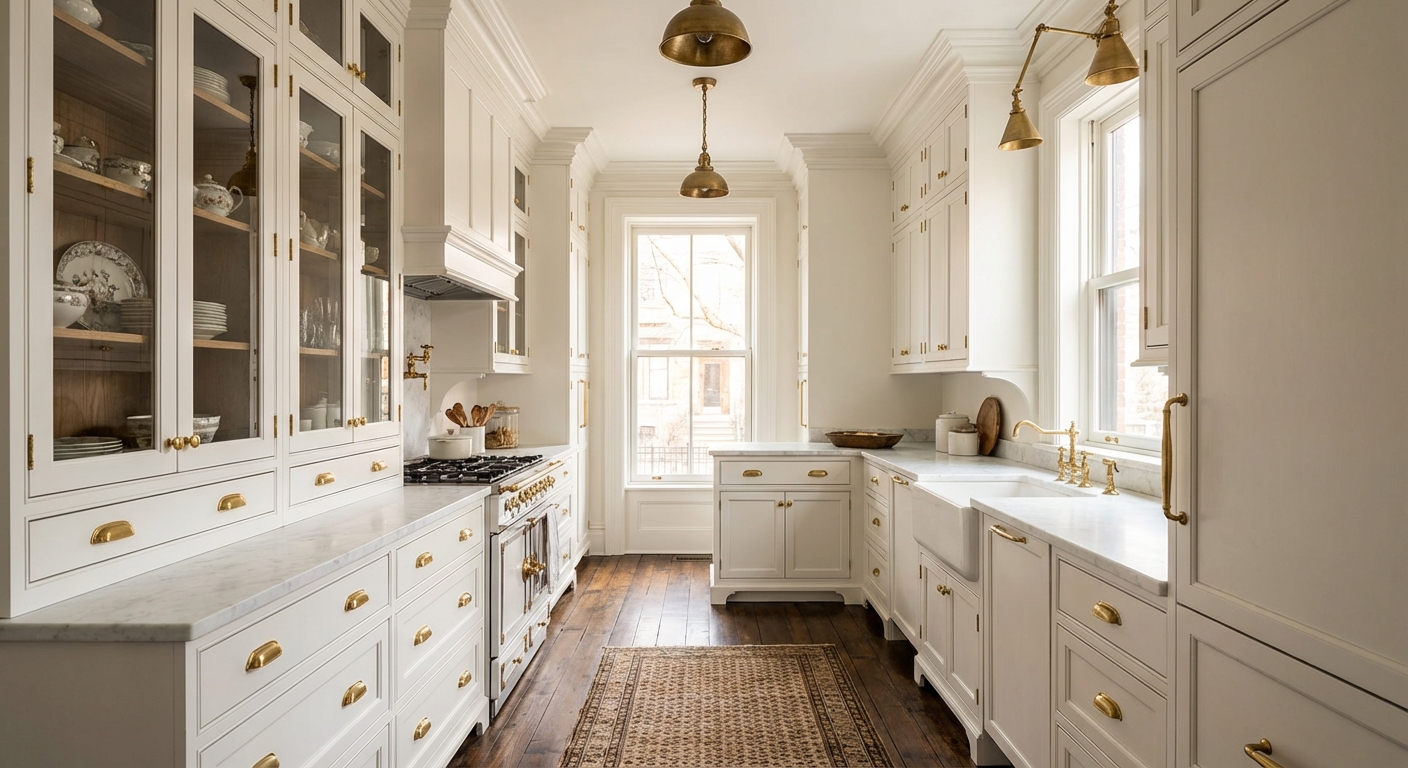
Quartz, with its more uniform appearance, is ideal for contemporary and transitional kitchens. It pairs exceptionally well with painted cabinets — white, navy, sage green — because the clean countertop surface creates visual calm. For our custom kitchen cabinets, I often recommend quartz when clients choose a two-tone design, since the countertop acts as a neutral bridge between upper and lower cabinet colors.
Have questions? Call me at (224) 808-5100 or schedule a consultation.
Maintenance: The Honest Truth
Granite requires sealing once a year. The process takes about 30 minutes and costs under $20 for a quality impregnating sealer. Skip this step and you'll eventually see staining around the sink, especially with dark liquids like red wine or coffee. I recommend a water-based impregnating sealer rather than a topical one — it penetrates deeper and lasts longer in Chicago's variable humidity.
Quartz needs only soap and water. No sealing, no special products. Avoid abrasive cleaners (Bar Keepers Friend is fine; Comet is not) and never use bleach-based sprays regularly — they can dull the surface over time. For daily use, quartz is objectively lower maintenance.
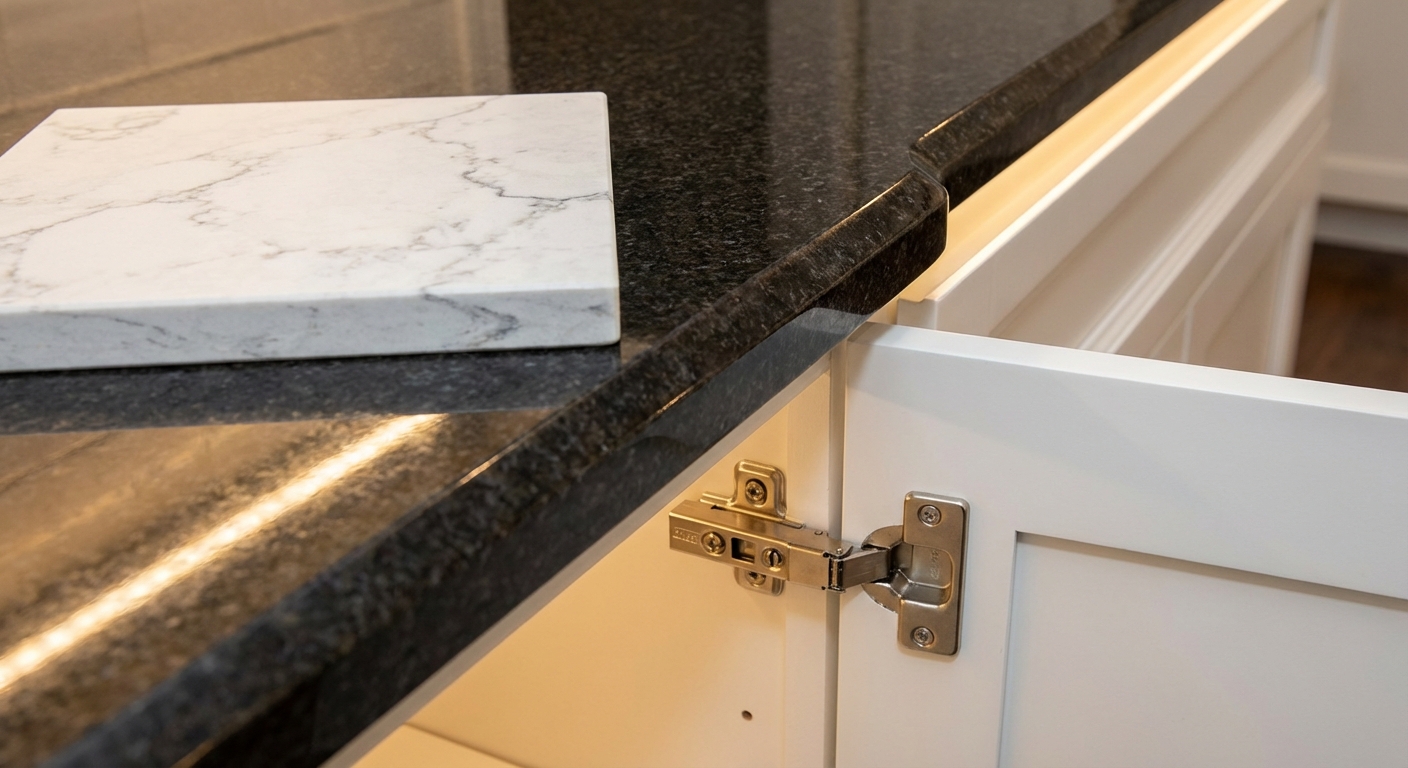
Cost Comparison for Chicago Kitchens
For a typical 30-square-foot Chicago kitchen countertop (including a standard island), here's what I see in current pricing:
- Granite (mid-range): $2,400–$4,500 installed. Exotic slabs like Blue Bahia or Patagonia can exceed $8,000.
- Quartz (mid-range): $2,800–$5,000 installed. Premium brands like Cambria or Caesarstone run $4,500–$6,500.
- Fabrication and installation costs are comparable for both materials in the Chicago market.
Granite has a wider price range, which means budget-conscious homeowners can find attractive options at a lower entry point. Quartz pricing is more consistent but generally starts slightly higher. Factor in granite's annual sealing cost ($15–$20/year over 20 years = $300–$400) and the lifetime cost gap narrows further.
Edge Profiles and Cabinet Integration
Both granite and quartz can be fabricated into any edge profile — ogee, bullnose, beveled, waterfall. But the material behaves differently during fabrication. Granite's natural crystal structure makes intricate edge profiles slightly more prone to micro-chipping during cutting. I've found that simpler edges (eased or beveled) hold up better in granite over the long run.
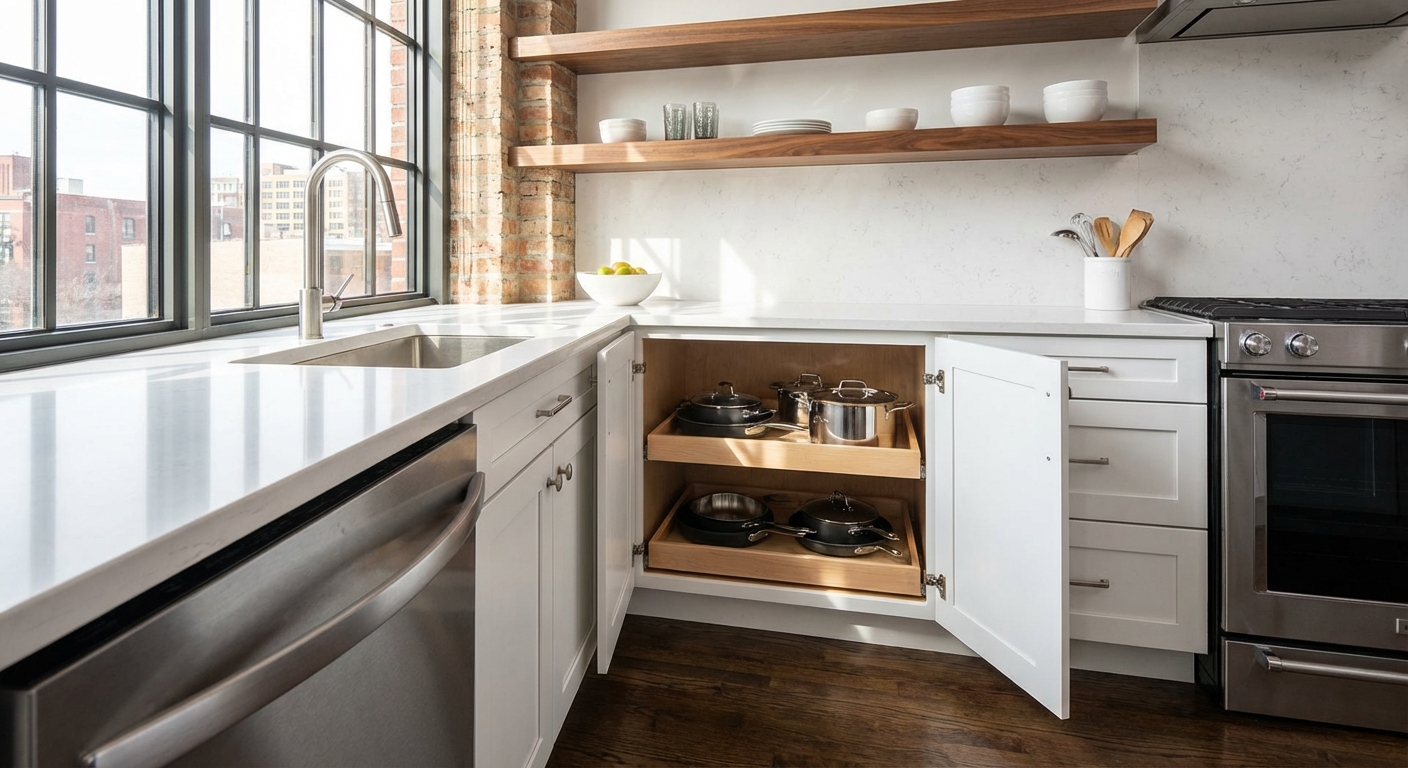
Quartz handles complex edge profiles more cleanly due to its engineered composition. If you want a dramatic waterfall island edge that cascades down the side of your custom cabinetry, quartz delivers a more uniform, seamless look. Granite waterfall edges can look stunning too, but the veining pattern won't always align perfectly at the mitered joint.
My Recommendation by Kitchen Type
After working with both materials across hundreds of projects at AK Cabinet Craft, here's my practical guidance:
- Choose granite if: You want a one-of-a-kind natural look, cook with high heat frequently, prefer traditional or transitional cabinet styles, and don't mind annual sealing.
- Choose quartz if: You prioritize zero maintenance, want color consistency across a large surface area, prefer modern or painted cabinets, and have kids who spill things constantly.
- Consider both: Some of our best Chicago projects use quartz on perimeter counters and a granite statement island. This gives you the best of both worlds and creates a clear visual hierarchy in the kitchen.
What About Resale Value in Chicago?
Both granite and quartz are considered premium countertop materials by Chicago buyers and appraisers. Neither will hurt your resale value. That said, quartz has been trending upward in buyer preference over the past five years, particularly in the 25–45 age demographic. In neighborhoods like Lincoln Park, Lakeview, and Wicker Park, I've seen quartz specified more often in kitchen renovations aimed at resale. Granite still commands respect in higher-end homes, particularly when paired with custom wood cabinetry — you can see examples in our project gallery.
Frequently Asked Questions
Can I put hot pots directly on granite or quartz?
Granite handles direct heat without damage. Quartz cannot — temperatures above 300°F can discolor or crack the resin binders. I always recommend trivets with quartz, no exceptions.
Which stains more easily — granite or quartz?
Unsealed granite stains more easily because it's porous. Properly sealed granite resists stains well for 12 months between applications. Quartz is non-porous and extremely stain-resistant, though turmeric and permanent marker can leave marks if not cleaned promptly.
Does quartz look fake compared to granite?
Modern engineered quartz has come a long way. Brands like Cambria and Dekton produce slabs with realistic veining that closely mimic Calacatta marble and other natural stones. In my experience, most homeowners cannot tell the difference at a normal viewing distance.
How long do granite and quartz countertops last?
Granite can last 50+ years with proper sealing. Quartz manufacturers typically warranty their product for 15–25 years, though real-world performance often exceeds that. In Chicago homes I've revisited, both materials age well when properly maintained.
Can I replace just the countertop without changing my cabinets?
Yes, as long as your existing cabinets are structurally sound and level. Both granite and quartz weigh 20–25 pounds per square foot, so your cabinet boxes need to support that load. Our team evaluates cabinet condition before every countertop installation.
Ready to Get Started?
Choosing the right countertop is easier when you can see how it looks against your actual cabinet samples. At AK Cabinet Craft, our team has completed 1,300+ projects across Chicago, and we bring material samples directly to your home so you can evaluate them in your kitchen's lighting. Whether you're leaning toward granite or quartz, I'm happy to walk you through the options and help you find the best pairing for your custom cabinets. Contact us today or call (224) 808-5100 to schedule your free consultation.