Last fall, a couple in the Portage Park neighborhood called me about their 1925 Chicago bungalow kitchen. The cabinets were original — nearly a hundred years old, warped, and falling apart. The layout wasted every inch. They loved their bungalow but dreaded cooking in it. This is the story of how we transformed their 95-square-foot galley kitchen into a space that finally works for a family of four, on a realistic budget, in 21 days of production time.
The Problem: What We Were Working With
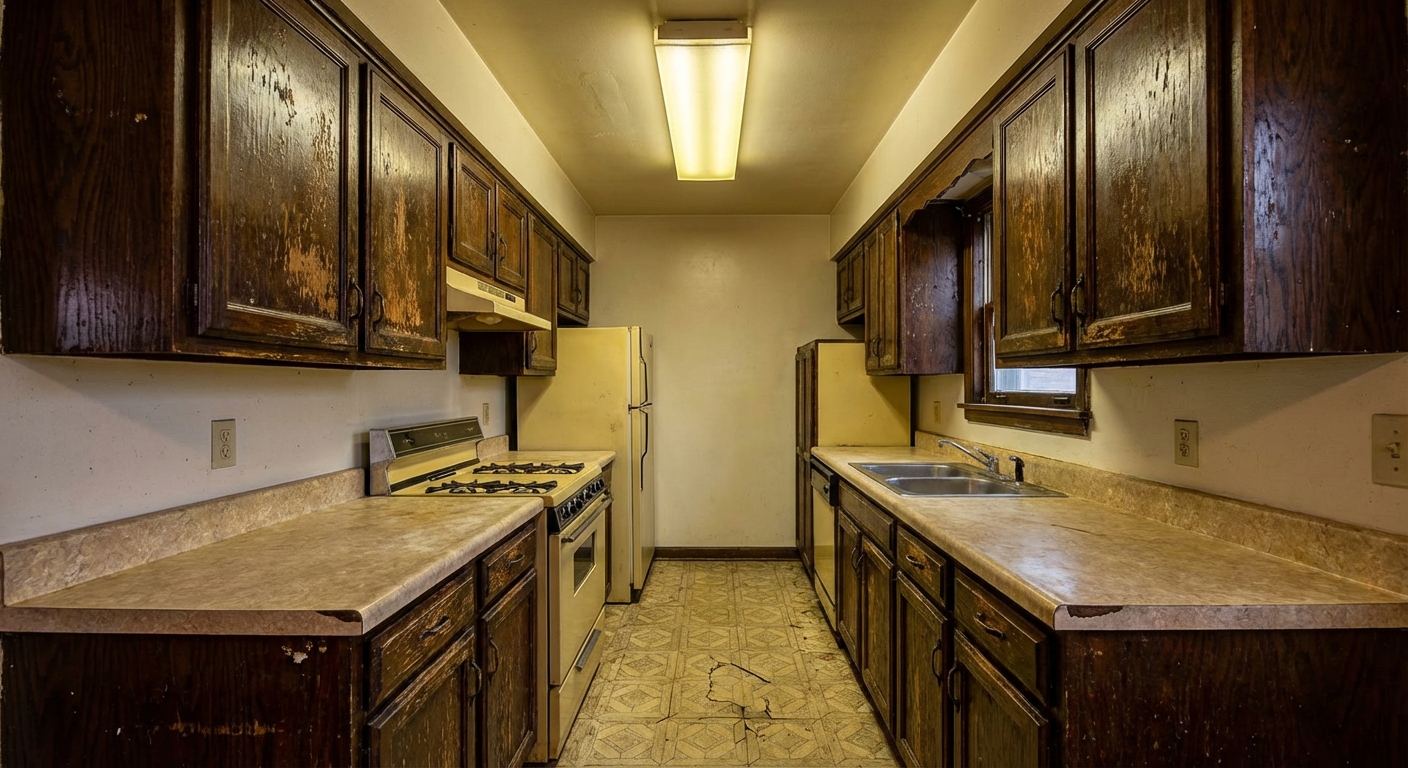
Chicago bungalows share a common kitchen challenge — they're compact, typically 80 to 110 square feet, with low ceilings around 8 feet and limited natural light from one or two small windows. This particular kitchen in Portage Park had dark oak cabinets from the original build. The doors no longer closed properly. The drawers had no slides — just wood-on-wood tracks worn smooth from decades of use.
The upper cabinets stopped six inches below the ceiling, creating a dust-collecting dead zone. The base cabinets had no pull-outs, no organizers, and one lazy Susan that hadn't spun since the Clinton administration. Counter space totaled about four running feet. The homeowners had been stacking their toaster on top of the microwave on top of the fridge.
The Homeowners' Goals
During our first consultation, the couple laid out three priorities. First, maximize every cubic inch of storage without moving walls. Second, brighten the space — the kitchen felt like a cave even at noon. Third, stay under $14,000 for cabinetry. They'd already allocated separate budgets for countertops, backsplash, and appliances with other contractors.
One thing I appreciated: they were realistic. They didn't want to blow out walls or relocate plumbing. They understood this was a bungalow, not a new-construction open concept. That clarity made planning faster.
Our Design Approach for Bungalow Constraints
I've overseen 1,300+ kitchen projects across Chicago, and bungalow kitchens make up a significant portion. The strategy that consistently works is vertical maximization. We designed new uppers that extend all the way to the 8-foot ceiling — gaining roughly 30% more storage compared to the old cabinets that stopped short.
We kept the original galley footprint but reconfigured the cabinet layout. On the sink wall, we replaced a single 36-inch base cabinet with a 33-inch sink base plus a slim 9-inch pull-out spice rack. On the opposite wall, we designed a floor-to-ceiling pantry cabinet (24 inches wide, 96 inches tall) with adjustable shelving — something the original kitchen never had. The result: 40% more total storage in the same square footage.
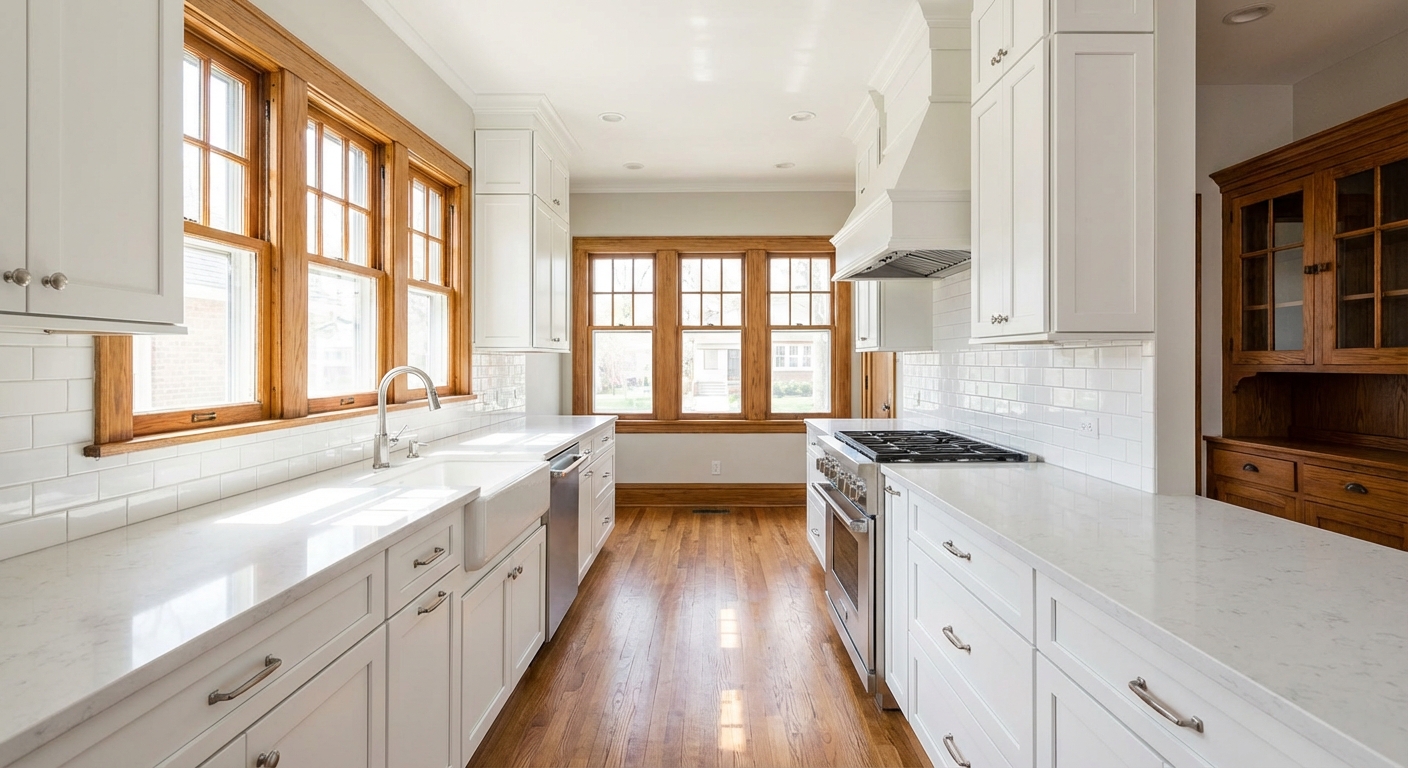
For the color palette, we went with a warm white (SW Alabaster) on shaker-style doors paired with brushed brass cup pulls. White cabinets in a bungalow kitchen aren't just about aesthetics — they reflect light back into the room. Combined with under-cabinet LED lighting, the kitchen went from cave to bright without adding a single window.
Have questions? Call me at (224) 808-5100 or schedule a consultation.
Materials and Hardware We Used
Every door and drawer box was built with 3/4-inch plywood construction — no particleboard. For a bungalow kitchen where humidity from cooking can build up fast in tight quarters, plywood holds up far longer. The finish was a catalyzed conversion varnish, which resists yellowing better than standard lacquer (important for white cabinets near a stove).
All hinges and drawer slides are Blum, made in Austria. The soft-close Blumotion hinges were non-negotiable for this project because the couple has two young kids. Every drawer uses Blum Tandem full-extension slides rated for 90 pounds. The corner base cabinet got a Blum SPACE CORNER unit instead of a traditional lazy Susan — it pulls out and pivots, giving access to the full interior without reaching blindly into a dark corner.
Explore more about the materials and methods we use across all projects in our custom kitchen cabinet options.
The Build Timeline: 21 Days Production, 2 Days Install
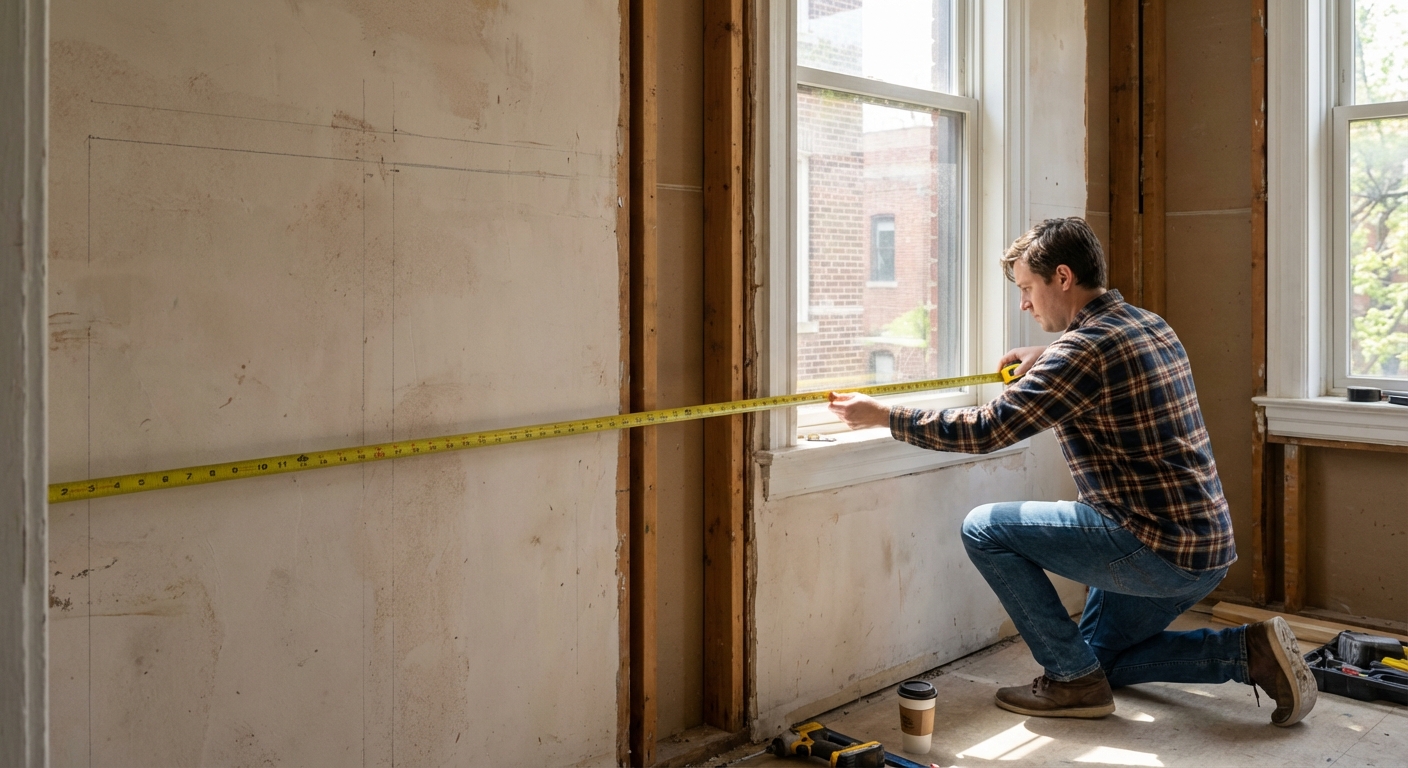
After finalizing measurements and design approval, our shop built every cabinet in 21 days. This is our standard production timeline, and for bungalow projects it's especially helpful because homeowners in compact homes feel the disruption of a missing kitchen more intensely than someone with a large house and a second prep area.
Installation took two days. Day one: removal of old cabinets, wall prep, and installation of all upper and base cabinets. Day two: installation of the pantry tower, hardware mounting, and final adjustments. The homeowners were cooking in their new kitchen by the following weekend.
The Budget Breakdown
Here's what the cabinet portion of this project actually cost:
- Base cabinets (5 units including sink base and pull-out): $4,800
- Upper cabinets (6 units, ceiling-height): $3,600
- Floor-to-ceiling pantry tower: $1,800
- Blum hardware package (hinges, slides, SPACE CORNER): $1,400
- Finishing and installation: $2,100
Total cabinetry investment: $13,700. Under their $14,000 target. The homeowners handled countertops (quartz, around $3,200 through their own fabricator) and backsplash (subway tile, about $800 installed) separately. All-in, their kitchen transformation came to roughly $17,700.
Before vs. After: The Measurable Differences
Numbers tell this story better than adjectives. Before: 22 linear feet of cabinet frontage with no pull-outs. After: 28 linear feet of cabinet frontage with 8 pull-out drawers and a full pantry tower. Before: upper cabinets at 30 inches tall. After: uppers at 40 inches tall, reaching the ceiling. Before: zero interior lighting. After: LED strips under every upper cabinet.
The homeowners told me the biggest everyday change was the pantry tower. They'd never had a dedicated pantry in the bungalow. Previously, dry goods lived in a hallway closet ten feet from the kitchen. Now everything is within arm's reach of the stove.
Lessons for Other Chicago Bungalow Owners
After hundreds of bungalow kitchen projects, here's what I consistently recommend. Don't fight the footprint — optimize it. Moving walls in a bungalow often means structural engineering costs ($3,000-$8,000) that could go toward better cabinets and appliances instead. Go to the ceiling with your uppers. That wasted space above old cabinets is free storage you're paying to heat.
Choose light-colored cabinet finishes. Bungalow kitchens almost always face north or have limited window area due to the lot layout. Dark cabinets in these kitchens require significantly more artificial lighting to feel comfortable. And invest in pull-out organizers for base cabinets. In a small kitchen, you cannot afford dead space in the back of a 24-inch-deep cabinet.
If you're exploring what a similar transformation could look like in your home, browse real examples in our project gallery.
Frequently Asked Questions
How long does a typical Chicago bungalow kitchen cabinet remodel take from start to finish?
From the initial measurement visit to completed installation, I typically quote 4 to 5 weeks. That includes design finalization (about a week), production (21 days in our shop), and installation (1-2 days depending on complexity). The kitchen is usually out of commission for only 2-3 days during removal and install.
Can you remodel bungalow kitchen cabinets without moving plumbing or walls?
Absolutely, and I recommend it for most bungalow owners. In this Portage Park project, we gained 40% more storage without touching a single wall or pipe. Smart cabinet design — taller uppers, pull-outs, a pantry tower — solves most storage complaints without the cost and disruption of structural changes.
What's a realistic budget for bungalow kitchen cabinets in Chicago?
For custom plywood cabinets with Blum hardware, most of my bungalow kitchen projects fall between $9,000 and $16,000 depending on the number of cabinets, finish complexity, and specialty organizers. Our entry point starts at $2,999 for smaller configurations. This project came in at $13,700 for a full kitchen.
Do you offer a warranty on bungalow kitchen cabinet work?
Every project we build carries a 5-year warranty covering materials, construction, and hardware. Blum components themselves carry a lifetime warranty from the manufacturer. If a hinge or slide fails under normal use, we replace it.
Why choose custom cabinets over big-box store options for a bungalow?
Bungalow kitchens rarely have standard dimensions. Ceilings might be 96 inches instead of 108. Walls might be slightly out of square after a century of settling. Stock cabinets from big-box stores come in fixed sizes and leave gaps that need filler strips. Custom cabinets are built to your exact measurements, which in a small kitchen means the difference between wasted space and a kitchen that works.
Ready to Get Started?
If you own a Chicago bungalow and your kitchen feels stuck in another era, I'd like to show you what's possible without tearing down walls or blowing your budget. I'll come to your home, take measurements, and give you a detailed quote — no pressure, no obligation. Contact us today or call (224) 808-5100. We're at 2650 N Halsted St, Chicago, IL 60614, and we've been transforming Chicago kitchens for over a decade.