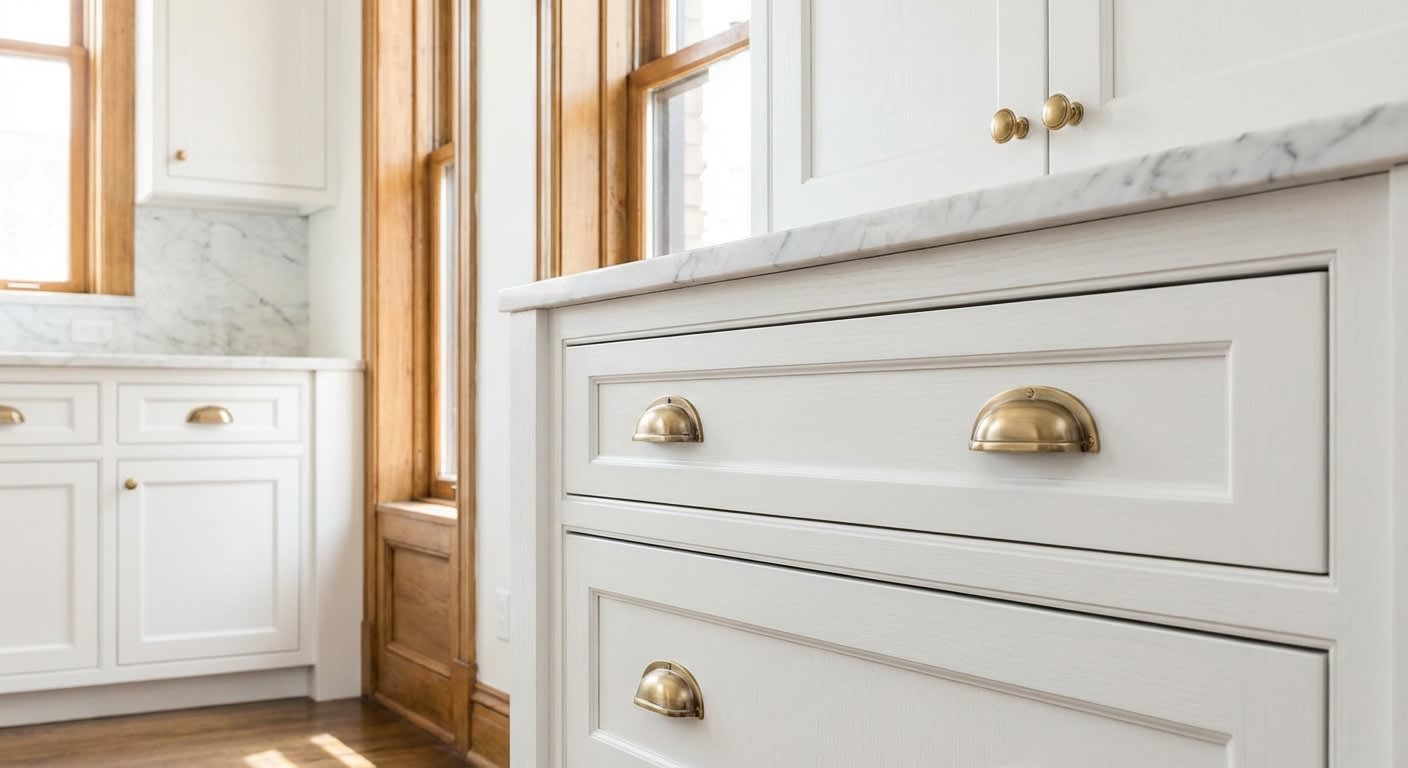
Last month, a client in Bucktown showed me her brand new $45,000 kitchen where the cabinet hardware was already failing. The pulls were loose, the finish was flaking, and the cheap zinc alloy had corroded near the sink. She'd spent $12 on a 10-pack from a big box store. That $12 decision now requires replacing 38 pieces of hardware and touching up paint where the old holes don't align with quality replacements.
Hardware is the jewelry of your kitchen. After installing over 1,300 kitchens across Chicago, I've learned that this relatively small investment—typically 2-4% of your cabinet budget—has outsized impact on both aesthetics and daily functionality. Here's how to choose pieces you'll love for decades.
Pulls vs Knobs: Which Works Better for Your Kitchen
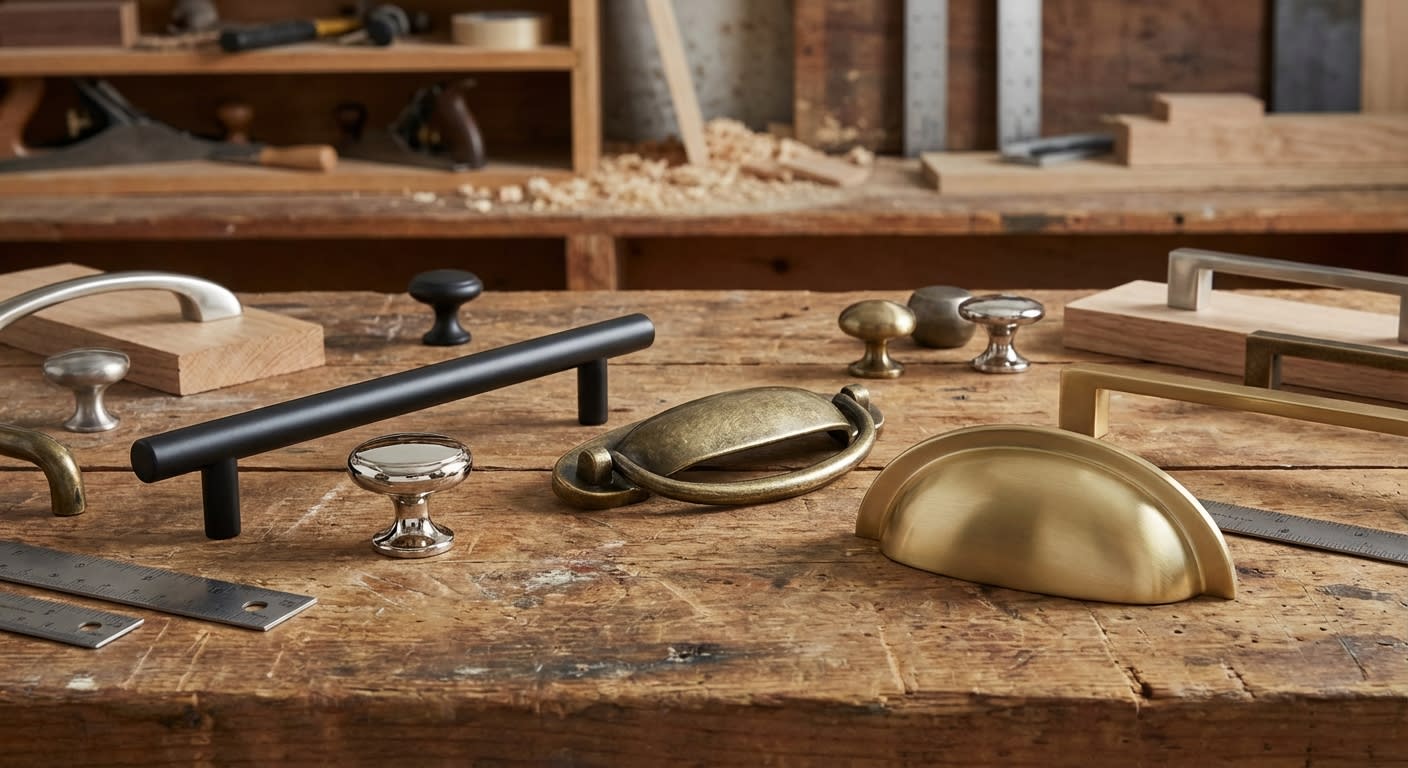
This isn't purely aesthetic—it's about ergonomics. Pulls give you more grip surface, which matters when your hands are wet or greasy from cooking. Knobs require a pinch-and-twist motion that can be harder for people with arthritis or mobility issues.
My general recommendation: pulls on drawers, your choice on doors. Drawers carry weight (think of a full cutlery drawer), and pulls distribute the force better. For upper cabinet doors, knobs work fine since you're just swinging them open. I see a lot of Chicago homeowners mixing both—knobs on uppers, pulls on lowers and drawers. This creates visual interest while being practical.
One exception: if you have children, consider pulls throughout. Kids naturally grab and pull rather than twist, reducing the chance they'll yank a knob loose over time.
Finding the Right Hardware Size
Oversized hardware on small cabinets looks cartoonish. Tiny hardware on large drawers feels cheap. Here's the sizing framework I use in my workshop:
- Drawer pulls: choose a length roughly one-third the drawer width (12-inch drawer = 4-inch pull)
- Cabinet door knobs: 1 to 1.5 inches diameter for standard doors
- Cabinet door pulls: 3 to 4 inches for most standard doors, 5 to 6 inches for larger pantry doors
- Appliance pulls: 12 to 18 inches for integrated refrigerator panels
Projection matters too. That's how far the hardware sticks out from the cabinet face. Standard projection is about 1.5 inches. Go shorter in tight spaces like galley kitchens common in Lakeview condos, where a 2-inch projection might catch your hip every time you walk past.
Materials That Survive Chicago Kitchens
Chicago's climate creates specific challenges. Our humid summers followed by dry winters with indoor heating cause wood to expand and contract. Hardware mounted on wood that moves needs to handle that stress without loosening.
Solid brass is my top recommendation. It's heavy, durable, develops a beautiful patina if unlacquered, and holds threads well even with seasonal wood movement. Yes, it costs more—roughly $8-25 per piece versus $2-5 for zinc alloy—but brass hardware can outlast the cabinets themselves.
Stainless steel works well near sinks where moisture exposure is constant. It won't corrode, but quality varies dramatically. Look for 304-grade stainless at minimum. Zinc alloy and aluminum serve budget-conscious projects, but expect replacement within 5-7 years in high-use areas. I've pulled countless corroded zinc pulls from kitchens near dishwashers where steam exposure accelerated deterioration.
Finishes: What's Trending vs What Lasts
In 2026, I'm seeing three dominant trends in Chicago kitchens: unlacquered brass (living finishes that patina), matte black, and warm metals like champagne bronze. Polished chrome has declined significantly from its peak a decade ago.
Trendy isn't always smart. Matte black shows fingerprints, water spots, and scratches more than almost any other finish. If you have kids or cook frequently, you'll be wiping hardware constantly. I'm honest with clients about this—matte black photographs beautifully but requires maintenance.
For durability with minimal upkeep, brushed nickel and satin brass remain excellent choices. The brushed texture hides fingerprints and minor scratches. PVD (Physical Vapor Deposition) finishes outlast traditional lacquered finishes significantly—the coating is bonded at a molecular level rather than painted on.
Have questions about your project? Give me a call at (224) 808-5100 — I'm happy to chat about your specific situation.
Matching Hardware to Chicago Home Styles
Your hardware should complement your home's architecture. A Gold Coast pre-war apartment with original moldings looks odd with ultra-modern flat bar pulls. Similarly, sleek contemporary hardware feels out of place in a Lincoln Park greystone with traditional details.
For vintage Chicago bungalows and two-flats (1900s-1940s), bin pulls, glass knobs, or simple brass knobs honor the period. Transitional styles work well in post-war ranches and split-levels throughout suburbs like Naperville and Schaumburg. Modern condos in newer developments can handle minimalist designs—finger pulls, integrated handles, or simple tubular bars.
The goal isn't strict historical accuracy unless you want that. It's visual coherence. When hardware feels like it belongs, the whole kitchen feels intentional rather than assembled from random choices.
Installation Placement That Makes Sense
Standard placement exists for a reason—it's comfortable for most people. For wall cabinets, position knobs or pulls in the bottom corner opposite the hinge, roughly 2.5-3 inches from the corner. For base cabinets and drawers, position in the upper corner opposite the hinge, or centered on drawer faces.
That said, I sometimes adjust based on the user. For a client in Oak Park who's 6'4", we mounted upper cabinet pulls slightly lower than standard so he wouldn't have to reach up awkwardly. For another client with shoulder problems, we positioned everything for optimal reach from a seated position.
One tip: before drilling, tape hardware in place with painter's tape and live with it for a day. Open cabinets, reach naturally, and see if the position feels right. Redrilling holes is possible but always visible, even with touch-up.
How Many Pieces You'll Actually Need
Most homeowners undercount. A typical Chicago kitchen with 20 cabinet doors and 15 drawers needs at minimum 35 pieces. Add appliance panels, pantry doors, or double-pull configurations on wider drawers, and you're easily at 40-50 pieces.
My advice: order 10-15% extra. You'll want spares for inevitable damage during installation or future repairs. Hardware lines get discontinued constantly—what's available today may be impossible to find in three years when you add a pantry cabinet. Matching across different production runs can mean slight finish variations too.
What I Use on My Own Projects
When clients ask what I'd choose for my own kitchen, I tell them: solid brass pulls from manufacturers who've been making hardware for decades, not trendy startups. Amerock, Top Knobs, and Emtek consistently deliver quality at different price points. At the premium end, Waterworks and Rocky Mountain Hardware create genuinely beautiful pieces that justify their cost.
I pair quality hardware with Blum hinges and drawer slides on every cabinet we build. Hardware that looks great means nothing if the drawers don't glide smoothly or doors sag after a year. The whole system works together.
Frequently Asked Questions
How much should I budget for kitchen cabinet hardware?
For quality hardware that lasts, budget $300-800 for a typical Chicago kitchen with 35-45 pieces. That's roughly $8-20 per piece for solid brass or quality stainless. You can spend less on zinc alloy, but I'd recommend putting that savings toward fewer, better pieces if budget is tight.
Can I mix different hardware finishes in one kitchen?
Yes, but with intention. The safest mix is two finishes that share undertones—polished nickel with chrome, or brass with gold. I'd limit mixing to two finishes maximum and use one consistently for cabinets while reserving the second for a specific zone like an island or appliance pulls.
Should cabinet hardware match my faucet and lighting?
Coordinating is better than matching. Exact matches often look forced and limit your options. Staying in the same metal family (warm metals together, cool metals together) creates cohesion without looking like you bought a builder-grade package deal.
How do I know if hardware will feel comfortable before buying?
Visit a showroom and physically test pieces. Online photos can't tell you if a pull edge is sharp or if a knob's proportions feel awkward in your hand. Most Chicago kitchen showrooms have hardware displays. I keep samples at my workshop for clients to test with actual cabinet doors.
What's the biggest hardware mistake you see homeowners make?
Choosing based solely on photographs. That gorgeous artisan hardware you found on Pinterest might have razor-sharp edges, weigh so much it strains hinge mechanisms, or have a finish that chips within months. Always verify materials, read reviews from people who've used the hardware daily, and test in person when possible.
Ready to Get Started?
Hardware is one of those details that separates a kitchen that photographs well from one that actually works well for your life. If you're planning a cabinet project and want to discuss hardware options that make sense for your home, your style, and how you actually cook—I'd love to help you figure it out.
Schedule Your Free Consultation:
- Call:(224) 808-5100
- Visit: 2650 N Halsted St, Chicago, IL 60614
- Online:akcabinetcraft.com/contacts
.png)
