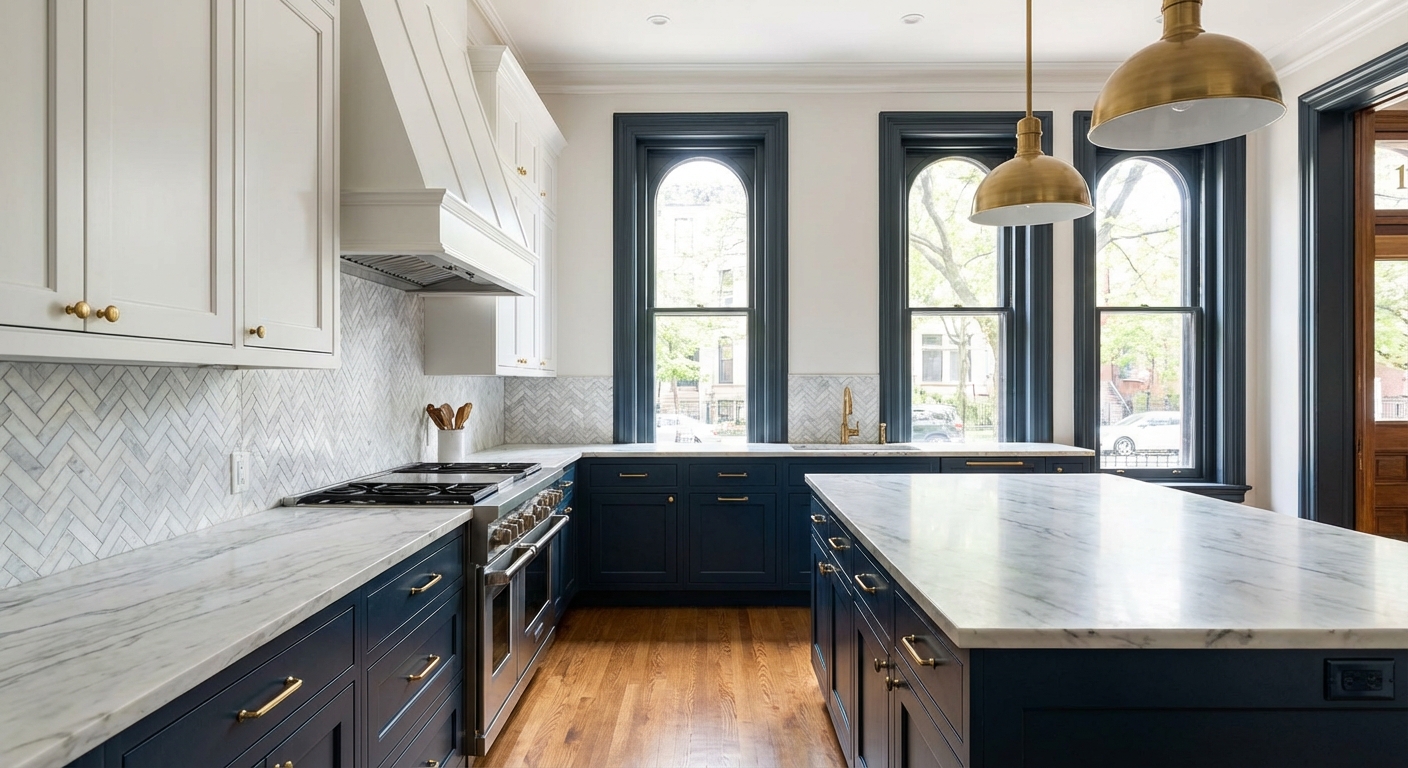
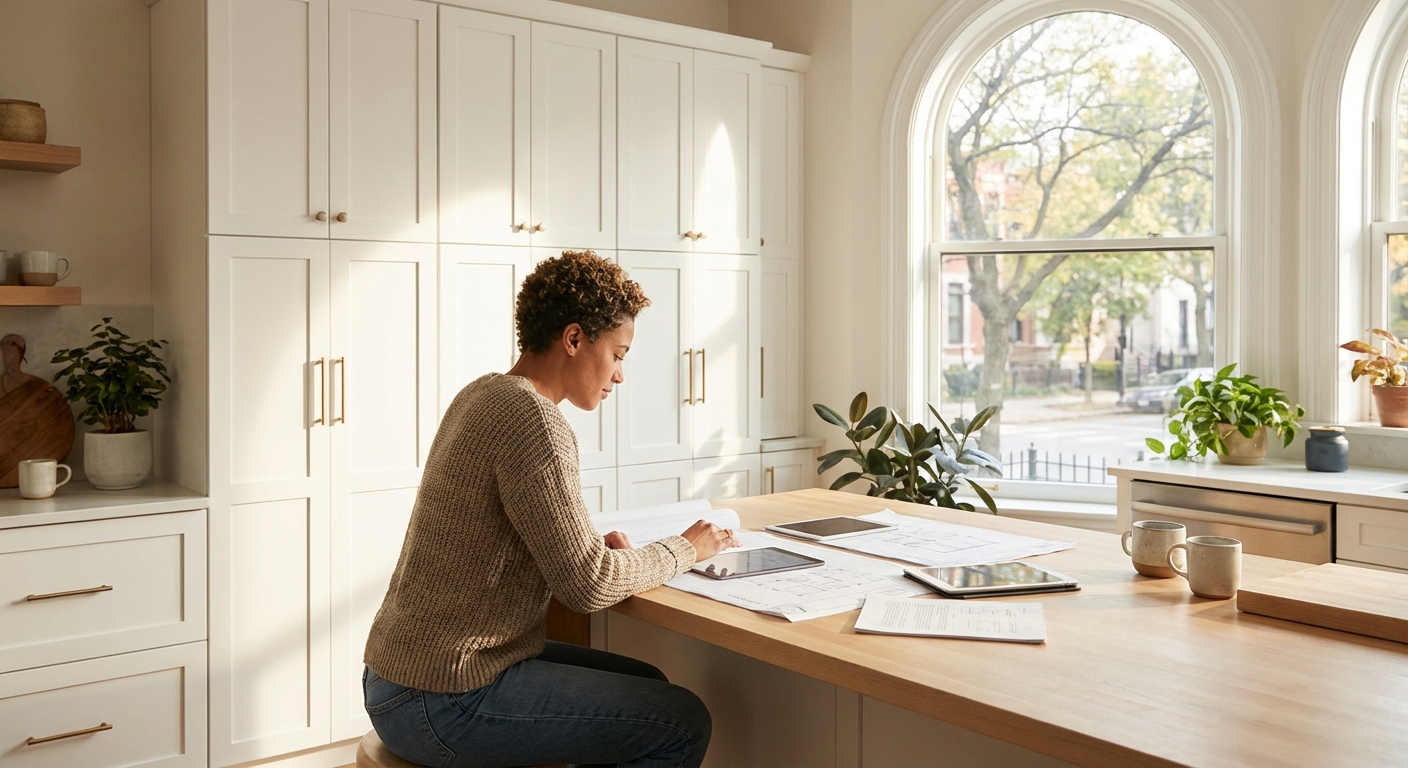
Two weeks ago, a homeowner in a 1940s Roscoe Village two-flat brought me a stack of magazine clippings — half showed sleek, handle-less European kitchens and half showed classic Shaker-style designs with traditional framing. Her kitchen measured just 110 square feet, and she wanted to know which construction method would give her the most storage without sacrificing the character of her vintage home. It's a question I hear almost every week on job sites across Chicago, and the answer depends on more factors than most people realize.
Key Takeaways
- Frameless cabinets offer 10-15% more interior storage space than face-frame cabinets of the same exterior dimensions
- Face-frame construction provides superior structural rigidity, especially important for Chicago's older homes with uneven walls
- Frameless cabinets require 3/4-inch (18mm) minimum box material — anything thinner compromises hinge integrity
- Both styles perform well in Chicago's humidity when built with quality materials like birch plywood and proper edge banding
- At AK Cabinet Craft, our team builds both construction types with a 5-year warranty and 21-day production turnaround
Understanding the Structural Difference Between Frameless and Face-Frame Cabinets
I started building cabinets in my grandfather's woodshop 14 years ago, and every single box he built had a face frame. That's the traditional American method: you construct a plywood or particle board box, then attach a solid hardwood frame — typically 1.5 inches wide — across the entire front. The doors and drawers mount to this frame, and it provides structural support that keeps the box square over decades. Face-frame cabinets have been the default in American kitchens since the early 1900s, and there's a reason they've lasted this long.
Frameless construction, sometimes called European or full-access construction, eliminates that front frame entirely. The cabinet box itself is the structure — built from thicker panels, usually 3/4-inch (18mm) plywood or high-quality particleboard, with doors and drawers mounting directly to the side panels using concealed cup hinges. This method originated in post-war Europe when material efficiency was critical, and it's become the dominant style in modern kitchen design worldwide. The National Kitchen and Bath Association reports that frameless construction now accounts for the majority of new cabinet installations in contemporary homes.
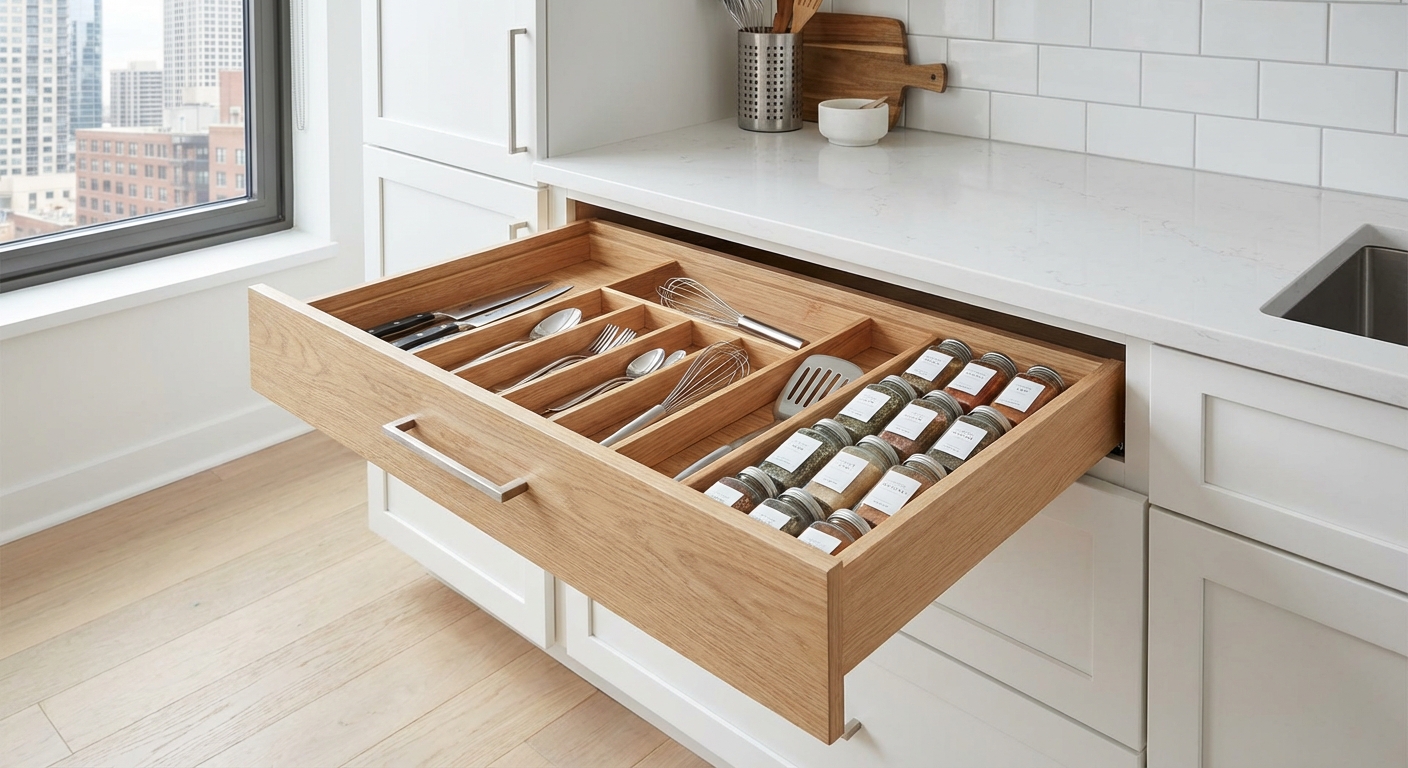
The engineering difference matters in daily use. In a face-frame cabinet, the frame narrows your drawer opening by 3 inches or more — that's 1.5 inches on each side where wood meets wood instead of open space. In a frameless box, the drawer slides mount directly to the side panel, and the opening stretches nearly the full width of the cabinet. I've measured the difference on hundreds of installs, and on a standard 36-inch base cabinet, the frameless version gives you roughly 2.5 to 3 inches of additional usable drawer width. Over an entire kitchen with 15-20 cabinets, that adds up to a significant amount of recovered space.
How Each Construction Method Handles Chicago's Climate
Chicago's humidity swings are brutal on cabinetry. We regularly see indoor relative humidity jump from 15-20% in January to 60-70% in July, and that seasonal expansion and contraction wreaks havoc on poorly built cabinets. In my experience, face-frame cabinets handle this slightly better out of the gate because the hardwood frame acts as a stabilizing skeleton — if the box material expands or contracts, the frame keeps everything aligned. I've pulled apart 30-year-old face-frame cabinets in Wicker Park greystones and found boxes that were warped but still functional because the maple frame held everything together.
Frameless cabinets can perform equally well, but only if you use the right materials. I exclusively build frameless boxes from 3/4-inch birch plywood with 2mm ABS edge banding on every exposed edge. The edge banding is critical — it seals the plywood layers against moisture absorption. Cheap frameless cabinets made from 1/2-inch melamine particleboard with paper-thin edge tape are the ones that fall apart after 3-4 years in a Chicago kitchen. At AK Cabinet Craft, our team uses EGGER laminates for interior surfaces because they carry an excellent moisture resistance rating, which is non-negotiable for homes in a Great Lakes climate.
One thing I always check on Chicago installs is the wall condition. Many homes in Lincoln Park, Lakeview, and Bridgeport have plaster walls that aren't perfectly plumb. Face-frame cabinets are more forgiving here because you can scribe the frame to fit uneven surfaces. Frameless cabinets demand straighter walls or careful shimming during installation — something I account for in every custom kitchen cabinet project we take on.
Need expert advice? Call (224) 808-5100 or schedule a free kitchen design consultation.
Frameless vs Face-Frame Cabinets: Side-by-Side Comparison
After building both styles for over a decade, I've compiled the differences that actually matter when you're choosing construction for a Chicago kitchen. Forget the marketing fluff — here's what I see on the shop floor and on installation day.
| Feature | Frameless (European) | Face-Frame (Traditional) |
|---|---|---|
| Box Material Thickness | 3/4 inch (18mm) required | 1/2 inch (12mm) minimum |
| Interior Storage Access | Full-width opening | Reduced by 3+ inches |
| Door Overlay Options | Full overlay standard | Full, partial, or inset |
| Hinge Type | Concealed cup hinges (e.g., Blum CLIP top) | Concealed or exposed hinges |
| Wall Tolerance | Requires plumb walls or precise shimming | More forgiving on uneven walls |
| Humidity Resistance | Excellent with proper edge banding | Excellent with quality hardwood frame |
| Visual Style | Sleek, minimal, contemporary | Traditional, transitional, or modern |
| Average Cost Premium | 5-10% higher (thicker panels) | Baseline |
| Ideal For | Modern condos, open-concept layouts | Historic homes, classic Chicago architecture |
The cost difference is worth explaining. Frameless cabinets require 3/4-inch material for every panel — sides, top, bottom, and back — because the box is the structure. Face-frame cabinets can use thinner panel stock for the box since the frame bears much of the load. That extra material thickness across an entire kitchen adds roughly 5-10% to the raw material cost. However, frameless cabinets require less labor for frame construction, which partially offsets the material premium. For most Chicago homeowners, the total price difference between the two styles on a mid-range kitchen (starting from $15,000) is modest enough that the decision should be about performance and aesthetics, not budget alone.
Hardware and Hinge Considerations for Each Style
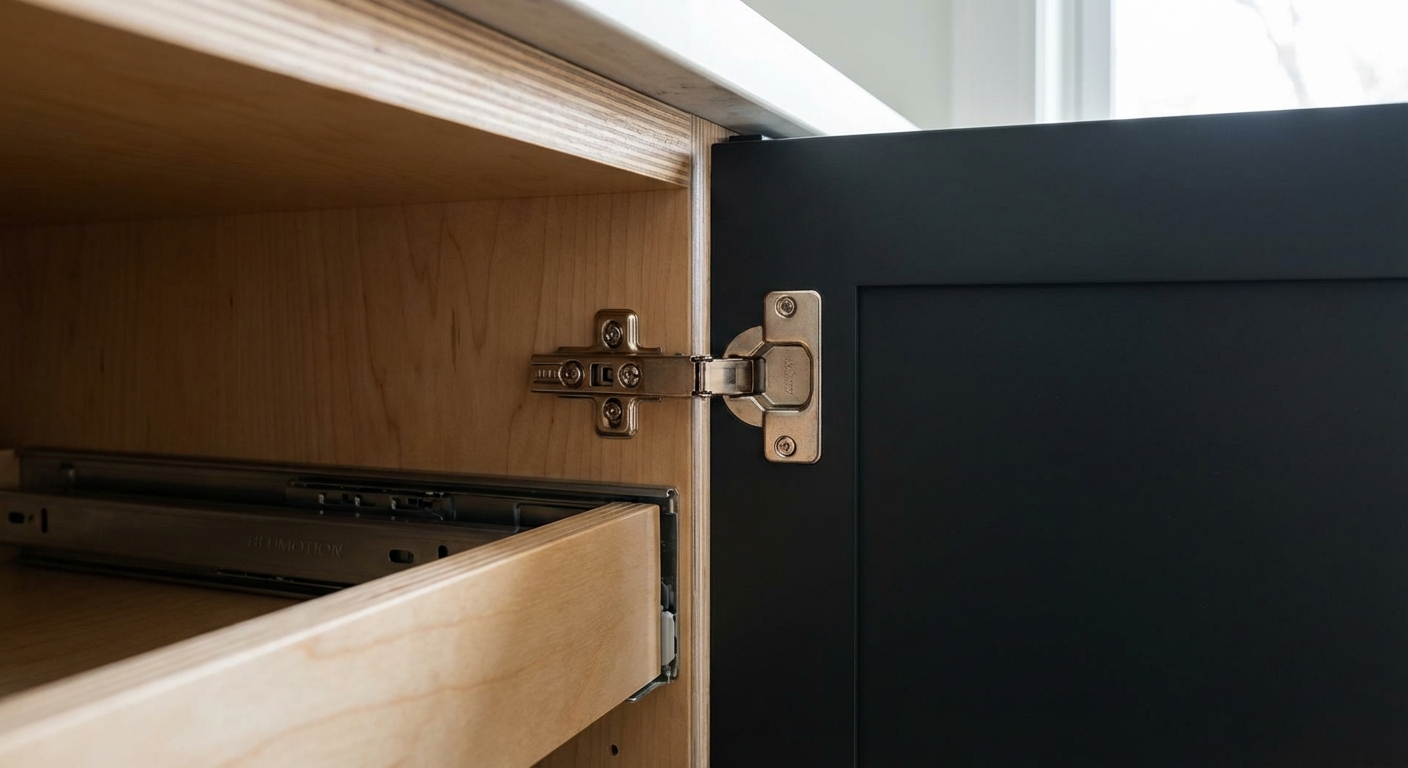
This is where my specialty comes in. I'm a certified Blum hardware specialist, and the hinge system is arguably the biggest functional difference between frameless and face-frame cabinets. Frameless cabinets universally use 35mm concealed cup hinges — the Blum CLIP top BLUMOTION is what I install on every frameless box that leaves our shop. These hinges bore directly into the side panel, offer three-dimensional adjustment (up/down, left/right, in/out), and include integrated soft-close damping. When a frameless cabinet door closes silently and aligns perfectly with its neighbors, that's the hinge doing its job.
Face-frame cabinets also use concealed hinges, but they mount to the face frame itself rather than the side panel. The Blum CLIP top for face-frame applications uses a mounting plate that screws into the 1.5-inch hardwood frame, which gives excellent screw holding power. Face-frame hinges also allow inset door mounting — where the door sits flush inside the frame — which is a look you simply cannot achieve with frameless construction. For clients restoring a vintage Chicago bungalow or greystone, that inset door detail is often the deciding factor.
Drawer systems follow a similar pattern. In frameless cabinets, I install Blum TANDEMBOX drawers that span nearly the full interior width. In a 36-inch frameless base cabinet, the drawer box measures roughly 32 inches wide. The same cabinet built with a face frame yields a drawer box closer to 29 inches wide. That's a meaningful difference when you're organizing pots, baking sheets, or drawer organizers. For a deep dive into how cabinet sizing affects storage, check out our kitchen cabinet dimensions guide.
Soft-close mechanisms are standard on both styles when you use quality hardware. I refuse to install any hinge or drawer slide without integrated damping — slamming cabinet doors are a relic of the past. Every custom cabinet our team builds includes Blum BLUMOTION soft-close technology, regardless of whether it's frameless or face-frame construction.
Which Construction Style Fits Your Chicago Home Type?
I've installed cabinets in nearly every housing style Chicago has to offer — from 800-square-foot condos in the Loop to sprawling Northshore colonials. The home's architecture, age, and layout all influence which construction method makes sense. Here's how I typically advise clients based on their specific situation.
- Pre-war greystones and bungalows (pre-1940): Face-frame cabinets almost always look right. The proportions, the ability to do inset doors, and the forgiving installation on old plaster walls make this the natural choice. Shaker-style or beaded inset doors on a maple face frame honor the character of these homes.
- Mid-century ranches and split-levels (1950s-1970s): Either style works beautifully. I've done frameless flat-panel cabinets in Skokie ranches that look stunning, and face-frame Shaker cabinets in Park Ridge splits that feel timeless.
- Modern condos and new construction (2000s-present): Frameless is the clear winner. Clean lines, full-overlay doors with minimal reveal, and maximum storage efficiency align perfectly with contemporary design. These newer buildings typically have straighter, plumb walls that make frameless installation straightforward.
- Two-flats and rental conversions: Face-frame cabinets offer better long-term durability for rental units because the frame protects the box from the extra wear tenants put on cabinets. The screw-holding power of a solid hardwood frame means hinges stay tight even after thousands of open-close cycles.
For homeowners tackling unusual layouts — galley kitchens, under-stair storage, or angled walls — I often recommend reading about custom built-ins for awkward spaces. Both frameless and face-frame construction can be adapted for these challenges, but the approach differs significantly.
Cost Breakdown: What Chicago Homeowners Should Budget
Let me give you honest numbers based on what our team at AK Cabinet Craft charges in 2026. These reflect quality construction — 3/4-inch plywood boxes, Blum hardware, professional finishing — not builder-grade shortcuts. Every kitchen we produce starts from $15,000 and includes our 5-year warranty.
| Kitchen Size | Frameless Cabinets | Face-Frame Cabinets | Face-Frame Inset |
|---|---|---|---|
| Small (8-12 cabinets) | $15,000 - $22,000 | $15,000 - $20,000 | $19,000 - $26,000 |
| Medium (13-20 cabinets) | $22,000 - $35,000 | $20,000 - $32,000 | $26,000 - $40,000 |
| Large (21-30 cabinets) | $35,000 - $55,000 | $32,000 - $50,000 | $40,000 - $65,000 |
Notice that inset face-frame cabinets carry the highest premium. That's because inset doors require painstaking fitting — every door and drawer must be individually gap-adjusted to maintain a consistent 1/16-inch reveal around the entire perimeter. It's the most labor-intensive cabinet style I build, and it demands the most skilled hands in the shop. But when done correctly, inset face-frame cabinets have a furniture-quality look that nothing else matches. Our team has completed 1,300+ projects across the Chicago area, and some of the most rewarding have been these high-precision inset kitchens.
Both frameless and face-frame cabinets deliver strong ROI at resale. The NKBA consistently reports that kitchen remodels return 50-75% of their cost at resale, and in competitive Chicago neighborhoods like Lincoln Park, Bucktown, and West Loop, a well-built kitchen can push that return even higher.
My Recommendation After 14 Years of Building Both
Here's what I tell every client who sits down at our design table: neither frameless nor face-frame is objectively better. They're different tools for different jobs. If you want a contemporary kitchen with maximum storage, clean sightlines, and handle-less doors, frameless construction is purpose-built for that vision. If you want a traditional or transitional kitchen that complements a classic Chicago home, face-frame construction — especially with inset doors — delivers warmth and character that frameless can't replicate.
What I won't compromise on, regardless of style, is material quality. Every box gets 3/4-inch plywood construction. Every hinge is Blum. Every edge is sealed. Every cabinet gets inspected before it leaves our shop at 2650 N Halsted St. Our 21-day production timeline applies to both construction methods, so you're not waiting months for your kitchen.
I also encourage clients to mix construction types when it makes sense. I've done kitchens in Andersonville where the main run is frameless for efficiency, but a built-in hutch or display cabinet uses face-frame construction with glass inset doors for a furniture look. This hybrid approach is one of the advantages of working with a shop that builds both styles in-house. Explore our completed projects gallery to see examples of both methods in real Chicago homes.
If you're renovating a kitchen and need help beyond cabinetry — perhaps a matching custom bathroom vanity or a custom closet system for the primary bedroom — we build those using the same materials and hardware standards. Consistency across your home matters.
Frequently Asked Questions
Are frameless cabinets less durable than face-frame cabinets?
Not when they're built correctly. I build frameless boxes from 3/4-inch birch plywood with dowel-and-cam construction, and they're rock solid. The misconception comes from cheap imported frameless cabinets made with 1/2-inch particleboard — those absolutely fail, especially in Chicago's humidity. With proper materials, frameless cabinets last just as long as face-frame construction.
Can I get a traditional Shaker look with frameless cabinets?
Yes, but with limitations. You can mount Shaker-profile doors on a frameless box as a full overlay, and it looks great — most people can't tell the difference from across the room. However, you cannot do inset doors on a frameless cabinet. If you want that classic inset Shaker look, you need a face frame. I'd say about 30% of our clients who start leaning frameless switch to face-frame once they see an inset Shaker sample in person.
How do frameless vs face-frame cabinets affect my kitchen layout?
Frameless cabinets give you more flexibility with drawer widths and pull-out configurations because there's no frame restricting the opening. In a tight Chicago galley kitchen where every inch counts, frameless construction can net you 10-15% more usable interior storage. For detailed sizing guidance, I always recommend reviewing our kitchen cabinet dimensions guide.
What's the production timeline for each style at AK Cabinet Craft?
Both frameless and face-frame cabinets go through our standard 21-day production cycle. Face-frame inset cabinets sometimes require an additional 3-5 days for the precision fitting and finishing of doors and drawer fronts. I'll give you an exact timeline during your design consultation.
Do you recommend one style for upper cabinets and another for base cabinets?
I've done it, and it can work well in certain designs. For example, frameless upper cabinets with lift-up Blum AVENTOS doors paired with face-frame base cabinets gives you contemporary function up top and traditional warmth at countertop level. It's an unconventional approach, but it solves real design problems — especially in Chicago kitchens where the upper zone needs maximum efficiency and the lower zone faces heavy daily use.
Ready to Get Started?
Whether you're leaning frameless, face-frame, or still weighing both options, the best next step is seeing samples in person. I keep full-size door and construction samples at our shop and can walk you through the differences hands-on. With 1,300+ completed projects and a 5.0 Google rating, our team knows how to match the right construction method to your home, your style, and your budget. Schedule a free kitchen design consultation or call (224) 808-5100 — I'll personally make sure you get the right cabinet for your Chicago home.