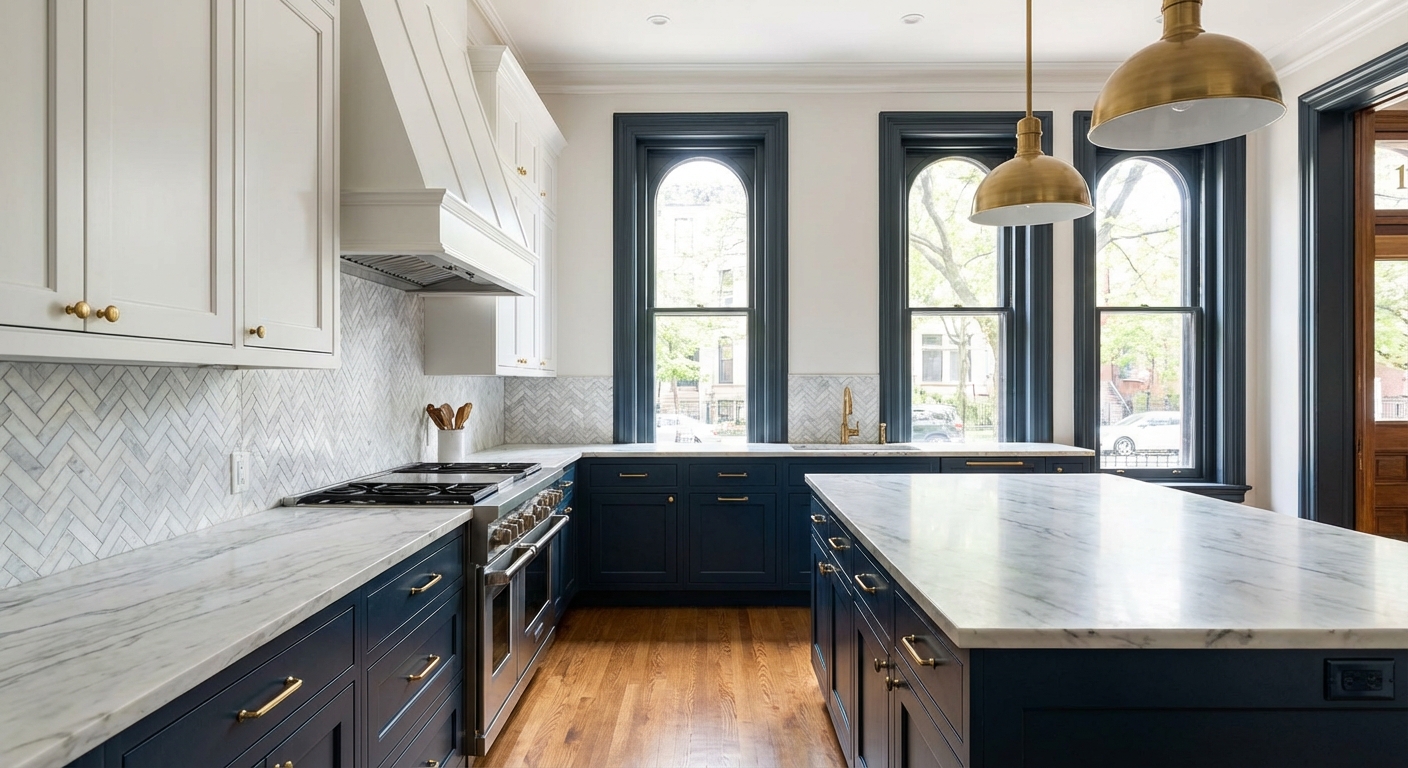
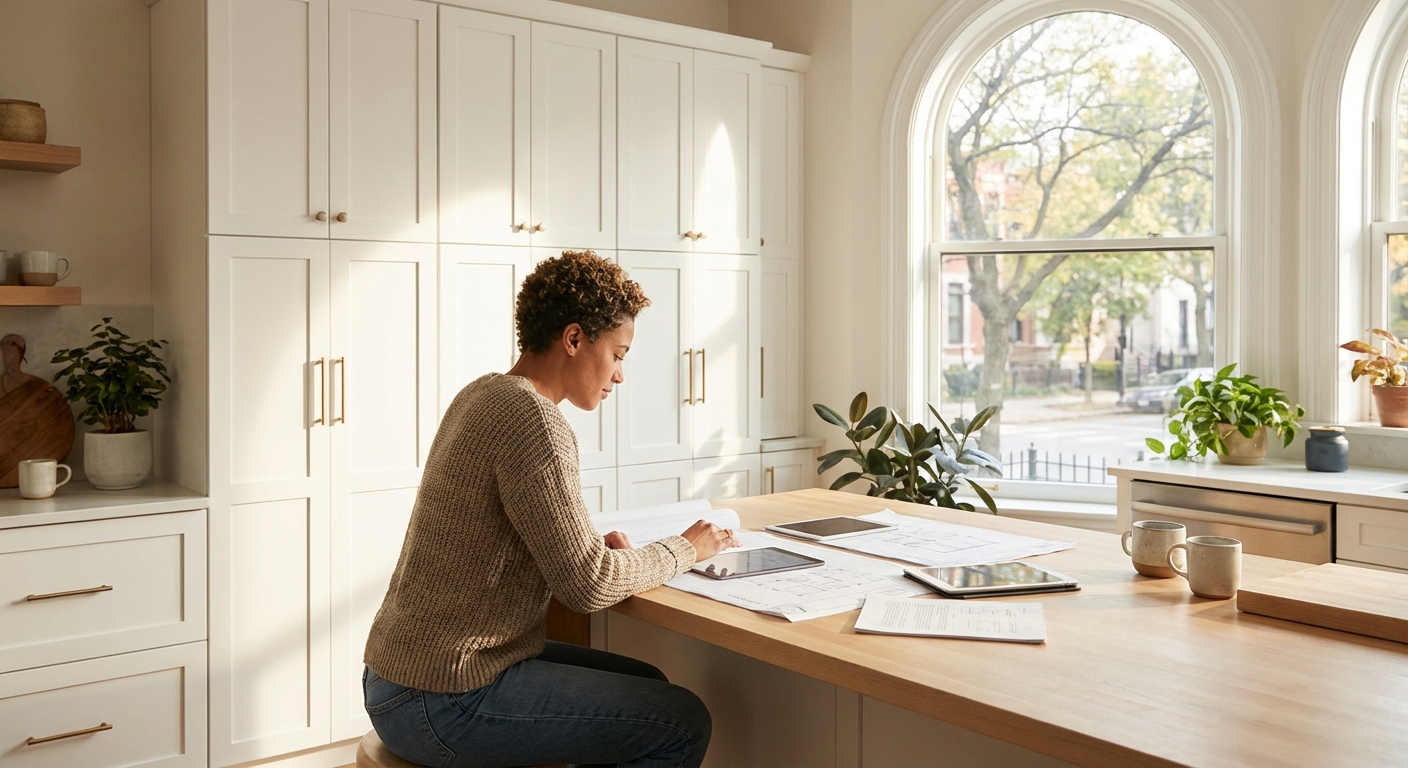
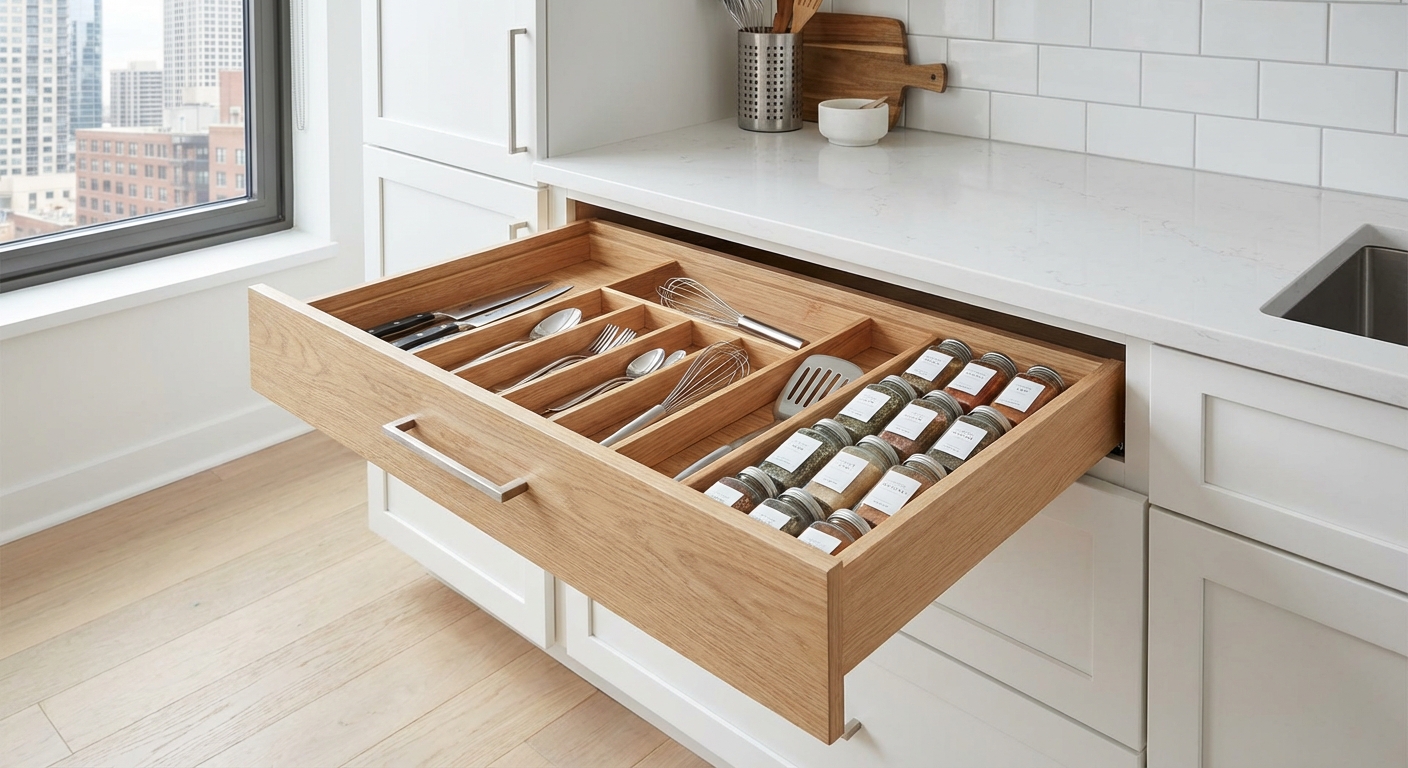
A few weeks ago I finished a kitchen for a young family in a Ravenswood greystone — a narrow galley layout with just one window facing the neighbor's brick wall. The kitchen felt like a cave, even at noon. We installed three layers of cabinet lighting — under-cabinet LED strips, in-cabinet puck lights behind glass doors, and toe-kick accent strips — and the space went from gloomy corridor to the warmest room in the house. That project reminded me how much lighting transforms a kitchen beyond what paint and countertops ever can.
Key Takeaways
- Under-cabinet LED strip lights cost between $150 and $600 for a typical Chicago kitchen and eliminate countertop shadows instantly.
- In-cabinet lighting behind glass-front doors adds depth and makes small kitchens feel 30-40% larger visually.
- Color temperature matters — 2700K to 3000K works best for Chicago kitchens with warm wood tones and grey stone exteriors.
- Hardwired systems outperform battery-powered puck lights in longevity and brightness by a wide margin.
- Layered lighting — task, accent, and ambient — is the single most impactful design upgrade I recommend in 2026.
Why Cabinet Lighting Matters More in Chicago Kitchens
Chicago kitchens have a unique relationship with natural light — or, more accurately, the lack of it. Bungalows in Portage Park often have north-facing kitchen windows shaded by porches. Greystones in Lakeview stack kitchens at the rear of the building where neighboring structures block direct sunlight. High-rise condos in Streeterville can have floor-to-ceiling glass, but the kitchen is usually tucked into an interior corner far from those views. I've measured light levels in dozens of these kitchens, and many sit below 150 lux on a winter afternoon — less than half of what the National Kitchen and Bath Association recommends for safe food prep.
That's why cabinet lighting isn't a luxury here — it's a necessity. When I design custom kitchen cabinets for Chicago homes, I plan lighting channels and wire chases into the cabinet structure from day one. Retrofitting is possible, but integrating lighting during the cabinet build gives you cleaner lines, hidden wires, and better performance. Chicago's long winters mean your kitchen lighting works overtime from October through April, so getting it right pays off every single day.
Under-Cabinet Lighting: The Foundation of Every Great Kitchen
Under-cabinet lighting is where I start every lighting plan. It eliminates the shadow your own body casts when you stand at the counter — a problem I see in nearly every Chicago kitchen that relies solely on overhead recessed cans. The most popular option in 2026 is continuous LED strip lighting mounted to the underside of wall cabinets, positioned toward the front edge so the light washes evenly across the countertop. I prefer strips with a CRI (Color Rendering Index) of 90 or above, which means your food, your backsplash tile, and your countertop colors all look true and natural.
For a standard L-shaped Chicago kitchen with 12 to 16 linear feet of upper cabinets, I typically spec about $250 to $500 in LED strip materials plus installation labor. Hardwired strips connected to a dimmer switch give you full control — bright for chopping vegetables, low for a late-night glass of wine. I always recommend adding a small aluminum channel with a frosted diffuser lens, which hides the individual LED dots and spreads the light into a smooth, even glow. It's a small detail that makes a big visual difference.
| Under-Cabinet Option | Cost (Materials) | Lifespan | Best For |
|---|---|---|---|
| LED strip (hardwired) | $250–$500 | 50,000+ hours | Most Chicago kitchens |
| LED puck lights (hardwired) | $150–$350 | 40,000+ hours | Spot task lighting |
| LED light bars | $100–$300 | 50,000+ hours | Budget-friendly option |
| Battery puck lights | $30–$80 | 3–6 months per battery | Renters only |
In-Cabinet Lighting: Turning Storage Into a Design Feature
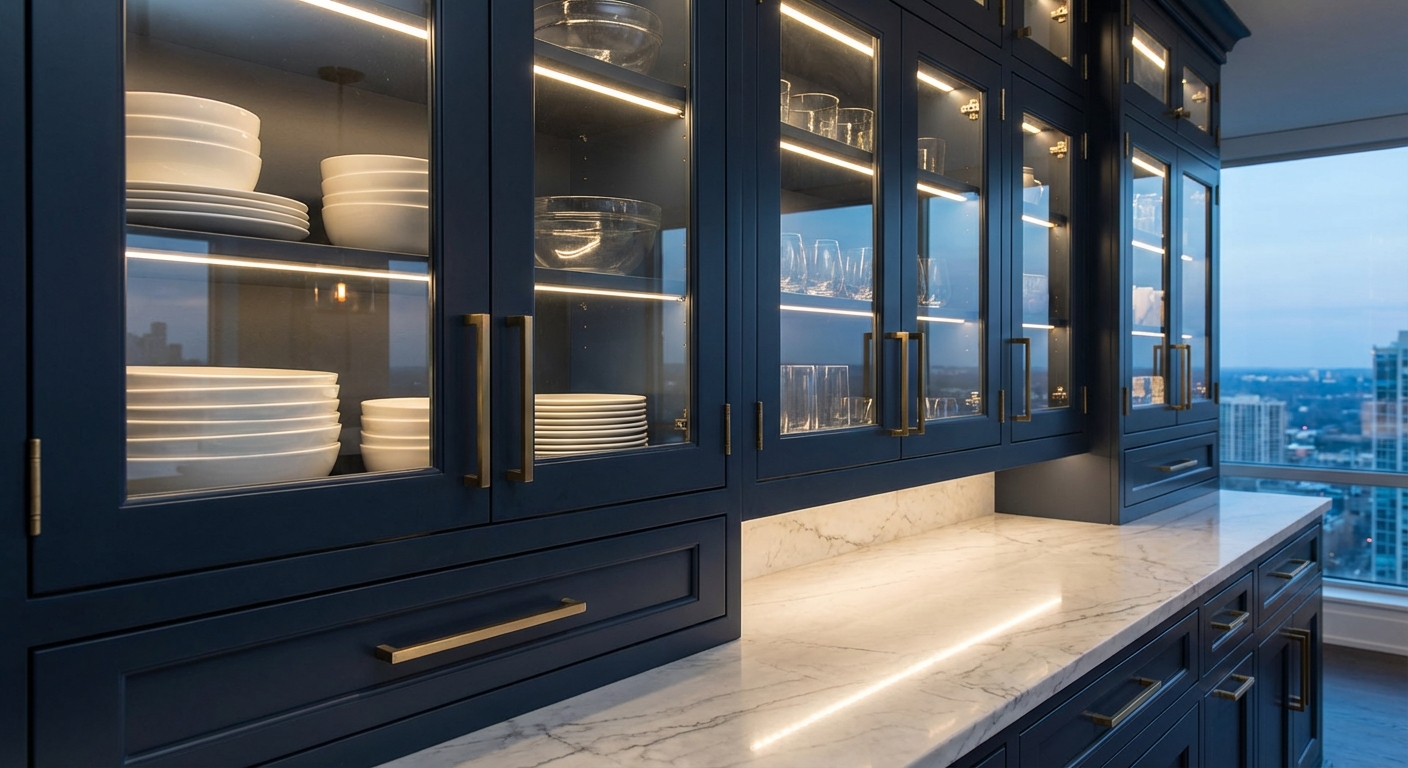
If under-cabinet lighting handles the task work, in-cabinet lighting handles the drama. Glass-front upper cabinets with interior LED strips instantly become display cases — I've used them to showcase everything from heirloom dishware in a Bridgeport bungalow to a curated cocktail glass collection in a West Loop loft. The trick is placing the LED strip vertically along the inside edges of the cabinet or horizontally at the top, angled slightly downward, so the light falls across the shelves without glaring through the glass at eye level.
Door-activated switches are a game-changer for solid-door cabinets. Using Blum hardware from Austria — which we install on every project at AK Cabinet Craft — I can integrate sensor switches that turn on the interior light the moment you open a cabinet door. It's incredibly useful in deep upper cabinets and pantry cabinets where items get lost in the back. For a typical kitchen with 4 to 6 glass-front doors, expect to invest $200 to $450 in in-cabinet lighting materials. The warm glow visible through glass doors also works beautifully as ambient evening light, reducing the need for harsh overhead fixtures.
- Glass-front uppers: Use continuous LED strips at the cabinet top for even wash lighting.
- Solid-door pantries: Install door-activated sensor strips so light appears only when you open the door.
- Open shelving: Mount recessed LED channels on the underside of each shelf to light the one below.
- Display niches: Use warm 2700K puck lights for a gallery-like spotlight effect.
Need expert advice? Call (224) 808-5100 or schedule a free kitchen design consultation.
Choosing the Right Color Temperature for Chicago Homes
Color temperature is measured in Kelvin, and it's one of the most overlooked decisions in kitchen lighting. I've walked into kitchens where the under-cabinet lights are a cool 5000K blueish-white while the overhead pendants glow a warm 2700K amber — the clash makes the whole room feel disjointed. For most Chicago kitchens, especially those with warm-toned wood cabinetry, stone countertops, or cream-colored walls, I recommend staying in the 2700K to 3000K range. It complements natural materials and creates a cozy atmosphere that feels right in our grey-sky city.
If you have a sleek, contemporary kitchen — think flat-panel white cabinets with waterfall quartz — you can push toward 3500K for a crisper, more neutral feel. I recently completed a Wicker Park condo kitchen in matte charcoal with 3500K under-cabinet strips, and the cooler tone made the white quartz countertops practically sparkle. The key is consistency: every lighting layer should be the same color temperature. When I design custom kitchen cabinets in Chicago, I spec the Kelvin range on the lighting plan so the electrician and cabinet installer are aligned from the start.
| Color Temperature | Kelvin Range | Mood | Best Kitchen Style |
|---|---|---|---|
| Warm White | 2700K | Cozy, intimate | Traditional, transitional, wood-heavy |
| Soft White | 3000K | Warm but clear | Most Chicago kitchens (my go-to) |
| Neutral White | 3500K | Clean, balanced | Modern, minimalist, high-gloss |
| Cool White | 4000K–5000K | Clinical, bright | Commercial kitchens only |
Accent and Toe-Kick Lighting: The Details That Wow
Toe-kick lighting is the most underestimated layer in kitchen design, and it's one of my favorites to introduce to clients who haven't seen it before. A soft strip of LED light running along the base of your cabinets at floor level creates the illusion that the cabinetry is floating — especially dramatic with dark cabinet finishes or when the kitchen opens to a dining area. I used this in a two-flat renovation in Ukrainian Village last winter, and the homeowner said it makes her kitchen look like a restaurant in the best way possible.
Above-cabinet lighting is another accent layer that works wonders in kitchens with a gap between the upper cabinets and the ceiling. In many Chicago bungalows and pre-war apartments, ceilings sit at 8 to 9 feet, leaving a 6- to 12-inch gap above the uppers. Rather than closing that gap with a soffit — which can make a small kitchen feel even tighter — I recommend placing an LED strip on top of the cabinets angled toward the ceiling. The upward wash of light makes the ceiling feel higher and adds a beautiful ambient glow in the evening. Combined with under-cabinet task lighting and in-cabinet display lighting, you get three distinct layers that make any kitchen feel designed and intentional.
- Toe-kick LED strips: $100–$250 in materials; best in kitchens with dark or floating-style cabinetry.
- Above-cabinet wash lighting: $80–$200; ideal for kitchens with a gap between cabinets and ceiling.
- Interior drawer lighting: $50–$120 per drawer; activates when the drawer opens using motion sensors.
- Cabinet glass shelf edge-lighting: $75–$150 per shelf; light transmits through the glass edge for a dramatic effect.
Hardwired vs. Battery-Powered: My Honest Take
I get this question at nearly every consultation. Battery-powered puck lights are tempting because they cost $10 to $20 each and stick on with adhesive in seconds. But in my experience, they're a temporary fix, not a design solution. Batteries die at the worst times, the adhesive loosens in kitchens with heat and humidity, and the light output dims noticeably after just a few weeks. For renters who can't modify their space, they're fine. For homeowners investing in custom cabinets for their Chicago home, I always recommend hardwired systems.
Hardwired LED systems connect to your home's electrical and operate from a wall switch or dimmer. They deliver consistent brightness, last 50,000+ hours (roughly 17 years at 8 hours per day), and integrate seamlessly into the cabinet structure. Yes, the upfront cost is higher — typically $500 to $1,200 installed for a full under-cabinet and in-cabinet package — but you'll never replace a battery or reattach a fallen puck light. In a city like Chicago where we rely heavily on artificial light for nearly half the year, that reliability is worth every penny. I work with licensed electricians on every project to ensure the wiring is code-compliant and hidden within the cabinet framework.
How I Integrate Lighting Into Cabinet Design
At AK Cabinet Craft, our team has completed 1,300+ projects across Chicago, and lighting integration has become a standard part of our process. When I design a kitchen, I route wire channels into the cabinet backs and undersides during production, not as an afterthought. Our 21-day production timeline includes these details, so the cabinets arrive on-site already prepped for lighting. This approach eliminates the messy cord management and visible wires that plague retrofit installations.
For glass-front doors, I plan the hinge placement in coordination with the LED strip location so the two never interfere. For under-cabinet strips, I design a small recessed channel into the bottom face frame of the upper cabinets — the light sits flush and completely hidden from view. If you've been reading our kitchen cabinet dimensions guide, you know that every fraction of an inch matters in tight Chicago kitchens. I also coordinate with the countertop installer to ensure the backsplash height leaves room for the lighting channel. These are the details that separate a professional lighting plan from a DIY afterthought.
Cabinet Lighting Ideas by Chicago Home Type
Different home types call for different lighting strategies. In a Chicago bungalow with its classic eat-in kitchen, I often focus on warm under-cabinet strips and above-cabinet wash lighting to brighten a room that's typically limited to one or two windows. Greystones and two-flats present similar challenges — kitchens are often in the center or rear of the unit, sandwiched between walls with minimal natural light. Here, in-cabinet lighting behind glass doors does double duty as both display lighting and ambient room lighting.
High-rise condos are a different story. Kitchens in newer buildings along the lakefront or in the South Loop often have open layouts with generous ceiling heights but compact footprints. In those spaces, I lean into toe-kick lighting and interior drawer lighting to make a small kitchen feel luxurious and high-tech. For a condo I designed last spring in Lincoln Park, we used color-tunable LED strips — a 2026 trend — that shift from 2700K in the evening to 3500K during daytime cooking. If you're exploring ideas for built-in solutions, our guide to custom built-ins for Chicago homes covers how lighting integrates with shelving and storage.
- Bungalows (Portage Park, Jefferson Park): Under-cabinet + above-cabinet wash; prioritize warm tones.
- Greystones (Lakeview, Lincoln Park): Glass-front in-cabinet lighting + under-cabinet strips for narrow galley layouts.
- Two-flats (Logan Square, Pilsen): Hardwired systems with dimmer controls; plan for separate circuits per unit.
- High-rise condos (Streeterville, South Loop): Toe-kick + drawer lighting + tunable color temperature strips.
Frequently Asked Questions
How much does it cost to add cabinet lighting to an existing Chicago kitchen?
For a retrofit with hardwired LED strips under 12 to 16 linear feet of upper cabinets, I typically see total installed costs between $500 and $1,200, depending on the electrical work needed. If your kitchen already has an outlet inside the upper cabinets — common in post-2000 construction — the cost drops significantly. Battery-powered options run $30 to $80 but don't compare in quality or longevity.
What's the best type of LED for under-cabinet kitchen lighting?
I recommend continuous LED strip lights with a CRI of 90+ and a color temperature of 3000K. Mount them in an aluminum channel with a frosted diffuser for smooth, dot-free light. Avoid bare LED strips stuck directly to the cabinet — they create visible hot spots and look unfinished.
Can cabinet lighting be added to any type of cabinet?
Yes, but it's much easier and cleaner when integrated during the design and build phase. When I design custom kitchen cabinets in Chicago, I pre-route wire channels and plan hinge clearances for lighting. Retrofitting existing cabinets is absolutely possible — I just recommend hiring an electrician to ensure a clean, code-compliant installation.
Do I need a separate switch for cabinet lighting?
I always recommend a dedicated dimmer switch for your cabinet lighting, separate from your overhead lights. This lets you use the under-cabinet lights as evening ambient lighting without the full overhead brightness. In-cabinet lights behind glass doors look best on their own switch too, so you can turn them on when entertaining.
Are motion-sensor cabinet lights worth it?
For interior cabinet and drawer lighting, motion sensors are excellent — they activate when you open the door and turn off automatically. For under-cabinet task lighting, I prefer a wall dimmer switch. You don't want your task lights flickering on and off every time you walk past the counter. I use sensor switches from Blum's hardware ecosystem, which integrate seamlessly with their soft-close hinges.
Ready to Get Started?
Cabinet lighting is one of the most impactful upgrades I recommend to my clients, and it's something I plan into every kitchen I design. Whether you're renovating a dim galley kitchen in a Lakeview greystone or building out a brand-new condo kitchen in the West Loop, the right lighting layers transform the space. At AK Cabinet Craft, we integrate lighting into the cabinet design from the very first meeting, ensuring clean lines and zero visible wires. Schedule a free kitchen design consultation or call (224) 808-5100 — I'd love to show you what the right lighting can do for your Chicago kitchen.