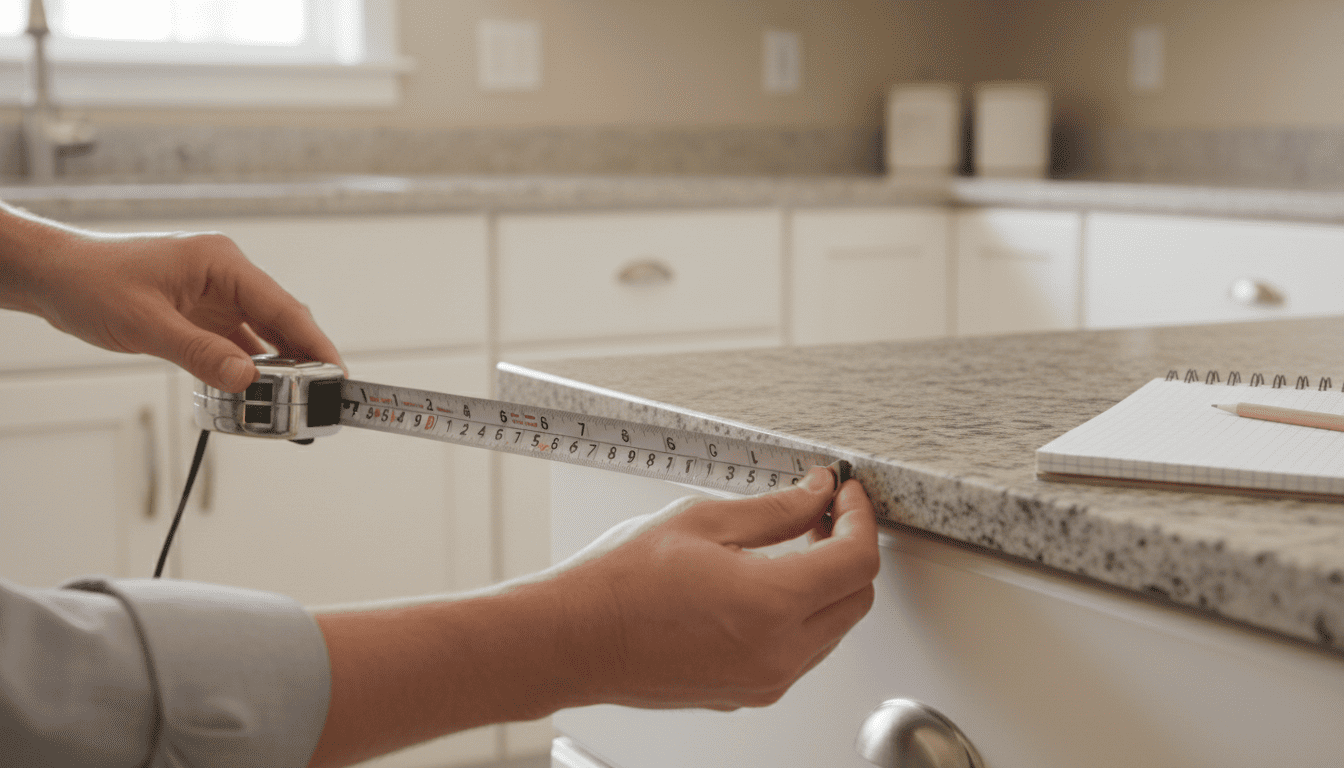
Getting accurate kitchen measurements is the difference between cabinets that fit perfectly and a renovation nightmare. A quarter-inch mistake doesn't sound like much, but when installing 15 cabinets, small errors compound fast. Here's the complete guide to measuring a kitchen correctly — plus the mistakes that cost Chicago homeowners thousands.
Why Accurate Measurements Matter
Ordering cabinets without professional measurements leads to gaps, doors that don't open properly, or cabinets that simply don't fit. This problem is especially common in older Chicago homes — bungalows, greystones, and vintage two-flats often have walls that aren't perfectly straight or corners that aren't square.
The good news: measuring a kitchen isn't complicated. The right approach takes about 30 minutes.
Tools Needed
Before starting, gather these essentials:
- 25-foot tape measure (metal, not fabric)
- Pencil and eraser
- Graph paper or printable template
- Step stool for upper measurements
- Camera or smartphone
- Blue painter's tape for marking
Skip laser measurers unless experienced with them. A quality tape measure is more reliable for most homeowners.
Step 1: Create a Base Sketch
Start with a rough sketch of the kitchen layout. Don't worry about scale yet — just capture the basic shape. Include:
- All walls, even partial walls
- Windows and their trim
- Doors and door swings
- Appliance locations
- Existing plumbing (sink, dishwasher connections)
- Electrical outlets and switches
Mark which direction is north. This helps design teams understand natural light patterns when recommending finishes.
Step 2: Measure Wall Lengths
Measure each wall at counter height (36 inches from floor). This is critical because Chicago homes often have walls that aren't perfectly straight.
Measure from corner to corner, recording to the nearest 1/8 inch. Then measure again. If two measurements differ by more than 1/4 inch, measure a third time and use the middle number.
For each wall, also measure:
- Floor to ceiling height
- Floor to bottom of soffit (if applicable)
- Width of any windows
- Distance from corner to window edge
- Window height from floor
.png)
Step 3: Measure Existing Openings
Windows and doors need precise measurements:
Windows:
- Overall width including trim
- Overall height including trim
- Distance from floor to window sill
- Distance from adjacent walls to window trim
Doors:
- Width including frame
- Height including frame
- Which way the door swings
- Distance from corners
In older Chicago homes, windows often aren't centered on walls. Don't assume symmetry — measure both sides.
Step 4: Document Obstacles and Utilities
This step catches most DIY measuring mistakes. Mark and measure:
Plumbing:
- Center of sink drain from back wall
- Center of sink drain from nearest corner
- Water supply line locations
- Dishwasher connection point
Electrical:
- All outlet locations and heights
- Switch locations
- Dedicated circuits (refrigerator, microwave, disposal)
HVAC:
- Vent locations on floors and walls
- Radiator dimensions (common in Chicago vintage homes)
- Baseboard heater lengths
Structural:
- Soffits (depth and height)
- Bulkheads
- Support columns
- Uneven ceiling lines
Step 5: Measure Floor and Ceiling
Check if the floor is level using a 4-foot level or smartphone app. In Chicago's older homes, 1/4 to 1/2 inch variation across a 10-foot span is typical. This affects base cabinet installation.
Measure floor to ceiling in multiple spots:
- Each corner
- Center of each wall
- Near windows
Ceiling heights in Chicago range from 8 feet in newer construction to 10+ feet in vintage greystones. This determines upper cabinet options.
Step 6: Photograph Everything
Take photos of:
- Each wall straight-on
- All corners
- Under the sink (plumbing configuration)
- Inside existing cabinets (reveals construction type)
- Any damage or issues
- Electrical panel (for reference)
Good photos save back-and-forth during the design process.
Common Measuring Mistakes
Forgetting the backsplash: Standard backsplash is 4 inches, but full-height backsplash to upper cabinets changes measurements.
Ignoring door clearances: Doors need to open fully without hitting cabinet handles. Measure the swing arc.
Missing refrigerator depth: Standard depth is 30 inches, but counter-depth is 24 inches. This affects surrounding cabinet planning.
Assuming square corners: Use the 3-4-5 triangle method to check if corners are actually 90 degrees. Many Chicago kitchens aren't square.
Forgetting appliance dimensions: Get exact specs for refrigerator, range, and dishwasher. "Standard size" varies by brand.
When to Call a Professional
DIY measurements work well for simple, rectangular kitchens. Professional measuring is recommended for:
- L-shaped or U-shaped layouts
- Multiple windows at different heights
- Angled walls or odd corners
- Plans to move plumbing
- Historical homes with non-standard dimensions
- High-end projects where precision is critical
AK Cabinet Craft offers free professional measurements for Chicago area homeowners, including Lincoln Park, Bucktown, Naperville, Schaumburg, Evanston, and Oak Park.
Measurement Checklist
Before submitting measurements for a quote, verify:
- All wall lengths at 36" height
- Floor to ceiling heights (multiple points)
- Window dimensions and positions
- Door dimensions and swing directions
- Appliance locations and sizes
- Plumbing rough-in locations
- Electrical outlet positions
- Soffit/bulkhead dimensions
- Photos of all walls and details
- Notes on floor level variations
Frequently Asked Questions
Q: How long does it take to measure a kitchen?
A: DIY measuring takes 30-45 minutes for a standard kitchen. Professional measurements typically take 20-30 minutes since experienced measurers know exactly what to capture.
Q: Can I measure my kitchen myself for custom cabinets?
A: Yes, for simple rectangular layouts. However, for L-shaped kitchens, older Chicago homes, or projects over $10,000, professional measuring is recommended to avoid costly errors.
Q: What's the most common measuring mistake?
A: Assuming corners are square. In Chicago bungalows and greystones, corners are often 1-2 degrees off from 90°, which affects cabinet fit significantly.
Q: Does AK Cabinet Craft offer free measurements?
A: Yes. Free in-home measurements are available throughout Chicago and suburbs including Lincoln Park, Bucktown, Naperville, Schaumburg, Evanston, and Oak Park.
Get Started
Accurate measurements are the foundation of a successful kitchen project. Whether measuring independently or using professional services, the goal is the same: cabinets that fit perfectly the first time.
With 21-day custom cabinet production, there's no months-long wait after measurements are finalized.
Schedule Your Free Consultation:
- Call: (224) 808-5100
- Visit: Lincoln Park or Bucktown showroom
- Online: akcabinetcraft.com/contacts